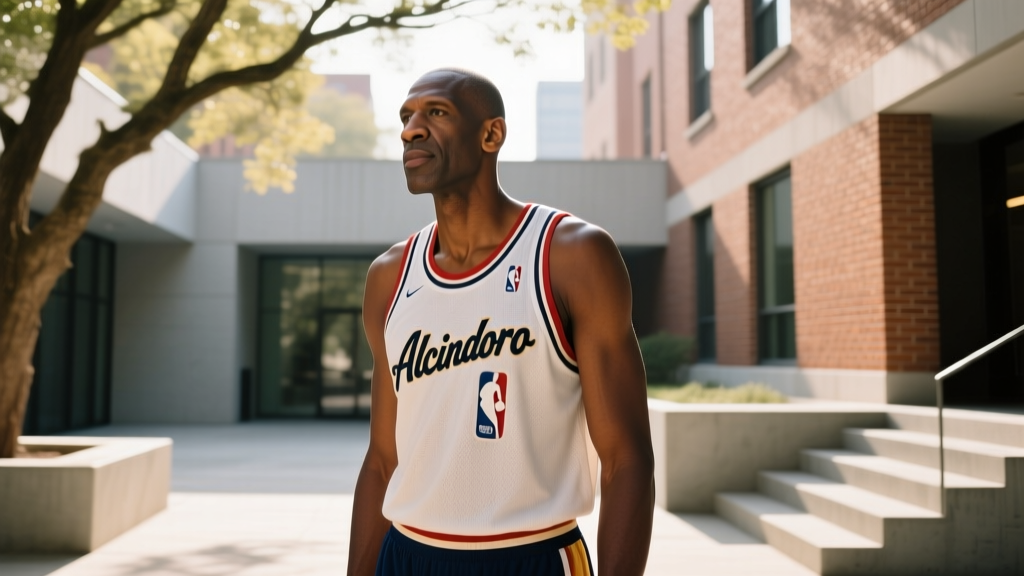
When analyzing the evolution of athlete personal branding, the Alcindor Bucks era represents a fascinating baseline for sports marketing and public perception. Before he became globally known as Kareem Abdul-Jabbar, Lew Alcindor dominated the NBA, leading the Milwaukee Bucks to a championship in 1971. However, his public persona was often misunderstood by the media of the 1970s, labeled as aloof simply because he refused to conform to the era's expectations of a smiling, compliant superstar. Today, as we compare vintage athletic stoicism with modern hyper-curated social media profiles, the legacy of his early career offers profound lessons. How does the intellectual, uncompromising authenticity of his youth compare to the alternative branding strategies of today's NBA stars? And more importantly, what can everyday users and aspiring creators learn from this comparison to build a more impactful Instagram bio and personal brand?
Quick Facts: The Man Behind the Legacy
| Full Name | Ferdinand Lewis Alcindor Jr. (Kareem Abdul-Jabbar) |
|---|---|
| Born | April 16, 1947 (New York City) |
| Nationality | American |
| Known For | NBA All-Time Scoring Leader, Milwaukee Bucks Legend, Author, Advocate |
| Social Media | @kareemabduljabbar (Instagram, X, Substack) |
Career Highlights: From Milwaukee to Los Angeles
To understand the branding of the man, one must understand the foundation of the myth. According to Basketball Reference, Lew Alcindor entered the NBA as the number one overall pick in the 1969 draft, selected by the Milwaukee Bucks. In just his second season, he led the Bucks to the 1971 NBA Championship, earning Finals MVP honors. It was during this Milwaukee tenure that he publicly changed his name to Kareem Abdul-Jabbar, a pivotal moment in athlete branding that prioritized personal truth and cultural identity over commercial palatability.
Following his trade to the Los Angeles Lakers in 1975, Kareem redefined athletic longevity. His signature 'skyhook' remains one of the most unguardable shots in sports history. He secured five more NBA championships in LA and retired in 1989 as the league's all-time leading scorer with 38,387 points—a record that stood for nearly four decades. Yet, unlike modern athletes who leverage every career milestone for immediate viral content, Kareem's career was defined by a quiet, almost academic dedication to the craft, creating a mystique that modern PR teams spend millions trying to artificially replicate.
Social Media Presence: The Intellectual Athlete
If you visit Kareem Abdul-Jabbar's Instagram or X (formerly Twitter) profiles today, you will not find locker room selfies, luxury car promotions, or viral dance trends. Instead, his social media presence operates as a digital salon for history, social justice, and pop culture. Citing his weekly columns for Time Magazine and his Substack newsletter, his platforms are extensions of his identity as an author and historian.
His posting style is highly educational. He frequently shares archival photos of the Harlem Renaissance, highlights forgotten Black historical figures, and advocates for Alzheimer's research and pancreatic cancer awareness. His follower engagement is uniquely respectful; the comment sections read less like a typical sports fandom and more like a university lecture hall. By treating his audience as intellectuals rather than mere consumers, he has built a deeply loyal, niche following that values substance over fleeting dopamine hits. This approach proves that an athlete's digital footprint can age gracefully, transitioning seamlessly from sports icon to cultural elder statesman.
Comparison Analysis: Authentic Legacy vs. Hyper-Curation
When we look at the alternatives available to modern athletes and creators, two distinct branding models emerge. The first is the 'Modern Influencer Athlete' model, characterized by high-frequency posting, lifestyle flexing, meme participation, and aggressive brand partnerships. This alternative guarantees massive short-term engagement and lucrative sponsorship deals but often leaves the individual vulnerable to cancel culture and audience fatigue once their athletic prime ends.
The second model is the 'Alcindor Alternative'—a strategy rooted in stoicism, intellectual authority, and long-form thought. During his Alcindor Bucks days, Lew refused to perform for the press, which hurt his immediate commercial appeal but preserved his authenticity. Today, this translates to using social media not as a megaphone for the ego, but as a curated gallery of one's actual interests and values. While the hyper-curated alternative might yield millions of TikTok views, the Alcindor alternative builds a sustainable, multi-generational brand that opens doors to publishing, filmmaking, and political advocacy long after retirement.
The Alcindor Bucks Blueprint: Substance Over Spectacle
What makes the historical branding of the Milwaukee Bucks era so relevant to your personal brand today? It is the concept of 'friction.' Modern social media encourages frictionless, easily digestible content. The Alcindor blueprint introduces positive friction—requiring the audience to read, think, and engage with complex ideas. For a personal brand, this means your bio and content should not just state what you do, but challenge how your audience thinks. It is the difference between an Instagram bio that reads 'Hustler | Crypto | Fitness' and one that reads 'Exploring the intersection of behavioral economics and endurance sports.' The latter demands attention and respect, mirroring the uncompromising identity Kareem established in 1971.
Personal Branding Takeaways for Your Profile
Whether you are an aspiring creator, a professional navigating LinkedIn, or an athlete building your digital footprint, the evolution from Lew Alcindor to Kareem Abdul-Jabbar offers actionable lessons for your social media bios and profiles:
- Define Your Core Pillars: Don't just list your job title. Like Kareem's focus on history and advocacy, use your Instagram bio to highlight your intellectual pursuits. Format: [Profession] | [Passion/Cause] | [Current Project].
- Embrace the 'Link-in-Bio' Strategy: Kareem uses his platforms to drive traffic to his Substack and books. Use a link aggregator to point followers toward long-form essays, portfolios, or charities you support, rather than just linking to your other social channels.
- Prioritize Evergreen Authority: Avoid tying your entire bio to current trends or slang. Use clean, authoritative language that will still make sense in five years. Words like 'Advocate,' 'Researcher,' or 'Builder' carry more long-term weight than 'Guru' or 'Ninja.'
- Leverage Archival Storytelling: In your Instagram Stories or Highlights, share the 'history' of your craft. Show the failures, the early drafts, and the research behind your work. Audiences connect with the struggle and the process, not just the polished final product.
Ultimately, the greatest lesson from his legacy is that true personal branding is not about convincing the world you are something you are not; it is about having the courage to present exactly who you are, even if the world isn't ready for it yet. By adopting a fraction of that uncompromising authenticity, your social media profiles will transcend digital noise and become a genuine reflection of your legacy.