When you hear the name Anastasia Romanov, you likely think of royal tragedy, enduring historical mystery, and Hollywood adaptations. But beyond the history books, the youngest daughter of Tsar Nicholas II possesses one of the most fascinating posthumous personal brands in digital history. Because she never had the chance to define her own narrative, her 'brand' has been fiercely contested, curated, and reimagined by historians, museums, and millions of fans across social media.
For modern creators, entrepreneurs, and professionals, the digital legacy of the Romanovs offers a masterclass in Comparison & Alternatives Analysis. How do you balance cold, hard facts with compelling storytelling? Do you present the 'archival' version of yourself, or the 'romanticized' alternative? In this deep dive, we analyze how the digital persona of Anastasia Romanov is managed across different platforms, comparing institutional authority with pop-culture mystique, and extracting actionable personal branding takeaways for your own Instagram bio and online presence.
Quick Facts: The Historical Profile
| Attribute | Details |
|---|---|
| Full Name | Grand Duchess Anastasia Nikolaevna Romanov |
| Born | June 18, 1901 (Peterhof, Russia) |
| Nationality | Russian |
| Known For | Youngest daughter of Tsar Nicholas II; enduring historical legacy and cultural mythos |
| Digital Presence | Represented by historical archives (e.g., @romanovs1918, @hermitage_museum) and global fan communities |
The Digital Footprint of Anastasia Romanov
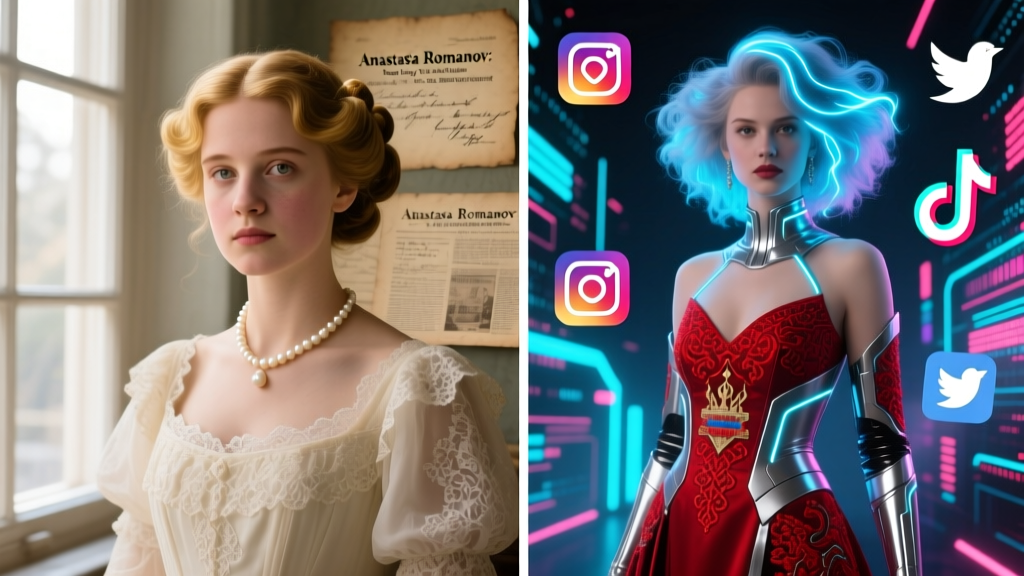
Unlike modern influencers who meticulously craft their own Instagram bios, the social media presence of Anastasia Romanov is entirely curated by third parties. This creates a unique digital ecosystem divided into two main alternatives: The Institutional Archive and The Pop-Culture Aesthetic.
On platforms like Instagram and TikTok, historical archive pages (such as those dedicated to the 1918 Yekaterinburg events or official museum accounts like the State Hermitage) treat her profile with academic rigor. Their 'bios' are structured to educate, using precise dates, geographical tags, and links to peer-reviewed articles or digital exhibits. The tone is objective, respectful, and grounded in verified history.
Conversely, the alternative is the vast network of pop-culture fan pages and 'royalcore' aesthetic accounts. These profiles craft a highly romanticized bio for Anastasia. They lean heavily into the 'what-if' mystery, utilizing sepia-toned filters, poetic quotes, and emojis (👑🕊️🥀). Their engagement metrics often dwarf those of institutional pages because they tap into emotion, nostalgia, and the universal human fascination with unresolved mysteries. By comparing these two digital alternatives, we can uncover profound lessons about how to structure our own personal brands.
Comparison Analysis: Archive vs. Aesthetic Bios
When building your own personal brand, you often face the same crossroads as the curators of the Romanov legacy. Do you lean into the factual archive, or the aesthetic myth? Let us compare the two approaches to social media bios.
Alternative A: The Institutional Bio (The 'Archive' Approach)
Museum pages and historical societies use a bio structure that prioritizes authority and clear navigation. A typical archival bio includes:
- Clear Identification: 'Official archive of the Romanov family history.'
- Credentialing: 'Curated by historians | Est. 1918.'
- Call to Action (CTA): 'Explore the digital exhibit below 👇' with a link to a museum database.
Branding Verdict: This approach builds immense trust and attracts high-value, serious engagement. It is the ideal alternative for LinkedIn profiles, professional portfolios, and B2B Instagram accounts where credibility is your primary currency.
Alternative B: The Storyteller Bio (The 'Pop-Culture' Approach)
Fan pages and aesthetic curators use a bio structure that prioritizes mood and community. A typical aesthetic bio includes:
- Evocative Hook: 'The lost Grand Duchess | A story frozen in time.'
- Visual Anchors: Heavy use of thematic emojis and curated highlight covers.
- Community CTA: 'Join the historical society | Share your theories 💌'
Branding Verdict: This approach drives rapid follower growth, high shareability, and viral potential. It is the best alternative for lifestyle influencers, artists, and creators whose brand relies on emotion, aesthetics, and parasocial connection.
The 'Anna Anderson' Effect: Authenticity in Personal Branding
No analysis of Anastasia Romanov is complete without addressing the most famous 'alternative' to her identity: Anna Anderson. For decades, Anderson claimed to be the surviving Grand Duchess, building a massive following and convincing high-society figures of her royal brand. It wasn't until decades later, and ultimately the 2007 DNA testing confirmed by institutions like National Geographic, that the imposter myth was definitively put to rest.
In the realm of personal branding, the 'Anna Anderson Effect' is a cautionary tale about brand authenticity. In the digital age, it is tempting to fabricate an alternative persona—exaggerating your income, faking a luxury lifestyle, or claiming expertise you haven't earned. You might build a quick following based on this romanticized myth, but the internet's collective 'DNA test' (audience scrutiny, background checks, and the test of time) will eventually expose the facade.
The most resilient personal brands are built on the unshakeable foundation of who you actually are. You can use the 'aesthetic' approach to make your truth more engaging, but the core facts of your 'archive' must be authentic.
Personal Branding Takeaways: Crafting Your Own Mystique
What can a modern professional or creator learn from a Grand Duchess who lived a century before the invention of the internet? Here are three actionable takeaways to elevate your social media bios:
- Master the 'Open Loop' (The Power of Mystery): The enduring brand of Anastasia Romanov was fueled by the mystery of her fate. While you shouldn't fake a mystery, you can use 'open loops' in your bio to create intrigue. Instead of a static title like 'Marketing Manager,' try 'Scaling SaaS brands from $1M to $10M | Building my next venture in public.' This gives the audience a reason to follow your ongoing story.
- Curate Your Visual Archive: Historical pages use consistent sepia tones and vintage borders to instantly signal their niche. Your Instagram Highlights and profile grid should have a cohesive visual alternative that immediately tells visitors what your brand is about before they even read your bio text.
- Blend Authority with Accessibility: The most successful historical pages blend the authority of the archive with the accessibility of modern storytelling. Use your bio's name field for SEO keywords (Authority), but use the bio text to show your personality and quirks (Accessibility).
Alternative Bio Formulas for Modern Creators
Ready to rewrite your own profile? Choose the alternative that best fits your current branding goals.
Formula 1: The Modern Archivist (For Professionals & Consultants)
[Name] | [Industry] Historian & Strategist
📊 Decoding [Niche] data for [Target Audience]
🏛️ Featured in [Publication 1] & [Publication 2]
👇 Access the free case study archive
[Link]
Formula 2: The Aesthetic Storyteller (For Creators & Artists)
[Name] ✨ Romanticizing the [Niche] process
🎨 Turning caffeine into [Your Craft]
🕊️ Based in [City] | Dreaming in [Color/Aesthetic]
💌 Join the creative society below
[Link]
Conclusion
The digital legacy of Anastasia Romanov proves that a powerful personal brand outlives its creator, provided it is rooted in compelling storytelling and meticulous curation. By comparing the institutional archive with the pop-culture aesthetic, you can strategically choose how to present your own narrative to the world. Whether you opt for the authoritative credibility of the historian or the emotional resonance of the storyteller, ensure that your digital footprint remains authentically yours.
Sources & Further Reading
- The State Hermitage Museum: Digital archives and historical curation of the Romanov family legacy.
- National Geographic (2008): Coverage of the DNA identification of the Romanov remains, resolving the historical mystery.
- Montefiore, S. S. (2016): The Romanovs: 1613–1918. Knopf. (For comprehensive historical context on the family's public image and legacy).