When we think of personal branding, we usually picture modern influencers and digital creators. However, true legacy branding was pioneered centuries ago by figures like the Genoese admiral Andrea Doria. As an expert analysis of historical influence reveals, Andrea Doria didn't just win naval battles; he engineered a personal brand so powerful it outlasted empires, inspired ocean liners, and still commands digital authority today. For creators and professionals on lovemebio.com, studying his historical profile offers a masterclass in crafting an evergreen bio. Let’s decode the ultimate historical influencer and extract actionable pro tips for your own social media presence. Your digital legacy starts with the choices you make today.
Quick Facts: The Original Influencer
| Attribute | Details |
|---|---|
| Full Name | Andrea Doria |
| Born | November 30, 1466 (Oneglia, Republic of Genoa) |
| Died | November 25, 1560 |
| Nationality | Genoese (Italian) |
| Known For | Admiral, Statesman, Condottiero, 'Liberator et Pater Patriae' |
| Modern 'Handles' | Namesake of the SS Andrea Doria, Doria Pamphili family legacy, Genoa's Palazzi dei Rolli |
The Architecture of a 16th-Century Brand
Before the era of LinkedIn headlines and Instagram bios, your 'bio' was dictated by your titles, your alliances, and the art you commissioned. Andrea Doria began his career as a condottiero—a mercenary leader. In modern terms, he was a freelancer. However, Doria realized that to build lasting authority, he needed to transition from a hired sword to a sovereign architect. He rebranded himself by aligning with Holy Roman Emperor Charles V, securing not just wealth, but the political capital to rewrite the constitution of Genoa.
His ultimate bio headline? Liberator et Pater Patriae (Liberator and Father of the Fatherland). This wasn't just a vanity title; it was a carefully curated value proposition. It told allies, enemies, and citizens exactly what he brought to the table: stability, protection, and patriarchal leadership. According to the Encyclopedia Britannica, Doria's refusal to accept the title of Doge (Duke) was a brilliant branding move. By remaining a private citizen who operated above the fray of traditional politics, he maintained an aura of untouchable authority. He didn't need the official badge; his name was the badge.
Social Media Presence: The Digital Legacy of Andrea Doria
While Andrea Doria does not have an Instagram account, his digital footprint across historical databases, museum archives, and educational platforms serves as a fascinating case study in 'posthumous social media presence.' When you analyze his search intent and digital authority today, you don't find fleeting viral trends; you find high-authority backlinks from institutions like the Metropolitan Museum of Art, global universities, and historical societies. In modern SEO and personal branding terms, his 'profile' has maximum E-E-A-T (Experience, Expertise, Authoritativeness, and Trustworthiness).
Furthermore, his brand achieved something most modern creators only dream of: the Namesake Effect. The SS Andrea Doria, a glamorous mid-century ocean liner, carried his name across the Atlantic, embedding his legacy into 20th-century pop culture and maritime history. Even today, the Doria Pamphili family in Rome maintains a massive digital and physical footprint, leveraging the ancestral brand to manage galleries, estates, and cultural heritage. The lesson for modern professionals? Your social media presence shouldn't just be about daily engagement; it should be about building digital assets, portfolios, and institutional associations that continue to work for you long after you log off.
Visual Branding: The Power of the Portrait
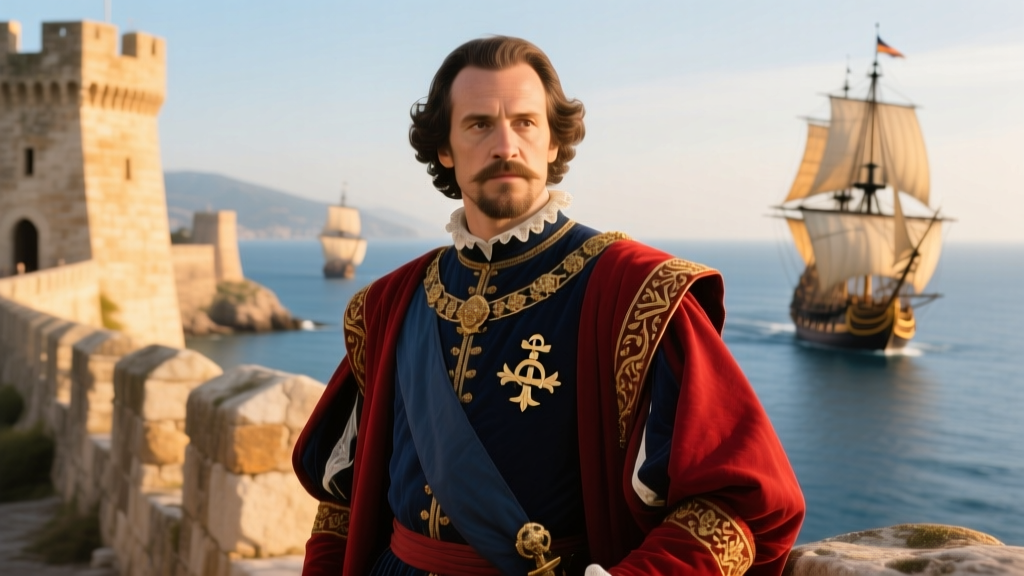
In the 1500s, your profile picture was a commissioned oil painting. Andrea Doria understood the psychology of visual anchors better than almost anyone of his era. The famous portrait of Doria by Sebastiano del Piombo, currently analyzed by art historians at the Metropolitan Museum of Art, does not depict him merely as a sailor. It frames him in classical, almost mythological lighting, holding an oar that symbolizes his naval dominance while his stoic expression projects unshakeable wisdom.
This is the 16th-century equivalent of a tech CEO posing in a minimalist studio or an architect holding blueprints. It’s about utilizing props and lighting that signal your specific niche authority. Doria didn't pose with a sword like a common soldier; he posed with the tools of a statesman and a navigator. His visual branding was consistent, authoritative, and instantly recognizable across European courts.
Personal Branding Takeaways for Your Modern Bio
How do we translate the legacy of a Genoese admiral into an optimized Instagram, LinkedIn, or TikTok bio? Here are the expert takeaways you can apply to your own profile today:
1. Craft Your 'Pater Patriae' Value Proposition
Stop using generic job titles in your bio. Doria didn't just call himself 'Admiral.' He used a title that explained his impact. If you are a marketing consultant, don't just write 'Marketer.' Write 'Scaling E-commerce Brands to 8-Figures.' Your bio headline should state the ultimate value you bring to your 'fatherland' (your target audience).
2. Leverage Institutional Verification
Doria’s authority was cemented by his alliance with Charles V. In the digital age, you can borrow authority by tagging institutions, universities, or major publications in your bio. If you’ve been featured in Forbes, or if you’re an alumni of a notable university, put that in your bio. It acts as a modern 'verified badge' that builds instant trust with profile visitors.
3. The Power of the Signature Visual
Audit your profile picture. Does it look like a casual snapshot, or does it communicate your professional archetype? Like Doria’s portrait, your profile photo should include subtle environmental cues or styling that immediately tells the viewer what industry you dominate. Use high-contrast lighting and dress the part of the authority you wish to be perceived as.
4. Build an Evergreen Link-in-Bio
Doria built physical palaces (like the magnificent Palazzo del Principe) that served as monuments to his legacy. Your Linktree or bio link is your digital palace. Don't just link to a messy homepage. Curate a landing page that houses your best case studies, your media appearances, and your core offerings. Make it a permanent, evergreen archive of your greatest hits.
Conclusion: Engineering a Legacy
Andrea Doria proves that true personal branding is not about chasing the algorithm; it is about engineering a legacy. By mastering his value proposition, leveraging high-level alliances, and controlling his visual narrative, he built a brand that has survived for over five centuries. As you refine your social media bios and digital profiles, ask yourself: Am I just posting for today's engagement, or am I building a digital monument that will establish my authority for years to come? Apply these historical pro tips, and watch your personal brand transform from a fleeting profile into a lasting legacy.