When analyzing the foundations of modern personal branding, few historical figures command the stage quite like the Annie Oakley American legend. Born Phoebe Ann Mosey in 1860, she engineered one of the most recognizable and enduring personal brands of the 19th and 20th centuries. Long before the era of Instagram bios, verified checkmarks, and viral TikTok campaigns, Oakley utilized staged photography, carefully crafted calling cards, and relentless press tours to build an empire. She was not just a performer; she was a meticulous brand manager who understood the power of a visual signature and a compelling narrative. In this critical review, we examine the pros, cons, and enduring legacy of her brand strategy, extracting actionable personal branding and bio lessons for modern creators, influencers, and entrepreneurs looking to craft an unforgettable digital presence.
Quick Facts: The Woman Behind the Myth
| Attribute | Details |
|---|---|
| Full Name | Phoebe Ann Mosey (Professionally: Annie Oakley) |
| Born | August 13, 1860 (Darke County, Ohio) |
| Died | November 3, 1926 |
| Nationality | American |
| Known For | Exhibition sharpshooting, Buffalo Bill's Wild West Show, female empowerment |
| Historical 'Bio' Equivalent | 'Miss Annie Oakley, Champion Rifle Shot' Calling Cards |
| Modern Digital Hubs | Smithsonian Archives, National Women's History Museum |
Career Highlights & The Original Press Kit
To understand the Annie Oakley American brand, we must first look at her career trajectory, which reads like a modern viral success story. Oakley began hunting game at age eight to help feed her impoverished widowed mother and siblings. By selling surplus game to local merchants and hotels, she not only paid off her family's mortgage but also caught the attention of Francis E. Butler, a traveling showman and champion marksman. After famously defeating Butler in a shooting match, the two married and formed a professional partnership that would change entertainment history.
Her big break came when they joined Buffalo Bill's Wild West show in 1885. Oakley became the star attraction, performing feats that defied belief, such as shooting the ashes off a cigarette held by the Crown Prince of Germany and splitting playing cards edge-on. Sitting Bull, the legendary Lakota leader who briefly toured with the show, was so astounded by her skills that he symbolically adopted her, giving her the nickname 'Little Sure Shot' (Watanya Cicilla). This moniker became a cornerstone of her personal brand, adding an aura of mystique and authenticity that press agents eagerly distributed to newspapers worldwide. She was not just a shooter; she was a cultural phenomenon who shattered Victorian gender norms while maintaining a polite, approachable public persona.
Digital Legacy & Online Presence Analysis
Because Oakley passed away in 1926, she does not have a personal Instagram, X, or TikTok account. However, analyzing her 'Social Media Presence' requires looking at how her estate, historians, and pop culture curate her digital footprint today. If Oakley were alive to write an Instagram bio, it would undoubtedly be a masterclass in brevity and authority. Historically, her equivalent of a social media bio was her calling card, which simply read: 'Miss Annie Oakley, Champion Rifle Shot.' It was clear, authoritative, and left no room for confusion about her value proposition.
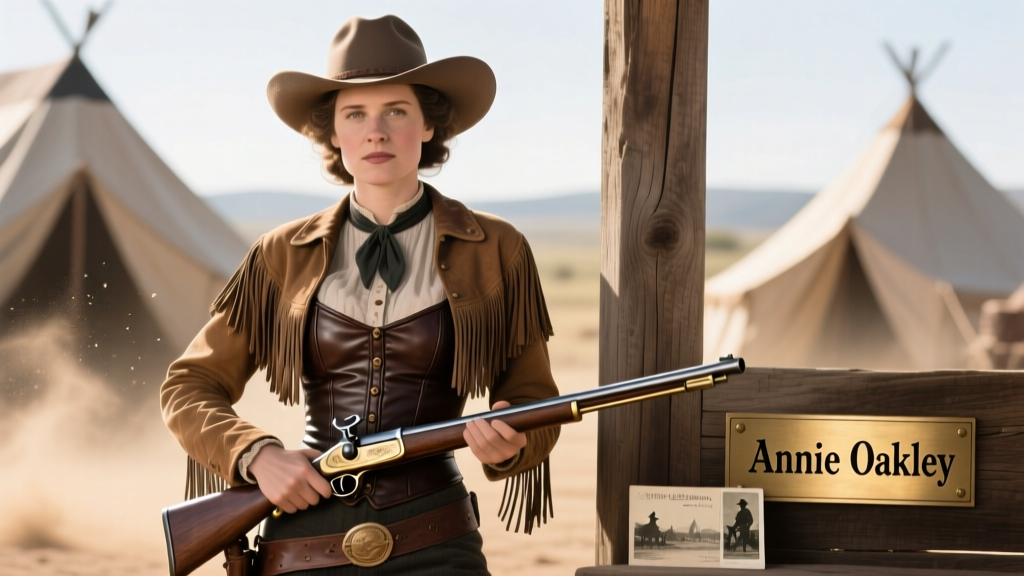
Today, her digital legacy is managed by institutions like the Smithsonian and various Western heritage museums, which act as her modern social media managers. On platforms like YouTube and Instagram, hashtags related to Oakley generate millions of impressions. The posting style of her digital archive relies heavily on high-contrast archival photography, emphasizing her iconic fringed buckskin outfits and the Stetson hat. Follower engagement in historical and feminist circles peaks around discussions of her advocacy for women's self-defense and her fierce legal battles against tabloid rumors.
Modern influencers, historical reenactors, and Western fashion creators frequently use her aesthetic as a shorthand for female empowerment, precision, and rugged individualism. Her online presence proves a vital branding lesson: a strong, consistent visual identifier (her silhouette with a rifle) transcends the need for daily content creation. Her brand remains highly engaging because it stands for something larger than just a skill; it represents independence.
Critical Review: The Annie Oakley American Brand
To provide a comprehensive critical review, we must weigh the strengths and weaknesses of how the Annie Oakley American persona was built and maintained.
The Pros: Mastery of Visuals and Narrative
First, Oakley was a pioneer of visual consistency. Long before the concept of an Instagram grid, she ensured that her promotional posters, cabinet cards, and press photos featured a cohesive aesthetic. She controlled her narrative by actively participating in the creation of her press materials, ensuring her image was one of refined femininity combined with unmatched lethal precision. Furthermore, she leveraged her platform for advocacy, famously offering to train a company of lady sharpshooters for the US military during the Spanish-American War and teaching thousands of women how to handle firearms for self-defense. Her brand had a mission, which fostered deep audience loyalty.
The Cons: Platform Dependency and Myth vs. Reality
However, the Oakley brand was not without its critical flaws. The most significant con was her platform dependency. For the prime of her career, her brand was inextricably tied to Buffalo Bill's Wild West show. When the show faced financial ruin and shifting public tastes, Oakley struggled to maintain her brand's momentum outside of that specific infrastructure. Additionally, the myth of Annie Oakley often overshadowed the real woman. The public demanded a flawless, romanticized frontier heroine, which left her vulnerable when real-life scandals struck. This culminated in a massive branding crisis when William Randolph Hearst's newspapers falsely reported she was serving time in a penitentiary for theft. Though she won dozens of defamation lawsuits, the stress and financial toll of defending her personal brand nearly ruined her, highlighting the dangers of a public persona that lacks a protective boundary between the character and the private individual.
Personal Branding Takeaways for Modern Creators
What can today's digital creators, entrepreneurs, and professionals learn from the Annie Oakley American legacy? Here are the core takeaways to apply to your own social media bios and personal branding strategies:
- Craft a Calling Card Bio: Oakley's historical calling card was direct and authoritative. Your Instagram or LinkedIn bio should function the same way. Strip away the fluff and emojis if they do not serve your core message. State exactly who you are, what your championship skill is, and what value you bring to your audience.
- Establish a Visual Signature: Oakley's fringed jackets and Stetson hat made her instantly recognizable even in low-resolution newspaper prints. In a crowded digital feed, you need a visual anchor. Whether it is a specific color palette, a signature accessory, or a distinct editing style, ensure your audience can recognize your content before they even read your handle.
- Beware of Platform Dependency: Oakley's reliance on Buffalo Bill's show is a historical warning against building your entire brand on a single platform or under another creator's umbrella. Always own your audience data (like an email list or a personal website) so that algorithm changes or platform collapses do not erase your livelihood.
- Align Your Brand with a Mission: Oakley was not just shooting glass balls; she was advocating for women's independence and self-reliance. Audiences today connect with creators who stand for a deeper purpose. Use your platform to advocate for a cause that aligns with your skills, transforming passive followers into an active, loyal community.
Sources and Further Reading
To dive deeper into the historical facts and branding evolution of this iconic figure, the following resources were consulted: