
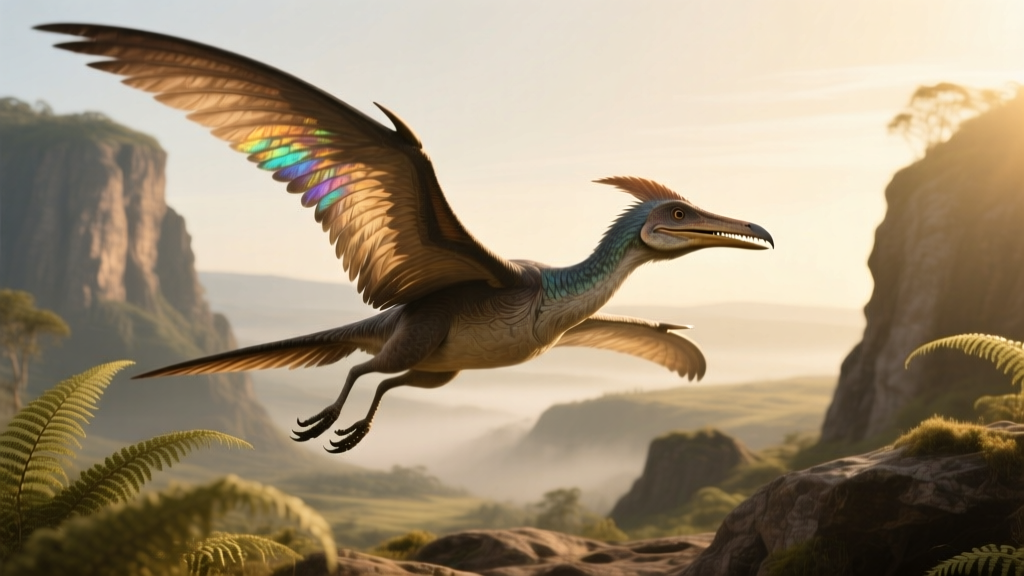
When you think of paleontology's biggest stars, one name consistently dominates the feed, the museum halls, and the textbooks: Archaeopteryx Dino. Properly capitalized as a person's name by its most devoted fans and science communicators, Archaeopteryx Dino represents the ultimate celebrity of the Jurassic period. But with massive fame comes massive misinformation. As a science communicator, educator, or personal brand, how do you handle a legacy that spans 150 million years? In this deep dive, we are tackling the most frequent FAQs and common misconceptions surrounding this prehistoric icon. Whether you are a paleo-nerd or a branding strategist looking to decode how a literal fossil maintains top-tier engagement, understanding the brand of Archaeopteryx Dino offers masterclasses in mystery, authority, and visual storytelling. Let's separate the fossilized facts from the fictional fluff and see what you can apply to your own social media bio.
Quick Facts: The Profile of a Prehistoric Icon
| Attribute | Details |
|---|---|
| Full Name | Archaeopteryx Dino (Archaeopteryx lithographica) |
| Born | Late Jurassic Period (~150 Million Years Ago) |
| Nationality | Bavarian Origin / Global Scientific Icon |
| Known For | Transitional fossil linking non-avian dinosaurs and birds |
| Social Media Handles | @NHM_London (Custodian), @MfN_Berlin, #Archaeopteryx |
FAQ & Common Misconceptions About Archaeopteryx Dino
Because Archaeopteryx Dino has been the poster child for evolutionary biology since the 1800s, the public perception of this creature is clouded by outdated textbooks and pop-culture myths. Let's address the most common questions that flood the comments sections of natural history museums.
Misconception 1: It was the absolute 'first bird'.
For over a century, Archaeopteryx Dino held the undisputed title of the world's first bird. However, modern paleontology has complicated this family tree. Recent discoveries of older or contemporaneous feathered dinosaurs in China, such as Xiaotingia and Anchiornis, prove that the 'bird-like' traits were shared among many theropod lineages. Today, science communicators brand Archaeopteryx not as the singular grandfather of all modern birds, but as the most iconic transitional fossil. It is a crucial snapshot of evolution in action, rather than the definitive starting line.
Misconception 2: It was entirely grounded and couldn't fly.
A common internet myth suggests that because it had teeth and a bony tail, Archaeopteryx Dino was merely a glider or a ground-dwelling runner. This is false. A landmark 2018 study published in Nature analyzed the cross-sectional geometry of its wing bones, revealing that they were adapted for active, powered flight. While it may not have been capable of the long-distance migration seen in modern waterfowl, Archaeopteryx Dino could absolutely take to the skies, utilizing burst-flight capabilities to escape predators or navigate the dense Jurassic archipelagos of Solnhofen.
Misconception 3: It looked exactly like a modern bird with scales.
Pop culture often depicts Archaeopteryx Dino as a scaly reptile with modern pigeon feathers glued to its arms. In reality, its plumage was highly complex. Fossil evidence shows it possessed asymmetrical flight feathers (crucial for aerodynamics) and even 'trousers' of pennaceous feathers on its hind legs. Its branding in modern paleo-art reflects a fluffy, dynamic, and distinctly dinosaurian creature, completely reshaping how museums present it to the public.
Social Media Presence & Digital Branding Analysis
While a 150-million-year-old fossil doesn't manage its own Instagram account, the digital brand of Archaeopteryx Dino is meticulously curated by the world's top natural history institutions. The Museum für Naturkunde in Berlin and the Natural History Museum in London act as its 'management team,' leveraging the fossil to drive massive online engagement.
Visual Strategy: The social media presence relies heavily on high-contrast macro photography. By zooming in on the delicate feather imprints preserved in the Solnhofen limestone, museums create a sense of intimacy and awe. This visual hook stops users from scrolling and encourages them to read the detailed, educational captions.
Engagement Tactics: Institutions frequently use the 'Team Bird vs. Team Dino' debate in their Instagram Stories and Twitter polls to drive algorithmic engagement. By leaning into the FAQ format and actively debunking myths in carousel posts, these accounts position themselves as authoritative yet accessible voices. The hashtag #Archaeopteryx serves as a centralized hub for paleo-artists, educators, and enthusiasts to share fan art, 3D renders, and educational threads, effectively creating a user-generated content (UGC) ecosystem around the fossil.
Career Highlights: The 'Discography' of Specimens
Just as a musician has a discography of albums, the career of Archaeopteryx Dino is defined by its physical 'releases'—the fossil specimens that have shaped scientific history.
- The London Specimen (1861): The debut single. Discovered shortly after Darwin published On the Origin of Species, this specimen provided the exact missing link the scientific community was craving. It currently resides at the Natural History Museum in London.
- The Berlin Specimen (1874): The platinum record. Widely considered the most beautiful and complete specimen, featuring the iconic skull and pristine feathering. It is the crown jewel of the Museum für Naturkunde in Berlin and the most frequently photographed specimen for digital media.
- The Thermopolis Specimen (2005): The modern remaster. This exceptionally preserved specimen provided crucial new data about the creature's anatomy, proving that certain traits previously thought to be unique to birds were present in a wider array of theropods.
Personal Branding Takeaways for Your Own Profile
You might not be a Jurassic-era theropod, but the digital strategy surrounding Archaeopteryx Dino offers brilliant, actionable takeaways for crafting your own Instagram bio and personal brand.
1. Embrace the 'Transitional' Identity
Archaeopteryx Dino's entire brand is built on bridging two seemingly different worlds: reptiles and birds. In your own bio, don't be afraid to highlight your dual expertise. A bio that reads 'Data Scientist 📊 | Abstract Painter 🎨' creates immediate intrigue. It tells your audience that you operate at the intersection of logic and creativity, making you stand out in a sea of single-niche profiles.
2. Leverage Mystery and High-Quality Visuals
Museums don't just post wide shots of the rock; they post extreme macro details of the feathers to create mystery and awe. Apply this to your profile grid. Use high-quality, close-up visuals of your work, your tools, or your process. Let your bio be the 'wide shot' that explains who you are, while your content provides the intricate details that keep followers engaged.
3. Address Misconceptions Head-On
The most successful science communicators use the 'FAQ' format to tackle industry myths. Use your Instagram Highlights to create a dedicated 'Myths vs. Facts' or 'FAQ' section. If you are a fitness coach, debunk diet myths. If you are a freelance designer, explain why 'AI won't replace your job.' Addressing misconceptions establishes instant authority and builds trust with your audience.
4. Curate Your 'Specimens' (Portfolio)
Just as the Berlin Specimen is the crown jewel of the Archaeopteryx brand, your Linktree or portfolio should highlight your absolute best work. Don't bury your lead. Pin your top three posts to your Instagram grid and ensure your bio link directs users to a curated, high-impact portfolio that showcases your unique 'transitional' skills.
Sources & Further Reading
- Voeten, U. et al. (2018). Wing bone geometry reveals active flight in Archaeopteryx. Nature Communications.
- Smithsonian Magazine: The Evolutionary Mystery of Archaeopteryx.
- Museum für Naturkunde Berlin: Official digital archives and specimen branding guidelines.