When we think of influential brands that have shaped modern conversations around family, wellness, and science, few topics carry as much weight as Artificial Insemination. While not a traditional celebrity with a single face, the concept and medical practice of Artificial Insemination has become a massive cultural touchstone, boasting a rich history and a highly curated modern presence on platforms like Instagram. In this profile, we explore the fascinating origin story of this reproductive milestone, how fertility advocates and clinics brand the practice online, and what personal branding lessons wellness creators can learn from its digital evolution.
The Origin Story of Artificial Insemination
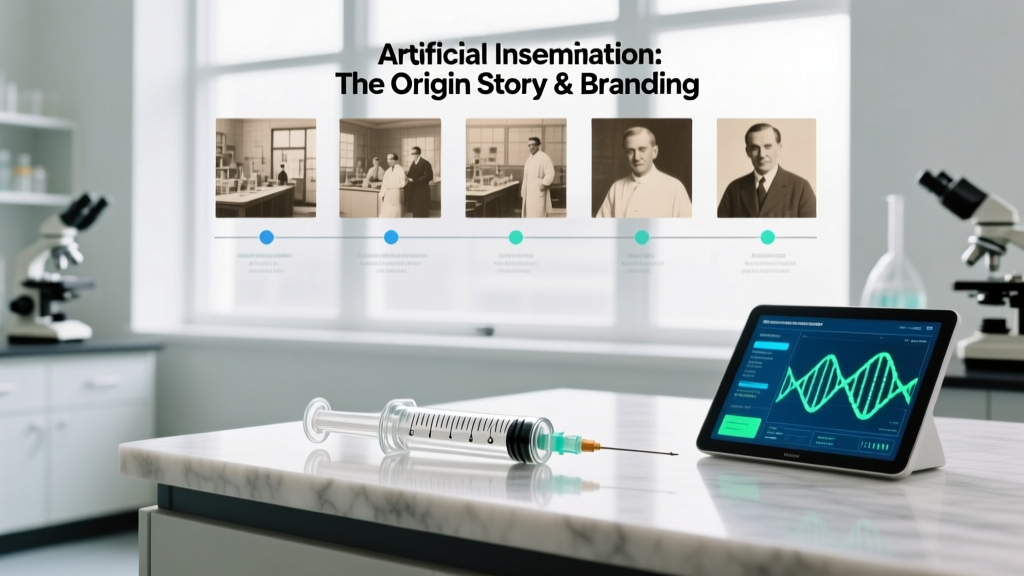
To understand the modern digital branding of fertility treatments, we must first look at the history and origin story of Artificial Insemination. The roots of this practice stretch back much further than modern wellness influencers might suggest. The earliest documented scientific experiments were conducted by Italian physiologist Lazzaro Spallanzani in the 1780s, who successfully performed the procedure on canine subjects. However, the true origin story for human application is widely credited to Scottish anatomist and surgeon John Hunter.
In 1790, Hunter successfully helped a linen draper's wife conceive using a syringe, marking a monumental, albeit highly controversial, leap in reproductive medicine. For over a century, the practice remained largely hidden due to intense societal and religious stigmas. It was often performed in secret, and the branding of the procedure was virtually non-existent, shrouded in medical confidentiality and shame.
It wasn't until the mid-to-late 20th century that the terminology and public perception began to shift. The rebranding of the procedure evolved from a secretive medical intervention to an empowering choice for diverse families. Pioneers in reproductive medicine began publishing success rates, slowly normalizing the conversation. Today, the brand of Artificial Insemination—often referred to clinically as Intrauterine Insemination (IUI)—is one of hope, scientific triumph, and inclusive family building. It has transitioned from a taboo medical secret to a celebrated pillar of modern reproductive freedom.
Quick Facts: The Procedure's Profile
| Attribute | Details |
|---|---|
| Full Name | Artificial Insemination (Intrauterine Insemination / IUI) |
| Origin Date | 1790 (First documented human case by Dr. John Hunter) |
| Origin Location | Scotland / Italy (Early scientific foundations) |
| Known For | Fertility treatment, reproductive science, family planning |
| Social Media Handles | #IUIJourney, #ArtificialInsemination, #FertilityBrand |
Social Media Presence: Branding Fertility Online
How does a medical procedure maintain a social media presence? In the digital era, the brand of Artificial Insemination is carried by a network of fertility clinics, reproductive endocrinologists, and patient advocates. On Instagram, the presentation of IUI and fertility treatments has undergone a massive rebranding.
Historically, medical marketing was sterile, clinical, and intimidating. Today, fertility clinics use their Instagram bios to project warmth, empathy, and success. A typical top-tier fertility clinic bio will include a clear value proposition (e.g., 'Helping you build your family 🌱'), board-certified credentials for E-E-A-T trust, and a Linktree directing users to IUI success stories and consultation bookings.
The posting style surrounding Artificial Insemination relies heavily on educational carousels, myth-busting reels, and emotional reveal videos. Influencers and advocates who share their #IUIJourney use highly engaging, vulnerable storytelling. They document the hormone injections, the waiting periods, and the ultimate results. This transparency creates immense follower engagement. The community rallies around shared vulnerability, turning a clinical procedure into a deeply human, community-driven narrative.
The Anatomy of a Modern Fertility Bio
Let's analyze the specific bio choices of modern fertility advocates who champion this cause. A successful personal brand in the fertility space requires a delicate balance of medical authority and emotional accessibility.
Consider the use of the Linktree or bio-link ecosystem. Top fertility brands do not just link to a generic homepage. Their bio links route directly to 'IUI Success Stories,' 'Financial Planning for Fertility,' and 'LGBTQ+ Family Building Guides.' This strategic bio-link routing reduces friction and immediately serves the specific emotional and logistical needs of the user. For personal brands, this means your bio link should never be a static homepage; it must be a dynamic menu that reflects your most valuable, niche-specific content pillars.
One of the most fascinating recent shifts in the digital branding of Artificial Insemination is the clinical pivot from the acronym 'AI' to 'IUI' (Intrauterine Insemination). For decades, medical literature used 'AI' to denote artificial insemination. However, with the explosive rise of Artificial Intelligence in the 2020s, fertility clinics and advocates had to rapidly rebrand their social media bios and hashtags to avoid algorithmic confusion. This demonstrates a crucial lesson in personal branding: adaptability. When cultural lexicons shift, your bio and terminology must evolve to maintain clarity and authority.
Furthermore, modern branding requires acknowledging all family structures. Bios now prominently feature 'LGBTQ+ Family Building' and 'Single Mothers by Choice,' ensuring that the origin story of Artificial Insemination continues to evolve into a tool for universal inclusivity. This inclusive language in the bio immediately signals to marginalized groups that they are safe and welcome in this digital space.
Personal Branding Takeaways for Wellness Creators
What can personal brands, wellness coaches, and digital creators learn from the history and digital branding of Artificial Insemination?
Demystify the Complex: The most successful fertility brands take highly complex, intimidating medical jargon and break it down into digestible, aesthetically pleasing Instagram carousels. If your niche is complicated, your bio and content should act as a friendly translator. Use your bio's name field to include searchable, plain-language keywords rather than obscure industry titles.
Embrace Vulnerability as a Brand Pillar: The engagement surrounding the #IUIJourney proves that audiences connect with struggle and triumph, not just polished perfection. Sharing the behind-the-scenes of your personal or professional journey builds deep parasocial trust. Your bio should hint at the real, human element of your work, not just your corporate achievements.
Curate Your Community Shorthand: Using specific emojis (🌱, 🧬, 🍼) and community-recognized acronyms in your bio instantly signals to your target audience that you are an insider. It saves precious character space and builds immediate rapport. When users see 'REI' or 'TTC' (Trying To Conceive) in a bio, they immediately recognize the creator's authority and shared experience, bypassing the need for lengthy introductions.
Sources & Further Reading
- American Society for Reproductive Medicine (ASRM) - Guidelines and history on IUI and fertility treatments.
- Mayo Clinic - Clinical overview of Intrauterine Insemination.
- National Center for Biotechnology Information (NCBI) - Historical perspectives on the origin of artificial insemination.