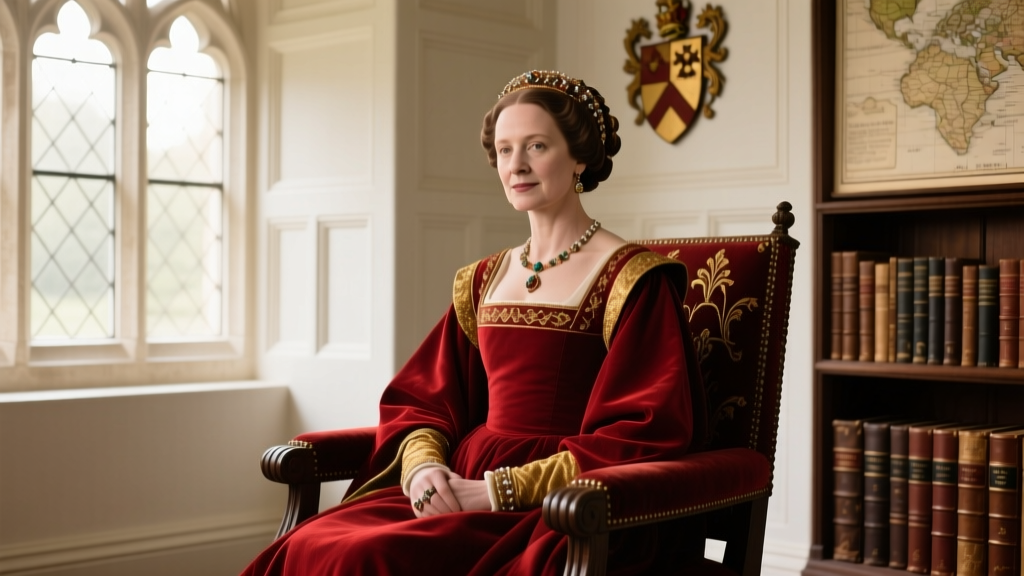
When modern creators study personal branding, they rarely look to the Tudor court. Yet, Catherine Parr executed one of history's most brilliant rebranding strategies. As the sixth and final wife of Henry VIII, she didn't just survive a notoriously lethal monarch; she thrived, authored books, and shaped the future of England. In this comparison and alternatives analysis, we break down the Catherine Parr brand against the 'alternatives'—the other wives of Henry VIII. By examining her historical legacy and how she is represented on modern social media by historical custodians, we uncover timeless personal branding takeaways you can apply to your own digital profile today.
Quick Facts: The Original Tudor Survivor
| Attribute | Details |
|---|---|
| Full Name | Catherine Parr |
| Born | 1512, Kendal, Westmorland, England |
| Nationality | English |
| Known For | 6th Wife of Henry VIII, First English female author to publish under her own name, Queen Regent |
| Modern Digital Custodians | @TheTudorSociety, @sixthemusical, @hrhpalaces (Historic Royal Palaces) |
The Catherine Parr Brand: Intellect and Adaptability
Before Catherine Parr married Henry VIII in 1543, she was a twice-widowed noblewoman with a reputation for piety and intelligence. Her core brand identity was not built on youthful glamour or political dynastic wealth, but on intellectual authority and nurturing stability. She became a stepmother to Mary, Elizabeth, and Edward, fostering their education and reconciling them with their father.
Crucially, Catherine Parr was the first English woman to publish a book under her own name. Her 1545 work, Prayers or Meditations, and her 1547 theological text, The Lamentation of a Sinner, cemented her brand as a scholar and a thought leader. In modern terms, she didn't just rely on her 'marital status' for relevance; she built an independent portfolio of work that established her as an authority in her niche. According to the English Heritage archives, her influence extended to acting as Queen Regent in 1544 while Henry was on military campaigns in France, proving her capability as an executive leader.
Comparison and Alternatives: Parr vs. Boleyn vs. Aragon
To understand why the Catherine Parr brand was so successful, we must compare it to the 'alternatives'—the branding strategies of Henry's previous wives. Each wife represented a different archetype, with varying degrees of long-term success.
Alternative 1: Anne Boleyn (The Disruptor)
Anne Boleyn's brand was built on disruption, French-inspired glamour, and religious reform. She was the ultimate high-risk, high-reward personal brand. While she successfully captivated the king and changed the course of English history, her brand lacked the adaptability required for long-term survival in a volatile environment. Takeaway: Disruption gets you noticed, but without a foundation of diplomatic adaptability, it can lead to a sudden brand collapse.
Alternative 2: Catherine of Aragon (The Traditionalist)
Catherine of Aragon branded herself on unwavering loyalty, royal Spanish lineage, and steadfast tradition. Her brand was incredibly strong but entirely rigid. When the market (the King) shifted its demands, her refusal to pivot resulted in her being cast aside. Takeaway: Authenticity is vital, but a brand that cannot adapt to changing circumstances will eventually lose its market position.
Alternative 3: Jane Seymour (The Peacemaker)
Jane Seymour's brand was the antithesis of Boleyn's. She marketed herself as demure, obedient, and traditional. While this secured her the crown and the birth of an heir, her brand lacked independent intellectual depth, and her legacy was cut short by her untimely death.
Why Parr's Brand Won: Catherine Parr synthesized the best traits of the alternatives. She possessed the intellectual depth of a scholar, the diplomatic grace of a peacemaker, and the quiet strength of a traditionalist, but she remained highly adaptable. She authored her own narrative rather than letting the court author it for her.
PR Damage Control: The 1546 Arrest Warrant Crisis
Every strong brand faces a crisis, and Catherine Parr's came in 1546. Conservative factions at court, led by Bishop Stephen Gardiner, convinced Henry VIII that Catherine's religious discussions were heretical. An arrest warrant was drawn up.
In a masterclass of PR damage control and emotional intelligence, Catherine intercepted the information. Instead of fighting back or fleeing, she visited the King's chambers, submitted entirely to his authority, and framed her theological debates as mere attempts to distract him from the pain of his ulcerated legs. According to historical records documented by The Tudor Society, she told Henry she was 'but a woman' and looked only to him for guidance. Henry was entirely disarmed, called her his 'sweetheart,' and when the guards arrived to arrest her, he drove them away. Catherine successfully navigated a fatal brand crisis by reading her audience, swallowing her pride, and executing a flawless strategic pivot.
Social Media Presence: Curating a 16th-Century Legacy
While Catherine Parr does not have a personal Instagram account, her 'brand' is heavily curated across modern social media by historical institutions, fan communities, and pop-culture phenomena. Analyzing these proxy accounts reveals how her legacy is packaged for modern audiences.
- @TheTudorSociety (Instagram/Twitter): Historical custodians frame Parr's bio around her literary achievements and her role as a devoted stepmother. Posts frequently highlight her books and her regency, positioning her as an early feminist icon and a scholar. The engagement on these posts is high among history enthusiasts who prefer intellectual depth over courtly scandal.
- @sixthemusical (Instagram/TikTok): The hit West End and Broadway musical Six has completely rebranded Catherine Parr for Gen Z. In the show, her 'bio' is stripped of the 'nursemaid' stereotype. Instead, she is presented as a soulful, resilient powerhouse who demands to be seen for her own merits, not just as Henry's wife. Her solo song, 'I Don't Need Your Love,' resonates deeply with modern audiences, generating millions of views on TikTok and redefining her brand for a new generation.
- @hrhpalaces (Historic Royal Palaces): The official accounts for Hampton Court Palace focus on her tangible impact on the royal estates, highlighting her gardens, her patronage of the arts, and her influence on the education of Elizabeth I.
The common thread across all these modern digital representations is agency. Modern social media managers know that audiences connect with historical figures who exert control over their own destinies. Catherine Parr's digital footprint thrives because her historical reality aligns perfectly with modern values of self-authorship and resilience.
Personal Branding Takeaways for Your Bio
What can modern professionals, creators, and entrepreneurs learn from a 16th-century queen? Here are three actionable takeaways to apply to your own Instagram bio, LinkedIn profile, and personal brand strategy:
1. Author Your Own Narrative (Literally)
Catherine Parr didn't wait for historians to write about her; she published her own books. In your digital bio, don't just list your job titles. Use the 'link in bio' feature to direct traffic to a newsletter, a portfolio, or a blog where you share your unique insights. Establish yourself as a thought leader in your specific niche, just as she did in theology and education.
2. Master the Strategic Pivot
When the political winds shifted and her life was threatened, Parr pivoted her presentation from 'theological debater' to 'devoted listener' to survive. Your personal brand should not be so rigid that it breaks during industry shifts. Update your bio and content strategy to reflect the evolving needs of your audience while keeping your core values intact. Adaptability is the ultimate survival skill.
3. Highlight Your 'Regency' (Leadership & Impact)
Parr's role as Queen Regent proved she could run the country. When crafting your LinkedIn summary or Instagram highlights, focus on the times you were left in charge. Highlight moments where you managed projects, led teams, or maintained stability during a crisis. Show your audience that you are a safe pair of hands, not just a participant.
Sources & Further Reading
- The Tudor Society (tudorsociety.com) - Biographical archives on Catherine Parr's regency and literary works.
- English Heritage (english-heritage.org.uk) - Historical context on her life at Kendal Castle and Hampton Court.
- Six The Musical (sixthemusical.com) - Analysis of modern pop-culture rebranding of the Tudor queens.