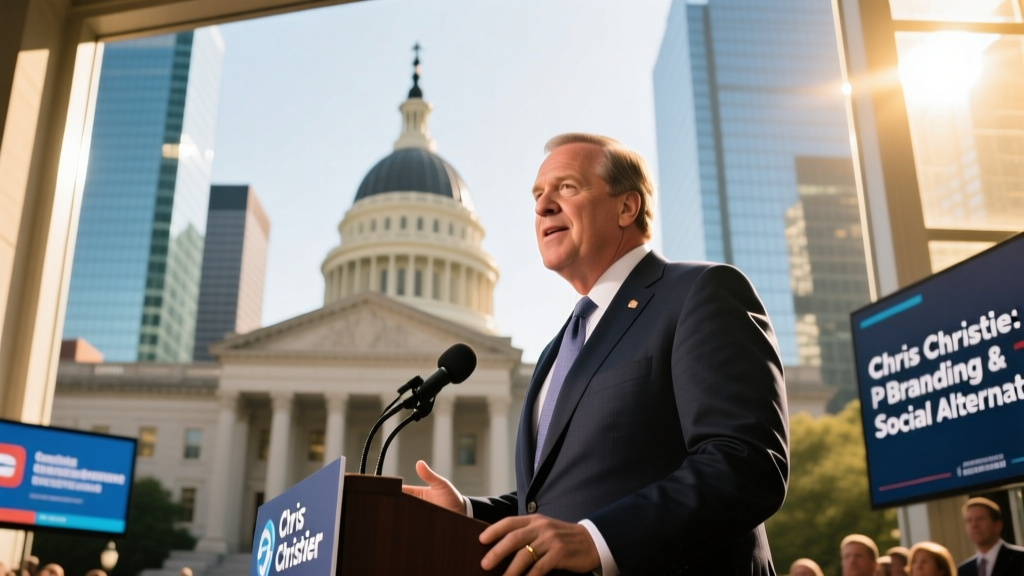
When building a personal brand, few figures offer as polarizing yet effective a masterclass in unapologetic positioning as Chris Christie. The former New Jersey Governor and two-time presidential candidate has never relied on polished influencer aesthetics or carefully curated TikTok dances. Instead, Christie’s brand is built on a foundation of aggressive confrontation, prosecutorial takedowns, and a 'tell it like it is' persona. For those studying personal branding and social media bios, analyzing Chris Christie alongside his political alternatives provides a fascinating look at how authenticity—even when abrasive—can carve out a highly engaged niche. In this comparison and alternatives analysis, we break down Christie’s digital footprint, contrast his strategy with other modern political brands, and extract actionable takeaways you can apply to your own Instagram bio and online presence.
Quick Facts: The Man Behind the Megaphone
| Full Name | Christopher James Christie |
|---|---|
| Born | September 6, 1962 (Newark, New Jersey) |
| Nationality | American |
| Known For | 55th Governor of New Jersey, Presidential Candidate, ABC News Contributor |
| X (Twitter) | @ChrisChristie |
| @chrischristie |
The Anatomy of the Chris Christie Bio
Before diving into his broader digital strategy, we must look at the anchor of his social media presence: his bio. On Instagram, Christie utilizes a classic, authority-driven formula. His bio typically reads: 'Husband. Father. Grandfather. 55th Governor of NJ. ABC News Contributor.' This is a masterclass in hierarchical branding. He leads with relatable, humanizing family roles, immediately followed by his highest political office, and concludes with his current media authority. For professionals and creators, this structure is a highly effective alternative to the emoji-laden, buzzword-heavy bios that clutter most platforms. It establishes immediate credibility without needing to brag. By comparing this to the 'hustle culture' bios of tech influencers or the meme-heavy bios of populist politicians, Christie’s bio stands out for its stark, traditional professionalism.
Deconstructing the Chris Christie Digital Strategy
Christie’s social media strategy is fundamentally different from the native digital-native approach. He does not treat social media as a place to build a community through parasocial vulnerability; he treats it as a distribution network for his traditional media appearances. His X (formerly Twitter) feed is heavily populated with clips from cable news town halls, podcast interviews, and debate stages. This is the 'Prosecutor Brand.' Every post is designed to highlight a moment where he dismantles an opponent's argument or delivers a sharp, quotable soundbite. According to analysis from the New York Times regarding his 2024 primary debate strategy, Christie deliberately positioned himself as the sole voice of traditional accountability in a field of populists. His social media team amplified these specific debate clashes, knowing that his target demographic—older, moderate, and independent voters—consumes political content via repurposed television clips rather than native short-form video.
Comparison Analysis: Christie vs. Political Alternatives
To truly understand Christie’s branding, we must compare it to the alternatives in the modern political arena. How does the 'Prosecutor' stack up against other dominant political archetypes on social media?
Alternative 1: The Populist Meme-Brand (e.g., Donald Trump)
Where Trump’s branding relies on nicknames, all-caps grievances, and raw, unfiltered emotional resonance, Christie’s brand is structured and legalistic. Trump uses social media to bypass the press and speak directly to the id of his base. Christie, conversely, uses social media to prove to the press and moderate voters that he is the most competent debater in the room. The takeaway for personal branding? You must choose your archetype. Are you the emotional disruptor, or are you the logical authority? Trying to blend both often results in a diluted brand.
Alternative 2: The Influencer Politician (e.g., Ron DeSantis / Vivek Ramaswamy)
During the 2024 cycle, alternatives like Vivek Ramaswamy leaned heavily into the 'Podcast Bro' aesthetic, utilizing high-production YouTube cuts, TikTok debates, and Gen-Z slang to build a grassroots digital army. Ron DeSantis attempted a similar pivot, utilizing polished Instagram Reels and influencer collaborations. Christie rejected this alternative entirely. He viewed the 'influencer pivot' as undignified and incompatible with his brand as a seasoned executive. By refusing to adapt to native short-form trends, Christie alienated younger voters but solidified his brand integrity among older demographics who value traditional gravitas. For creators, this highlights a vital lesson: chasing algorithmic trends that contradict your core brand identity will ultimately damage your long-term authority.
Social Media Presence & Engagement Breakdown
Christie’s engagement metrics reveal a stark dichotomy between his platforms, offering a brilliant case study in cross-platform persona layering.
- X (Twitter): This is Christie’s war room. The tone is combative, policy-heavy, and highly reactive. Engagement here is driven by quote-tweets, political junkies, and journalists. It is designed for virality through controversy and sharp wit.
- Instagram: Here, the 'Prosecutor' takes a backseat to the 'Family Man.' His Instagram features behind-the-scenes campaign moments, pictures with his wife Mary Pat, and interactions with everyday voters. The engagement is softer, driven by likes and supportive comments rather than aggressive political debate.
This bifurcation is a highly effective alternative to the 'omnichannel uniformity' that many brands mistakenly pursue. A Pew Research Center study on social media demographics highlights that different platforms attract vastly different user intents. Christie’s team understands that X users want a fight, while Instagram users want a narrative. By tailoring the content to the platform's native psychology, he maximizes his reach without fracturing his core identity.
Personal Branding Takeaways for Your Own Profile
You may not be running for president or appearing on ABC News, but the mechanics of Christie’s personal brand offer powerful alternatives to the standard advice given to creators and professionals. Here is how you can apply his strategy to your own bio and social presence:
1. Own Your Archetype Unapologetically
Christie knows he is not the 'relatable everyman' or the 'polished influencer.' He is the blunt, heavyweight enforcer. Look at your own bio and content. Are you trying to be everything to everyone? Strip away the buzzwords. If your brand is 'no-nonsense financial advice,' do not clutter your Instagram with overly polished lifestyle shots. Lean into your specific archetype.
2. Use the 'Authority + Humanity' Bio Formula
Steal Christie’s Instagram bio structure. Start with one line of humanizing personal facts (e.g., 'Dog Dad. Coffee Snob.'). Follow it with your hardest, most impressive professional credential (e.g., 'Ex-Director at [Company]'). End with your current value proposition (e.g., 'Helping startups scale'). This establishes immediate trust while keeping you approachable.
3. Leverage Contrast in Your Content Strategy
Don't post the exact same content across all platforms. Use your X or LinkedIn for industry takedowns, sharp opinions, and professional debates. Use your Instagram or TikTok for the humanizing, behind-the-scenes reality of your work. The contrast between your 'professional authority' and your 'human reality' is what creates a deeply compelling personal brand.
Ultimately, the Chris Christie brand proves that you do not need to win a popularity contest to build a powerful, recognizable personal brand. By understanding your alternatives, choosing a distinct archetype, and executing it with unwavering consistency, you can carve out a highly engaged audience that respects your voice—exactly as you are.