
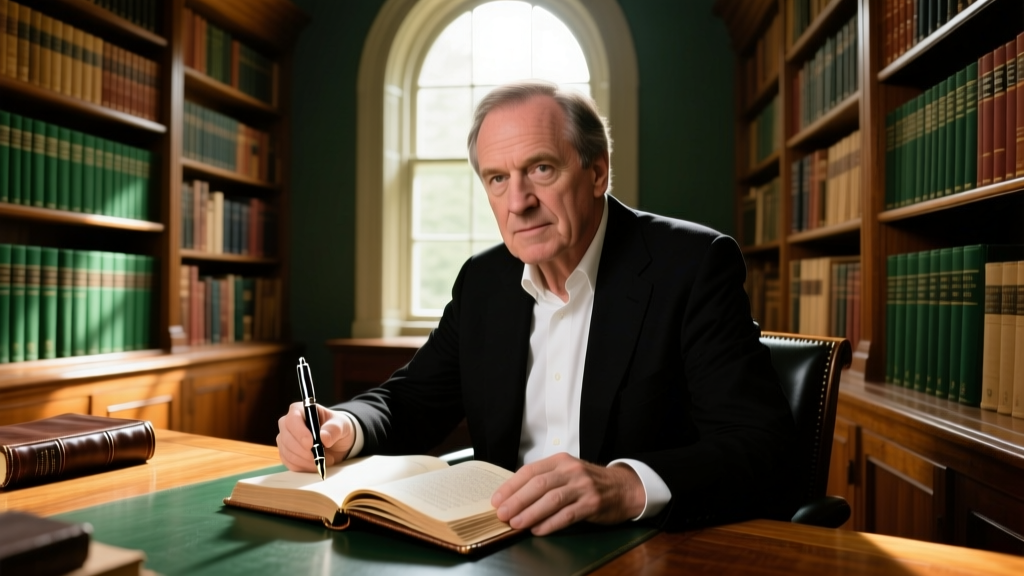
The Legacy of Christopher Hitchens: Journalist and Intellectual Brand
When studying the art of the personal brand, few figures offer as compelling a case study as the late Christopher Hitchens. To understand the Christopher Hitchens journalist legacy is to study a masterclass in intellectual authority, razor-sharp wit, and meticulously crafted author biographies. Long before the era of Instagram influencers and TikTok personal branding, Hitchens built an unmistakable public persona rooted in uncompromising debate, prolific output, and a distinct aesthetic. Today, his digital legacy thrives across social media platforms, proving that true personal branding transcends the ephemeral trends of the day. For writers, thinkers, and creators looking to craft a bio that commands respect, Hitchens remains the ultimate blueprint for intellectual branding.
Quick Facts: The Man Behind the Myth
| Attribute | Details |
|---|---|
| Full Name | Christopher Eric Hitchens |
| Born | April 13, 1949 (Portsmouth, England) |
| Died | December 15, 2011 (Houston, Texas) |
| Nationality | British-American |
| Known For | Polemics, Vanity Fair columns, God Is Not Great |
| Digital Legacy | YouTube debate archives, X quote curation, Reddit communities |
Career & Literary Highlights
Hitchens’ career was a masterclass in niche domination and eventual mainstream crossover. He began as a fiery left-wing critic for The Nation, building a reputation for taking down sacred cows with surgical prose. His transition to Vanity Fair and Slate marked his evolution into a premier cultural commentator and contrarian. His bibliography is staggering, but three works define his brand: Blood, Class, and Nostalgia (establishing his Anglo-American critique), The Missionary Position (showcasing his willingness to attack universally beloved figures like Mother Teresa), and God Is Not Great (cementing his status as a leading voice of the New Atheist movement). According to his memoir, Hitch-22 (2010), his brand was never about being universally liked; it was about being undeniably heard. This unapologetic stance is the bedrock of his enduring appeal.
The Anatomy of the Hitchens Author Bio
For modern creators obsessed with 'link in bio' optimization, the traditional author biography might seem antiquated. Yet, the 'About the Author' page on a Hitchens book jacket is a masterclass in establishing immediate ethos. Hitchens did not use emojis, quirky anecdotes, or desperate calls to action. His bios were credential-heavy, institutional, and laced with dry authority.
A classic Hitchens bio reads like a legal brief of intellectual dominance: 'Christopher Hitchens is the author of... His essays and articles have appeared in Vanity Fair, The Atlantic, and Slate. He is a regular contributor to...' This structure achieves three vital branding goals:
- Institutional Borrowing: By name-dropping elite publications like Vanity Fair and The Atlantic, the bio borrows their editorial authority, signaling to the reader that Hitchens has passed the highest vetting standards in journalism.
- Volume as Proof of Work: Listing a dense bibliography proves he is not a one-hit wonder but a working, breathing intellectual engine.
- The Absence of Fluff: There are no mentions of his 'love for coffee' or 'rescuing stray dogs.' The bio is strictly business, reinforcing the brand of the serious, uncompromising polemicist.
Modern Substack writers and X (Twitter) intellectuals frequently mimic this exact template. The 'Hitchens Bio Template'—Author of [Book]. Contributor to [Publication]. Unapologetic contrarian.—has become the gold standard for digital writers seeking to project gravitas in a sea of casual social media profiles.
Social Media Presence: The Posthumous Digital Footprint
Because Hitchens passed away in 2011, he did not live to curate an Instagram grid or engage in Twitter threads. However, his 'social media presence' today is a fascinating case study in posthumous brand management and archival dominance. His digital footprint is maintained by estates, dedicated fan communities, and debate aggregators.
YouTube as the Visual Archive: YouTube is the primary engine of the Hitchens brand today. Channels dedicated to his debates, speeches, and interviews boast millions of views. The engagement on these videos is driven by the 'Hitchslap'—his signature rhetorical maneuver of dismantling an opponent's argument with historical references and biting wit. His visual brand on these platforms is incredibly consistent: the tweed jacket, the unlit cigarette or glass of scotch, and the unflinching eye contact. This aesthetic has been heavily co-opted by modern 'intellectual dark web' figures and podcasters who use similar visual cues to signal intellectual rigor.
X (Twitter) and Quote Curation: On X, the Hitchens brand thrives through high-contrast, text-heavy quote cards. Fan accounts and legacy pages post his aphorisms daily. The engagement here relies on his polarizing nature; his quotes on religion, free speech, and totalitarianism guarantee high reply counts and retweets. His brand on social media is synonymous with free speech absolutism. For modern creators, this proves that a highly opinionated, polarizing voice generates far more long-term social media engagement than a safe, universally agreeable one.
Personal Branding Takeaways for Modern Writers
What can contemporary journalists, authors, and digital creators learn from the Christopher Hitchens journalist case study? Here are three actionable takeaways for your own bio and personal brand:
1. Optimize Your Bio for Institutional Authority
Strip the filler from your Instagram, X, or Substack bio. If you have written for reputable publications, spoken at recognized venues, or published books, list them. Use the 'Hitchens Template': [Role]. Bylines in [Pub 1], [Pub 2]. Author of [Work]. Let your institutional associations do the heavy lifting for your credibility.
2. Cultivate a Signature Aesthetic and Voice
Hitchens’ vocabulary, his cadence, and even his physical props (the scotch, the tweed) were part of a cohesive brand package. Your personal brand should have a recognizable 'texture.' Whether it is a specific way you format your newsletters, a consistent visual theme in your headshots, or a distinct rhetorical style, consistency breeds recognition. When people see a tweed jacket and a glass of Johnnie Walker Black Label, they think of Hitchens. What visual or stylistic cue belongs to you?
3. Embrace Polarization as a Brand Asset
Hitchens famously stated that he didn't mind being disliked, provided he was not ignored. In an algorithmic landscape that rewards high engagement, safe opinions are easily forgotten. Your bio and content should clearly signal what you stand for—and by extension, what you stand against. A bio that reads 'Challenging the consensus on [Topic]' attracts a fiercely loyal niche audience, which is far more valuable than a passive, disengaged mainstream following.
Conclusion
The Christopher Hitchens journalist persona was not built on viral hacks or algorithmic pandering. It was forged through decades of relentless writing, fearless debate, and a meticulous curation of his public intellectual image. By studying his author biographies, his visual aesthetics, and his enduring digital legacy, modern creators can learn how to build a personal brand that commands respect, sparks debate, and ultimately stands the test of time.