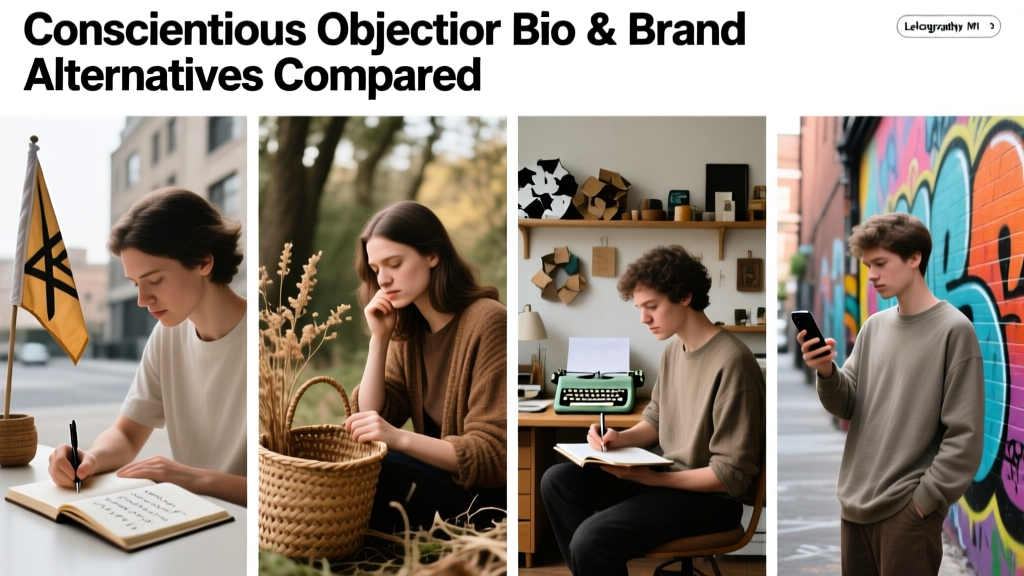
When building a digital identity, adopting the persona of the Conscientious Objector offers a masterclass in authentic, boundary-driven marketing. Unlike influencers who chase every trend, this brand archetype stands firm on core principles, refusing to compromise for engagement. In personal branding, the Conscientious Objector is not necessarily a military term, but a powerful psychological profile. It represents the individual who says no to the noise, creating a magnetic pull through unwavering conviction. At lovemebio.com, we analyze how this steadfast approach translates to social media bios, profile aesthetics, and audience trust. By comparing this archetype to popular alternatives, you can decide if this principled stance is the right foundation for your own digital presence.
Quick Facts: The Conscientious Objector Profile
| Attribute | Details |
|---|---|
| Brand Archetype | Conscientious Objector (The Principled Rebel) |
| Core Philosophy | Unwavering commitment to personal morals over mainstream trends |
| Known For | Boundary-setting, authentic advocacy, quiet confidence |
| Vibe and Aesthetic | Minimalist, raw, unfiltered, documentary-style |
| Signature Bio Elements | Clear boundaries, mission statements, absence of hype-words |
| Target Audience | Consumers seeking transparency, ethics, and deep authenticity |
Social Media Presence: How the Conscientious Objector Brands Online
The digital footprint of the Conscientious Objector is defined by what is absent just as much as what is present. When analyzing their Instagram or TikTok bios, you will rarely find strings of emojis, exaggerated claims, or desperate calls to action. Instead, their social media presence relies on negative space and high-impact statements. A typical bio for this archetype might simply read: 'Creating on my own terms. No sponsored content. Link to my independent journal.' This immediate establishment of boundaries actually increases follower engagement, as audiences are starved for transparency in an era of hyper-commercialized influencer culture.
Their posting style is equally deliberate. Rather than adhering to algorithmic demands for daily posting, the Conscientious Objector posts only when they have something of substance to share. This scarcity model elevates the perceived value of their content. When they do post, the captions are often long-form, essay-style reflections that read more like a personal manifesto than a standard social media update. Follower engagement tends to skew heavily toward meaningful comments and shares, rather than passive likes. The link-in-bio strategy is also distinct; instead of a cluttered Linktree filled with affiliate codes, they typically link to a single, owned platform, such as a Substack newsletter, a personal foundation, or a long-form video essay. This reinforces their brand identity as someone who cannot be bought or easily distracted.
Comparison: Conscientious Objector vs. Brand Alternatives
To truly understand the power of this archetype, we must compare it to the most common alternatives found on modern social platforms. If you are trying to decide how to position your own personal brand, weighing the Conscientious Objector against these three popular alternatives will clarify your strategic direction.
Alternative 1: The Hustle Culture Guru
The Hustle Guru bio is packed with accolades, revenue milestones, and promises of financial freedom. They use high-energy language, rocket emojis, and aggressive calls to action. While this alternative excels at driving short-term course sales and hype, it suffers from high audience burnout and skepticism. The Conscientious Objector, by contrast, builds slow, generational trust. Where the Hustle Guru demands your attention, the Conscientious Objector commands your respect. If your goal is to build a deeply loyal, niche community rather than a massive, fleeting audience, the Objector approach is vastly superior.
Alternative 2: The Outspoken Activist
Both the Activist and the Conscientious Objector care deeply about societal issues, but their branding execution is entirely different. The Outspoken Activist uses their bio and feed to react to daily news cycles, often utilizing outrage as an engagement tool. Their bios frequently feature trending hashtags and urgent demands. The Conscientious Objector, however, focuses on systemic principles rather than daily controversies. Their bio is timeless, not reactive. While the Activist may see viral spikes in follower count during global events, the Conscientious Objector maintains a steady, unshakeable baseline of trust that survives the shifting winds of internet discourse.
Alternative 3: The Aesthetic Minimalist
The Aesthetic Minimalist relies heavily on visual curation, using their bio to set a moody, enigmatic tone. They might use a single lowercase word or a cryptic poem as their bio. While visually pleasing, this alternative often lacks substance and fails to convert followers into true community members. The Conscientious Objector borrows the visual restraint of the Minimalist but pairs it with radical transparency. Their bio is not a riddle; it is a clearly defined mission statement. They prove that you can be visually understated while remaining intellectually and morally loud.
Personal Branding Takeaways for Your Own Bio
How can you inject the gravity of the Conscientious Objector into your own social media profiles? You do not need to be a political figure or a historical icon to utilize this branding framework. Here are actionable takeaways you can apply to your Instagram, TikTok, or LinkedIn bio today:
- Define Your 'No': Use your bio to state what you refuse to do. A freelance designer might write, 'Sustainable branding only. No fast-fashion clients.' This immediately filters your audience and attracts aligned opportunities.
- Eliminate Hype Vocabulary: Strip your bio of buzzwords like 'ninja,' 'guru,' or 'obsessed.' Replace them with grounded, factual statements about your craft and your ethical boundaries.
- Utilize the Single-Link Strategy: Remove chaotic link-aggregators. Direct your audience to one place that represents your deepest work, reinforcing the idea that your time and attention are highly guarded.
- Embrace the Manifesto Format: Use your bio lines to write a three-part personal manifesto. For example: 'Line 1: What I believe. Line 2: What I refuse to compromise. Line 3: Where you can read my long-form thoughts.'
Real-World Branding Sources and Psychology
The effectiveness of the Conscientious Objector archetype is deeply rooted in established psychological and marketing research. According to the foundational work in The Hero and the Outlaw by Margaret Mark and Carol S. Pearson, brand archetypes that rely on moral conviction and rebellion against the status quo create the strongest emotional bonds with niche audiences. Jungian psychology suggests that consumers project their own desire for integrity onto brands that display unwavering principles.
Furthermore, modern data supports the shift toward boundary-driven branding. The Edelman Trust Barometer consistently highlights that purpose-driven figures and brands that take clear, uncompromising ethical stances earn significantly higher long-term trust metrics than those that attempt to appeal to everyone. Research published on the HubSpot marketing blog also indicates that social media users are increasingly fatigued by over-polished, hyper-commercialized profiles, leading to a surge in engagement for creators who adopt raw, boundary-setting, and highly authentic digital personas. By studying the Conscientious Objector, you are not just writing a better bio; you are aligning your digital presence with the psychology of deep, enduring trust.