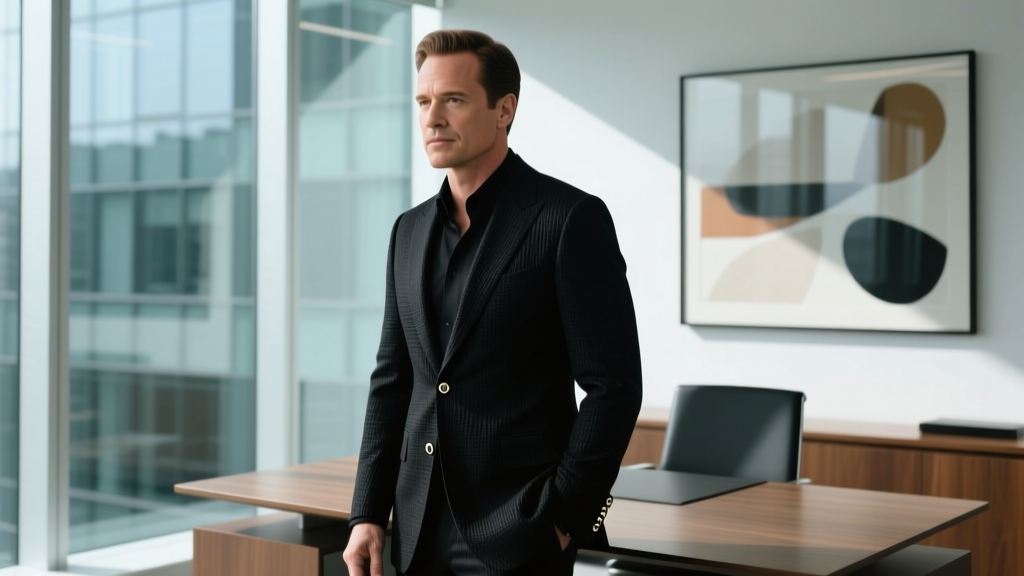
When building a personal brand in the digital era, the default advice is to post daily, engage constantly, and share your personal life. But veteran actor David Rasche proves there is a highly effective alternative to the influencer grind. Best known for his iconic roles in Sledge Hammer! and as the sycophantic CFO Karl Muller on HBO’s Succession, Rasche has cultivated a decades-long career with virtually zero personal social media presence. In this comparison and alternatives analysis, we explore how Rasche’s traditionalist approach to fame contrasts with modern digital branding, and how you can apply his 'quiet authority' strategy to your own professional profiles.
Quick Facts: David Rasche
| Full Name | David Rasche |
|---|---|
| Born | June 24, 1944 (St. Louis, Missouri) |
| Nationality | American |
| Known For | Succession, Sledge Hammer!, Burn Notice, In the Loop |
| Social Media Handles | N/A (Managed via traditional PR and network channels) |
The David Rasche Paradox: Fame Without the Feed
If you search for David Rasche on Instagram, TikTok, or X (formerly Twitter), you will not find a verified personal account. For a working actor with a vast IMDb filmography spanning over five decades, this is highly unusual in the modern Hollywood ecosystem. Instead of cultivating a parasocial relationship with fans, Rasche relies on what personal branding experts call the 'Ghost Brand' or 'Legacy Model.' His digital footprint consists entirely of network-promoted press tours, theater reviews from institutions like Playbill, and the cultural impact of his characters.
Rasche’s approach proves that a personal brand does not require a personal feed. His brand is defined by competence, consistency, and character immersion. By refusing to dilute his on-screen presence with off-screen digital noise, he maintains an aura of old-school Hollywood mystique. For professionals outside of acting, this raises a vital question: Is a hyper-active social media presence actually necessary for authority, or is it just a modern vanity metric?
Career Highlights: How Characters Become the Brand
Because Rasche does not use social media to tell the public who he is, his characters do the heavy lifting. His career offers a masterclass in brand pivoting:
- The Satirical Macho (1986-1988): As the title character in Sledge Hammer!, Rasche’s brand was loud, comedic, and physically expressive. The character was a parody of 80s action tropes, and Rasche’s commitment to the bit made him a cult icon.
- The Stage Veteran (1990s-2000s): Rasche quietly pivoted to theater, performing in Broadway and off-Broadway productions like Speed-the-Plow and The Country Girl. This cemented his reputation among industry insiders as a serious, classically trained actor, not just a TV comedian.
- The Corporate Sycophant (2018-2023): As Karl Muller on HBO’s Succession, Rasche introduced himself to a new generation. His portrayal of the terrified, yes-man CFO became a masterclass in subtle, reactive acting. Here, his 'brand' shifted to the ultimate corporate survivor.
Comparison: Rasche’s Traditional PR vs. Co-Stars’ Digital Brands
To truly understand the power of Rasche’s alternative approach, we must compare it to the branding strategies of his Succession castmates. The show’s ensemble provides a perfect A/B test for modern personal branding.
The Parasocial Influencer Model (e.g., Nicholas Braun)
Nicholas Braun (Cousin Greg) actively uses Instagram to share behind-the-scenes content, promote indie music, and interact with fans. This builds a highly engaged, approachable, and youthful personal brand that exists independently of his acting roles. It requires constant maintenance, content creation, and emotional labor.
The Traditionalist Alternative (David Rasche)
Rasche, alongside peers like Alan Ruck, relies on HBO’s official PR machinery and high-profile interviews. Rasche’s brand is 'untouchable' and strictly professional. He doesn't need to convince the audience he is a serious actor via an Instagram story; his body of work and his representation do it for him. The contrast is stark: Braun builds a community, while Rasche builds an institution.
Alternatives to the Influencer Route: Building a 'Ghost' Brand
For the everyday professional reading this, you might not be an actor, but you still have a personal brand. If the idea of dancing on TikTok or sharing your morning routine on Instagram Stories fills you with dread, Rasche’s career offers three powerful alternative branding models you can adapt for your own LinkedIn, X, or portfolio bios.
Alternative 1: The 'Executive Ghost' Bio
This is the direct translation of the Rasche method. You post rarely, but when you do, it is high-level industry analysis. Your bio is minimalist and authoritative.
Example Bio: 'CFO at [Company]. 20 years in corporate restructuring. Board Member. Inquiries via email.'
Why it works: It signals that your time is valuable and your authority is unquestioned. You don't need to prove your expertise; your title and sparse, high-value output do it for you.
Alternative 2: The 'Portfolio Purist' Bio
Instead of a social feed, your brand lives on a personal website or a platform like Substack. Your social media bio simply acts as a traffic signpost.
Example Bio: 'Architect specializing in sustainable urban design. See my latest projects and publications below. 🏗️ [Link]'
Why it works: Like Rasche letting his Broadway credits speak for him, you let your actual work take center stage, removing the pressure to be a 'personality.'
Alternative 3: The 'Character Shield' (Brand Persona)
Rasche lets Karl Muller or Sledge Hammer take the spotlight. In business, this means building a brand around your company, your agency, or a specific methodology rather than your personal face.
Example Bio: 'Founder of The Rasche Method for B2B Sales. Helping teams close enterprise deals. Read the manifesto 👇'
Why it works: It separates your private life from your public professional identity, giving you the privacy Rasche enjoys while still capturing market share.
Personal Branding Takeaways for Your Own Profile
What can we learn from David Rasche’s decades of success without a single selfie? Here are the core takeaways to apply to your own digital presence:
- Silence Can Signal Authority: In a world where everyone is shouting for attention, a quiet, well-curated profile stands out. You do not need to post daily to remain relevant. Consistency in your actual work matters more than consistency in your posting schedule.
- Let the Network Do the Work: Rasche lets HBO and theater critics write his 'captions.' In your career, let your clients, colleagues, and industry publications be your social proof. A bio that links to a featured interview in a major publication is infinitely more powerful than a bio full of self-praise.
- Master the Pivot: Rasche went from slapstick comedy to high-stakes corporate drama. Your bio should not trap you in your past. Update your professional summary to reflect where you are going, not just where you started.
- Protect Your Privacy: You are allowed to have a public professional persona and a completely private personal life. Use the boundaries of your bio to set expectations. If you don't want DMs, state 'Contact via website only.'
David Rasche’s legacy is a testament to the fact that true personal branding isn't about how much of yourself you give to the internet. It’s about the undeniable quality of the work you put into the world. Whether you choose the hyper-visible influencer route or the quiet authority of the Rasche alternative, the key is intentionality. Craft a bio that serves your goals, protects your peace, and lets your work speak for itself.