When we think of personal branding, we usually picture curated Instagram grids, viral TikTok hooks, and highly optimized LinkedIn bios. But what happens when one of the most respected figures in American history builds a legendary reputation by doing the exact opposite? Enter David Souter, the retired Associate Justice of the United States Supreme Court, famously known for his absolute refusal to participate in the digital age. This beginner-friendly explainer dives into the fascinating anti-brand of a man who proved that sometimes, the most powerful statement you can make online is complete silence and deliberate absence. Let us explore his legacy.
Quick Facts: David Souter
| Full Name | David Hackett Souter |
|---|---|
| Born | October 17, 1939 (Melrose, Massachusetts) |
| Nationality | American |
| Known For | Associate Justice of the U.S. Supreme Court (1990–2009) |
| Social Media Handles | None (Famously offline, private, and institutionally restrained) |
The Career and Jurisprudence of David Souter
To understand the personal brand of David Souter, you first have to understand the sheer weight of his professional resume. Souter was a brilliant legal mind who climbed the ranks of the American judiciary through quiet diligence rather than loud self-promotion. After graduating from Harvard College, he studied at Oxford University as a Rhodes Scholar, and later earned his law degree from Harvard Law School.
His career in public service was marked by a steady, unflashy ascent. He served as the Attorney General of New Hampshire and later as a judge on the U.S. Court of Appeals for the First Circuit. In 1990, President George H.W. Bush nominated him to the Supreme Court. At the time, many political operatives believed Souter would be a reliable conservative vote. However, Souter famously defied expectations, evolving into a crucial independent swing vote who prioritized legal precedent and institutional stability over partisan ideology.
His most famous contribution to American jurisprudence was co-authoring the plurality opinion in Planned Parenthood v. Casey (1992), which upheld the core holding of Roe v. Wade. He also played a pivotal, though often dissenting, role in Bush v. Gore (2000). When he retired in 2009, he left behind a legacy defined not by soundbites, but by deeply reasoned, meticulously crafted legal opinions. He proved that true authority is built on the substance of your work, not the volume of your voice.
David Souter’s Social Media Presence: Analyzing the Void
How do we analyze the social media presence of a man who famously avoided using email, preferred writing with a fountain pen, and reportedly did not own a television? The short answer is that we analyze the void. In the context of modern digital branding, David Souter’s complete lack of a social media footprint is not a failure of marketing; it is a masterclass in institutional alignment and personal boundary-setting.
Unlike contemporary politicians, celebrities, or even some modern legal scholars who use platforms like X (formerly Twitter) to share rulings, debate critics, or build a following, Souter’s digital footprint is practically zero. This deliberate absence aligns with the Supreme Court’s historical institutional restraint. While the Court as an entity now maintains an official website and releases audio recordings of oral arguments, individual justices rarely maintain public, verified personal profiles. Souter took this institutional norm to its absolute extreme.
His ‘bio’ is not written in a 150-character Instagram caption or a clever LinkedIn summary. His bio is written entirely through his judicial opinions, his rigorous questioning during oral arguments, and his unwavering dedication to the Constitution. His follower engagement is nonexistent because there is nothing to follow. Yet, paradoxically, his name generates thousands of organic mentions, academic citations, and passionate discussions across platforms like Reddit’s legal communities and legal Twitter. He is widely discussed without ever participating in the discussion.
The ‘Hermit Justice’ and the Anti-Brand Strategy
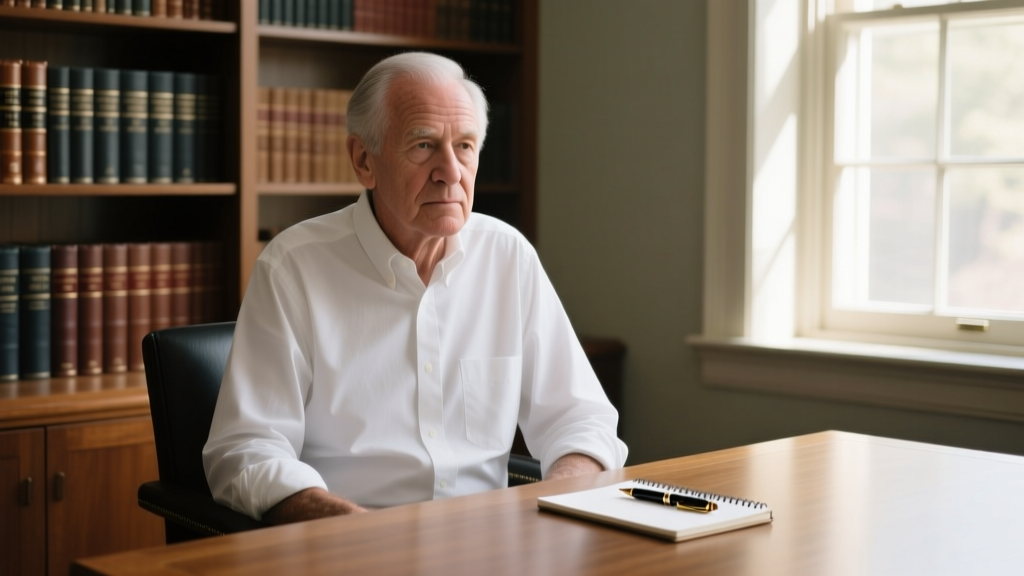
The media often referred to Souter as the ‘Hermit Justice.’ Upon his retirement from the highest court in the land, he did not take a lucrative corporate board seat, nor did he embark on a multi-million-dollar book tour. Instead, he immediately returned to his modest farmhouse in Weare, New Hampshire. He embraced a lifestyle of extreme privacy, reading by natural light and actively avoiding the Washington D.C. spotlight.
In a world where personal branding demands constant visibility, Souter’s brand is built on mystique, intellectual rigor, and unyielding privacy. This scarcity creates immense value. When Souter does choose to speak—such as his rare graduation addresses, his occasional guest lectures at Harvard, or his unprecedented testimony before Congress regarding judicial security—it becomes a major news event. By refusing to dilute his presence with daily digital noise, every word he speaks carries the weight of an oracle. For personal branding, this is the ultimate demonstration that accessibility does not equal influence.
Personal Branding Takeaways: What We Can Learn
You might not be a Supreme Court Justice, but the principles behind Souter’s ‘anti-brand’ can be incredibly powerful for your own social media strategy. Here is how you can apply his philosophy to your personal brand:
- Let Your Work Be Your Bio: Souter’s legacy is cemented by landmark cases, not by a viral tweet. Before you spend hours tweaking your Instagram aesthetic, ensure the actual ‘product’ you offer—whether that is your photography, your coding skills, or your writing—is exceptional. A great bio gets them to look; great work gets them to stay.
- Embrace Digital Minimalism: You do not need to be on every single platform. If maintaining a TikTok or an X account feels like a chore that drains your creative energy, delete it. Choose one platform where you can add genuine value, or choose none at all. Protect your peace and direct that energy into your craft.
- Scarcity Creates Value: Overposting can dilute your message and fatigue your audience. You do not need to share every meal, every thought, or every minor life update. Sharing less frequently, but with higher quality and deeper intention, makes your audience pay closer attention when you do post.
- Establish Firm Boundaries: It is entirely acceptable to keep your private life private. You can use your social media bio to establish professional boundaries. A simple, clean bio that states your professional focus without oversharing personal drama attracts a more respectful, career-oriented network.
- Opt for Quiet Confidence: You do not need to use aggressive buzzwords or boastful metrics in your LinkedIn or Instagram bio. Souter never had to tell people he was smart; his opinions proved it. Use your bio to state clearly what you do, and let your portfolio, testimonials, and body of work prove how well you do it.
Conclusion
David Souter proves that a powerful personal brand does not require a ring light, a viral hook, or a verified checkmark. By prioritizing substance over visibility, and privacy over popularity, he crafted a legacy of profound respect and enduring influence. As you craft your own digital identity on lovemebio.com, remember that sometimes the most memorable thing you can do in a noisy digital world is to simply let your work speak for itself.