
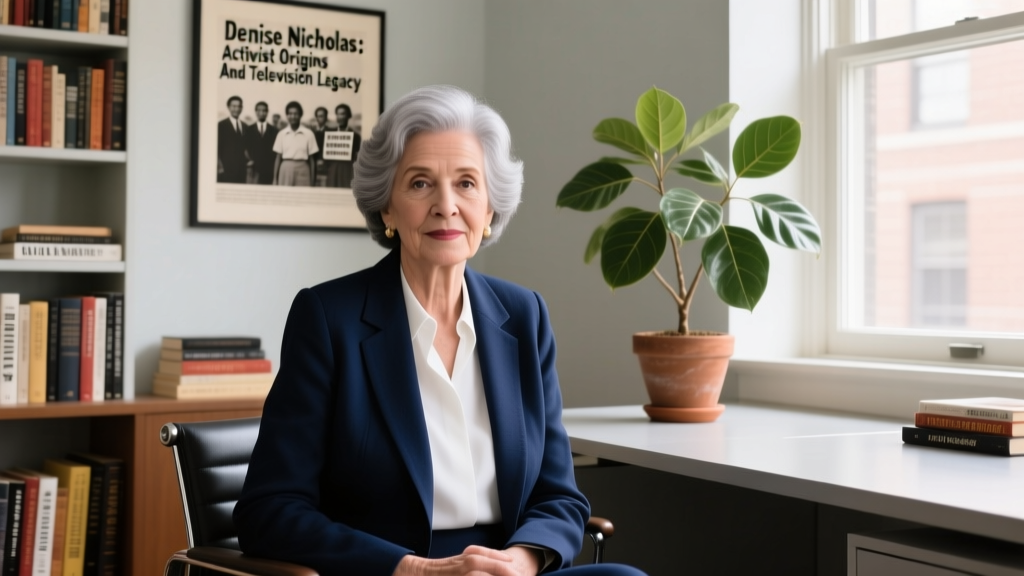
The Origin Story of Denise Nicholas: Before the Fame
Denise Nicholas didn't start her journey in Hollywood; she started it on the front lines of the American Civil Rights Movement. Born Donna Denise Nicholas on July 12, 1944, her origin story is one of profound activism, artistic reinvention, and literary triumph. For fans looking to understand the woman behind the iconic roles in Room 222 and In the Heat of the Night, examining her history reveals a masterclass in authentic personal branding. Long before influencers curated their digital lives, Nicholas built a legacy rooted in conviction. Raised primarily in Milan, Michigan, after being born in Detroit, she grew up in a household that valued education and social awareness. Her father was a physician and her mother a teacher, providing an upbringing that sharply contrasted with the systemic inequalities she witnessed in the broader American landscape. This dichotomy fueled her desire for direct action. She attended the University of Southern California (USC) but made a life-altering decision in 1964. She dropped out of college to join the Student Nonviolent Coordinating Committee (SNCC), participating in the dangerous and historic Freedom Summer voter registration drives in Mississippi. This foundational experience shaped her worldview, her art, and the way she would eventually present herself to the world.
Quick Facts: The Life and Career of Denise Nicholas
| Attribute | Details |
|---|---|
| Full Name | Donna Denise Nicholas |
| Born | July 12, 1944 (Detroit, Michigan) |
| Nationality | American |
| Known For | Room 222, In the Heat of the Night, Freshwater Road |
| Digital Presence | Archival, Author Platforms, Institutional Interviews |
From the Frontlines to Prime Time: A Multi-Hyphenate Career
After her time in the Civil Rights Movement, Nicholas moved to New York and joined the Negro Ensemble Company, a pivotal theater group that nurtured Black talent. Her stage work quickly translated to television, leading to her groundbreaking role as Liz McIntyre on the acclaimed ABC series Room 222 (1969–1974). Room 222 was revolutionary for its time, tackling issues like racism, sexism, and the Vietnam War within the microcosm of a Los Angeles high school. Nicholas's character was the moral compass of the show, and as a high school counselor, she was one of the first Black female leads in a regular television role. Nicholas earned three consecutive Golden Globe nominations for her nuanced portrayal. Following Room 222, she continued to build a robust acting resume, most notably playing Chief Gillespie's ex-wife and civil rights attorney Harriet DeLong on the hit NBC drama In the Heat of the Night. However, Nicholas's brand was never confined to acting. In the later chapters of her career, she pivoted to writing, penning plays and ultimately publishing her critically acclaimed memoir, Freshwater Road, in 2005. The memoir circles back to her origin story, detailing her harrowing and transformative experiences during the 1964 Freedom Summer. By authoring her own history, Nicholas reclaimed her narrative, ensuring that her legacy was defined not just by the characters she played, but by the real-life history she helped forge.
Denise Nicholas Digital Footprint and Social Media Presence
When analyzing the social media presence of legacy figures like Denise Nicholas, the strategy differs vastly from modern digital influencers. Nicholas does not maintain a hyper-active, verified Instagram or TikTok account. Instead, her digital footprint is a study in curated legacy and institutional authority. Her online bio is largely managed through publisher networks, civil rights digital archives, and long-form interview repositories. On platforms like Goodreads, her author profile highlights her literary contributions and historical significance. On YouTube, her presence is felt through archived interviews with PBS, NPR, and civil rights documentaries, where she speaks eloquently about her SNCC days and Hollywood career. This approach to digital branding is highly effective for authors and historical figures. Rather than chasing algorithms with daily posts, her digital presence relies on high-signal, low-noise content. When a user searches for Denise Nicholas today, they are met with institutional authority: university archives, literary databases, and respected news outlets. Her bio across these platforms consistently emphasizes a triad of identities: Activist, Actress, and Author. This consistency across decentralized digital platforms ensures that her personal brand remains dignified, historically accurate, and deeply respected.
Personal Branding Takeaways from a Trailblazer
What can modern social media users and professionals learn from the Denise Nicholas origin story and digital footprint? Here are four personal branding takeaways you can apply to your own Instagram, LinkedIn, or personal website bios:
- 1. Lead with Your Core Values: Nicholas's brand is inextricably linked to her civil rights activism. She didn't hide her past to fit into a Hollywood mold; she used it to inform her art. In your own bio, don't just list your job titles. Highlight the core values or causes that drive you. A simple line like 'Advocate for [Cause] | [Profession]' immediately adds depth to your profile.
- 2. Embrace the Multi-Hyphenate Bio: Nicholas is an activist, an actress, and an author. Too many people try to box themselves into a single professional identity. Use your social media bio to showcase your diverse talents. Use pipe separators (|) or bullet points to list your distinct skills, showing your audience that you are a multi-dimensional creator.
- 3. Prioritize Authority Over Volume: You do not need to post every day to build a strong personal brand. Nicholas's digital footprint proves that long-form, high-quality content carries more weight than fleeting social media trends. Focus on creating evergreen content that establishes your expertise, and let your digital bio serve as a clean, professional directory linking to your best work.
- 4. Own Your Narrative Through Long-Form Media: By writing Freshwater Road, Nicholas ensured her history was told in her own words. Today, you can apply this by starting a newsletter, a personal blog, or a YouTube channel. Don't rely solely on rented social media platforms to tell your story; build an owned platform where your complete bio and history can live permanently.
Sources and Further Reading
To dive deeper into the incredible history of Denise Nicholas, explore the following verified archives and interviews: The SNCC Digital Gateway for historical records of her Freedom Summer activism, and NPR's book archives featuring interviews regarding her memoir Freshwater Road.