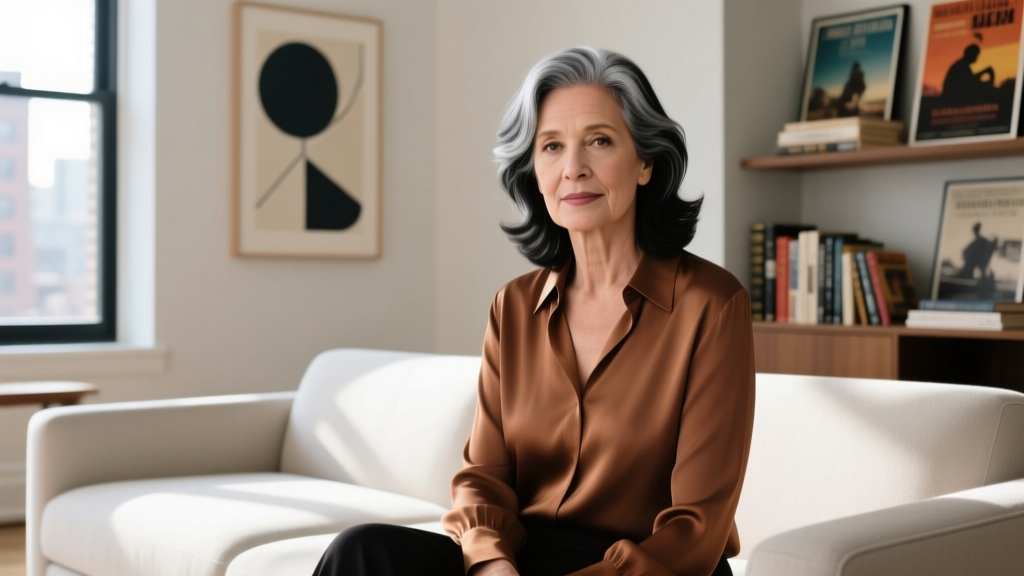
In the hyper-connected landscape of modern Hollywood, where actors are often expected to be full-time influencers, Diane Venora stands as a fascinating anomaly. The celebrated American actress, renowned for her commanding performances in cinematic masterpieces like Heat and The Insider, has cultivated a career defined by artistic integrity rather than digital noise. For personal branding enthusiasts and professionals seeking to elevate their online presence, analyzing the digital footprint—or deliberate lack thereof—of Diane Venora offers a masterclass in quiet prestige. This deep dive explores how letting your work speak for itself can be the ultimate bio strategy in an era of oversharing.
Quick Facts: The Artist Behind the Characters
| Full Name | Diane Venora |
|---|---|
| Born | August 10, 1952 (East Hartford, Connecticut) |
| Nationality | American |
| Education | The Juilliard School (Drama Division) |
| Known For | Heat, The Insider, Romeo + Juliet, Bird |
| Awards | Golden Globe Nomination (Best Supporting Actress) |
| Social Media | Intentionally Private / Unverified |
The Theatrical Foundations of a Prestige Brand
To understand the personal brand of Diane Venora, one must first look at her foundational training. A graduate of the prestigious Juilliard School, Venora was steeped in the rigorous, disciplined world of classical theater long before she ever stepped onto a Hollywood soundstage. Her early career was marked by Shakespearean performances and intense stage work, environments that reward deep character study over superficial celebrity. This theatrical pedigree established a brand identity rooted in 'serious artistry.' In the context of personal branding, this translates to a foundational truth: your underlying expertise and training will always dictate the ceiling of your public perception. Venora never had to rebrand herself as a serious actor; her Juilliard roots and stage presence did the heavy lifting before she ever spoke a word on camera.
Filmography and Defining Career Highlights
Venora’s transition from stage to screen is a case study in selecting roles that reinforce a brand of quiet strength and complex dignity. She does not play caricatures; she plays grounded, fiercely intelligent women.
- Bird (1988): Directed by Clint Eastwood, Venora portrayed Chan Parker, the common-law wife of jazz legend Charlie Parker. Her nuanced performance proved she could hold the screen against heavy dramatic material, establishing her as a formidable character actress.
- Heat (1995): In Michael Mann’s magnum opus, Venora played Justine Hanna, the estranged wife of Robert De Niro’s master thief. In a film dominated by explosive masculine energy, Venora’s grounded, emotionally resonant performance provided the film’s vital human anchor.
- Romeo + Juliet (1996): As Gloria Capulet in Baz Luhrmann’s stylized adaptation, she brought a tragic, frantic elegance to the screen, showcasing her versatility and willingness to adapt to visionary directors.
- The Insider (1999): Her role as Liane Bergman, the supportive but fiercely protective wife of whistleblower Jeffrey Wigand (Russell Crowe), earned her a Golden Globe nomination. Critics praised her ability to convey volumes of emotion through subtle expressions, a hallmark of her acting style.
Each of these roles reinforced a specific brand archetype: the intelligent, resilient, and deeply layered woman. For professionals building a portfolio, the lesson is clear. You are defined by the projects you accept. Curating a selective, high-quality portfolio is infinitely more powerful than accepting every opportunity just to stay visible.
Diane Venora Social Media Presence: The Power of Privacy
When you search for Diane Venora on platforms like Instagram, X (formerly Twitter), or TikTok, you will not find a verified mega-account with millions of followers posting daily vlogs or sponsored content. Instead, you encounter a digital void. In the modern attention economy, this absence is not a failure of marketing; it is the ultimate expression of luxury and prestige.
For high-level executives, elite artists, and specialized professionals, the 'Ghost Profile' or 'Prestige Privacy' model is a highly effective branding strategy. By refusing to participate in the daily churn of social media trends, Venora maintains an aura of mystique. When audiences engage with her, they do so exclusively through her art—her films and stage performances. There are no controversial tweets, no curated vacation photos, and no parasocial distractions to dilute the impact of her work.
This digital minimalism forces the public to focus entirely on her professional output. In a world where everyone is fighting for screen time, opting out of the race entirely signals a supreme confidence in one's own value. It tells the industry and the public: I do not need to remind you I exist; my work will do that for me.
Personal Branding Takeaways: The Quiet Prestige Bio
What can creators, executives, and artists learn from the Diane Venora approach to digital presence? Here are the core takeaways for crafting a 'Quiet Prestige' bio and profile strategy:
1. The 'Less is More' Bio Formula
A prestige bio does not rely on emojis, long-winded stories, or lists of hobbies. It relies on authority. A minimalist bio typically includes only three elements: your core title, your primary affiliation or agency, and your location. For example: 'Actor. Represented by CAA. Los Angeles / New York.' This signals that you are established enough that your work speaks for itself, and you do not need to 'sell' yourself in 150 characters.
2. Portfolio-First Positioning
Venora’s legacy is built on her filmography, not her follower count. Your social media should function as a gallery, not a diary. If you are a designer, lawyer, or consultant, your profile should link directly to a sleek, minimalist portfolio or a published body of work. Remove the clutter of Linktrees filled with podcast appearances and side-hustles. One authoritative link is worth ten fragmented ones.
3. Cultivating Mystique Through Boundaries
Oversharing diminishes perceived authority. By keeping your personal life private, you maintain a professional boundary that commands respect. When you do choose to post, it should be a significant milestone—a new project launch, a major award, or a high-level industry insight. Scarcity creates value. If you post less frequently, your audience will pay closer attention when you do.
4. High-Contrast Visual Identity
While Venora doesn't maintain a personal Instagram, the visual language associated with her press and film stills is always striking, professional, and high-contrast. For your own profile, ditch the casual selfies. Invest in a single, high-quality, black-and-white or muted-tone professional headshot. It immediately elevates your profile from 'amateur user' to 'industry veteran.'
Applying the Venora Strategy to Your Own Profile
Transitioning to a prestige brand requires an audit of your current digital footprint. Start by archiving old, irrelevant posts that no longer align with the expert you are today. Rewrite your bio to strip away the fluff. Remove buzzwords like 'ninja,' 'guru,' or 'serial entrepreneur,' and replace them with concrete, verifiable titles.
If you are a creative professional, consider making your Instagram account private, using it strictly for close friends and family, and directing all professional inquiries to a clean, optimized LinkedIn profile or a personal domain. This bifurcation allows you to maintain a personal life while presenting an impenetrable, highly curated professional front to the world.
Ultimately, the branding strategy of Diane Venora teaches us that true authority cannot be manufactured through algorithms or engagement hacks. It is earned through mastery, protected by boundaries, and communicated through the quiet confidence of a job exceptionally well done. In a noisy digital world, silence is the loudest statement you can make.