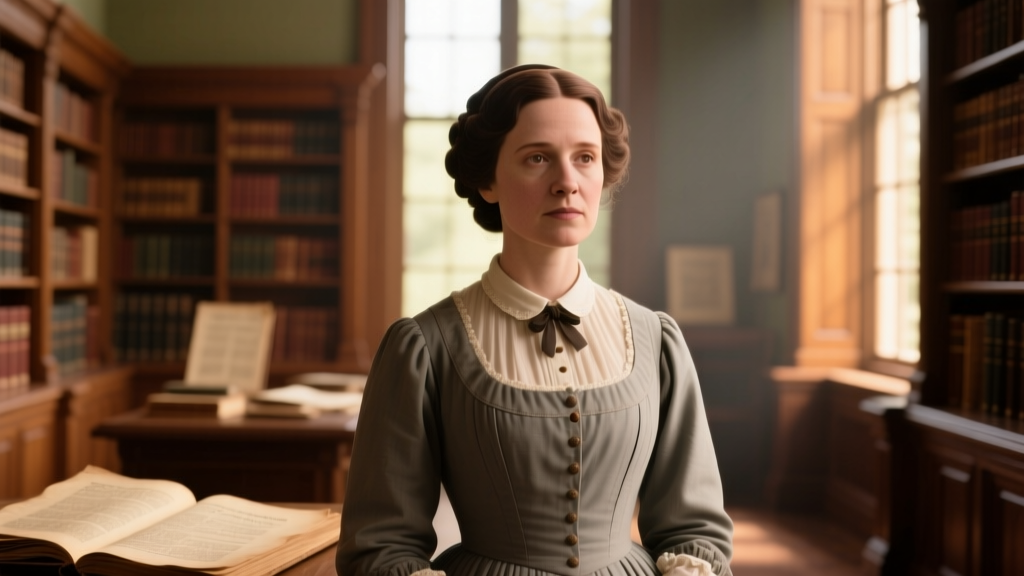
When researching historical pioneers, separating fact from fiction is crucial. Dorothea Dix is one of the most significant figures in American history, yet her legacy is often clouded by romanticized myths. As a 19th-century activist, educator, and lobbyist, she fundamentally changed how society treats the mentally ill. But who was the real woman behind the legend? In this FAQ and misconception-busting guide, we explore the true history of Dorothea Dix, analyze how her legacy is curated across modern digital platforms, and extract powerful personal branding lessons you can apply to your own professional bio today.
Quick Facts: The Real Dorothea Dix
| Attribute | Details |
|---|---|
| Full Name | Dorothea Lynde Dix |
| Born | April 4, 1802 (Hampden, Maine) |
| Died | July 17, 1887 (Trenton, New Jersey) |
| Nationality | American |
| Known For | Mental health advocacy, Superintendent of Army Nurses |
| Modern Digital Presence | Championed by @NLM_NIH, @MassHistSoc, and global nursing organizations |
| Primary Legacy Hashtags | #NursingHistory, #MentalHealthPioneer, #DorotheaDix |
Frequently Asked Questions & Common Misconceptions About Dorothea Dix
Because Dorothea Dix operated in an era before mass media, her life story has been heavily mythologized over the last century. Let us address the most common FAQs and misconceptions regarding her career and impact.
Myth 1: She was a frontline Civil War nurse who treated wounded soldiers.
The Fact: Dorothea Dix was not a frontline clinical nurse; she was an administrator and a political appointee. In 1861, at the age of 59, Secretary of War Simon Cameron appointed her as the Superintendent of Army Nurses for the Union Army. She did not typically change bandages or administer medicine on the battlefield. Instead, her role was deeply bureaucratic and logistical. She recruited, organized, and managed the thousands of women who served as nurses. Furthermore, she was notoriously strict, enforcing rigid age and dress codes for her nurses, which often led to fierce clashes with military surgeons who resented her authority.
Myth 2: She was a trained medical professional.
The Fact: Dix had absolutely no formal medical training. Her background was in education and literature. She began her career as a schoolteacher and a governess. Her pivot to mental health advocacy began in 1841 when she was asked to teach a Sunday school class at the East Cambridge House of Correction in Massachusetts. There, she witnessed the horrific conditions of the mentally ill, who were housed in unheated cells alongside criminals. Her power did not come from medical expertise, but from her unparalleled skills as an investigator, data collector, and persuasive lobbyist.
Myth 3: She was universally beloved by her peers and the government.
The Fact: While history remembers her as a saintly figure, her contemporaries often found her abrasive, uncompromising, and difficult to work with. Dix was a relentless perfectionist who did not suffer fools gladly. She frequently bypassed the chain of command, appealing directly to politicians and even President Abraham Lincoln when military doctors tried to undermine her nursing corps. Her rigid personality alienated many, but it was precisely this unyielding stubbornness that allowed her to force legislative change in a deeply patriarchal society.
Myth 4: She founded the American Red Cross.
The Fact: This is a common historical mix-up. The American Red Cross was founded by Clara Barton in 1881. While both women were instrumental in Civil War relief efforts, their roles and organizations were entirely distinct. Dix was strictly affiliated with the Union Army's official nursing corps, whereas Barton operated more independently, bringing supplies directly to the front lines and later focusing on international humanitarian aid.
The Digital Footprint: How Dorothea Dix is Bio'd on Modern Social Media
Obviously, a 19th-century pioneer did not have an Instagram or Twitter account. However, in the realm of digital legacy and institutional personal branding, Dorothea Dix maintains a massive, highly curated 'posthumous social media presence.' Her brand is kept alive by historical societies, medical libraries, and nursing boards. Analyzing how these institutions 'bio' her provides fascinating insights into modern digital storytelling.
Institutional Bios and Positioning
On platforms like Instagram and X (formerly Twitter), accounts such as the National Library of Medicine (@NLM_NIH) and the Massachusetts Historical Society (@MassHistSoc) serve as the stewards of her digital bio. When these institutions profile her, they rarely use the generic term 'nurse.' Instead, her digital bio is optimized for authority: 'Pioneer of Mental Health Reform,' '19th-Century Lobbyist,' and 'First Superintendent of Army Nurses.' This strategic labeling corrects the historical record in real-time, ensuring her administrative genius is highlighted over the romanticized image of a bedside caretaker.
Posting Style and Visual Branding
The visual branding of Dorothea Dix on social media relies heavily on archival authenticity. Posts featuring her typically utilize high-resolution scans of her original 1843 'Memorial' to the Massachusetts legislature, showcasing her elegant but urgent handwriting. The aesthetic is scholarly and grounded. Institutions use sepia tones, historical typography, and side-by-side comparisons of 19th-century asylum blueprints versus modern mental health facilities. This posting style attracts a highly specific, engaged demographic of history buffs, nursing students, and psychology professionals.
Follower Engagement and Hashtag Strategy
Engagement on posts about Dix spikes during specific cultural moments: Women's History Month, Nurses Week, and Mental Health Awareness Month. Modern advocates have claimed her legacy, using her as a historical anchor for contemporary mental health discussions. The hashtag #DorotheaDix is frequently paired with #MentalHealthAdvocate and #NursingHistory. When modern mental health professionals share her quotes regarding the humane treatment of the indigent, engagement rates soar, proving that her 19th-century 'brand message' still resonates deeply with 21st-century digital audiences.
Personal Branding Takeaways from a 19th-Century Pioneer
You might not be lobbying state legislatures to build psychiatric hospitals, but the way Dorothea Dix built her reputation offers masterclass lessons for crafting your own personal brand and professional bio today.
1. Let Data Define Your Pitch
Before Dix approached the Massachusetts legislature in 1843, she spent 18 months traveling over 9,000 miles, visiting every jail and almshouse in the state. She did not just present emotional pleas; she presented a meticulously researched, data-driven document known as her 'Memorial.' The Lesson: When writing your LinkedIn summary or professional bio, do not just use buzzwords. Back up your claims with hard metrics. Instead of saying 'passionate about marketing,' write 'scaled organic traffic by 140% through data-driven SEO strategies.' Let your data do the heavy lifting.
2. Own Your Niche Relentlessly
Dix could have branched out into general education, women's suffrage, or abolitionism—all popular causes of her era. Instead, she hyper-focused on one specific, deeply stigmatized niche: the humane treatment of the mentally ill. She became the undisputed authority in this space. The Lesson: A diluted personal brand is a forgettable one. Narrow your focus. If you are a graphic designer, do not brand yourself as a 'creative jack-of-all-trades.' Brand yourself as a 'SaaS UI/UX Specialist.' Authority is built in the niches.
3. Your Reputation is Built on Friction, Not Just Popularity
Dix was not trying to be everyone's friend; she was trying to get things done. Her willingness to clash with powerful military surgeons and stubborn politicians was a feature of her brand, not a bug. She was known as an immovable force for her cause. The Lesson: Stop trying to make your professional bio appeal to everyone. Authentic personal branding requires taking a stand. If you are a strict, detail-oriented project manager, own that trait in your bio. Attract the clients who value your exact methodology, and repel those who do not.
4. Create a 'Legacy Bio' Through Consistent Output
Dix's brand outlived her because she left behind a tangible body of work: over 30 hospitals founded or expanded, and thousands of pages of correspondence and legislative memorials. The Lesson: Your social media bio is just the tip of the iceberg. The true substance of your personal brand is the content you publish, the projects you complete, and the digital footprint you leave behind. Ensure your portfolio, blog, or GitHub repository reflects the same high standards promised in your bio.
Sources and Further Reading
- National Library of Medicine (NLM). Dorothea Dix: Advocate for the Insane. Historical Exhibitions and Archival Records.
- Massachusetts Historical Society. The Dorothea Dix Papers. Primary source documents and legislative memorials.
- American Nurses Association (ANA). Nursing Hall of Fame: Dorothea Lynde Dix. Biographical profiles and Civil War nursing history.