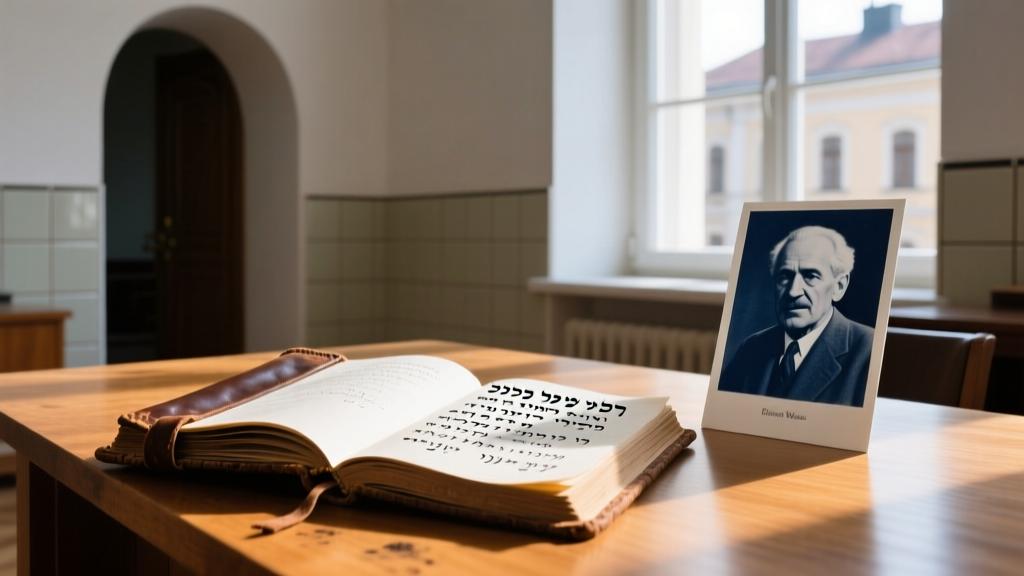
When researchers, students, and advocates search for Elie Wiesel Romania, they are typically tracing the geographical and emotional origins of one of the 20th century’s most vital human rights voices. Born in Sighet, Romania, Wiesel’s early life profoundly shaped his worldview, eventually leading to a Nobel Peace Prize and a lifelong crusade against indifference. However, from a digital branding perspective, Wiesel presents a fascinating case study: how does a global icon’s personal brand survive, adapt, and inspire in the digital age long after their passing?
At LoveMeBio, we analyze not just the influencers of today, but the enduring legacy brands of history. Managing the digital footprint of a historical figure requires a delicate balance of reverence, education, and active mission-driven engagement. By examining how Wiesel’s estate, foundations, and associated museums curate his digital biography and social media presence, modern creators can learn profound lessons about building a purpose-driven personal brand that outlasts a single lifetime.
| Attribute | Details |
|---|---|
| Full Name | Eliezer 'Elie' Wiesel |
| Born | September 30, 1928 (Sighet, Romania) |
| Nationality | Romanian-American |
| Known For | Nobel Peace Prize (1986), Author of 'Night', Holocaust Activism |
| Digital Legacy Hubs | The Elie Wiesel Foundation, USHMM Archives |
The Digital Footprint of Elie Wiesel Romania
The search intent behind 'Elie Wiesel Romania' reveals a critical component of his enduring brand: the power of the origin story. In digital archives maintained by institutions like the United States Holocaust Memorial Museum (USHMM), Wiesel’s Romanian-Jewish heritage is not treated as mere biographical trivia. Instead, Sighet, Romania, is positioned as the emotional anchor of his narrative. Digital curators use his birthplace to illustrate the stark contrast between a vibrant, tight-knit community and the devastating void left by the Holocaust.
For modern personal branding, this is a masterclass in authenticity. Many creators attempt to polish their online bios by erasing their humble or complex beginnings, opting instead for a sanitized, corporate-friendly aesthetic. Wiesel’s digital legacy proves that your origin story—no matter how painful or unconventional—is your most powerful branding asset. It provides context, builds deep emotional resonance with your audience, and grounds your current mission in lived experience. When crafting your own Instagram or LinkedIn bio, do not just list your current job title; hint at the journey that brought you there.
Bibliography and Activism: The Pillars of the Brand
Elie Wiesel was the author of over 50 books, with his 1956 memoir 'Night' serving as the cornerstone of his global recognition. Yet, if you examine how his estate and affiliated organizations present his bibliography online, you will notice a distinct branding choice: his identity as an author is inextricably linked to his identity as an activist.
On digital platforms, his books are rarely categorized simply as 'literature.' They are framed as tools for human rights education. The Elie Wiesel Foundation for Humanity utilizes his written works as entry points for broader discussions on ethics, memory, and justice. This integration of product (books) and purpose (activism) creates a cohesive brand identity. For entrepreneurs, authors, and thought leaders, the lesson is clear. Your creative output should not exist in a vacuum. Your digital bio and content strategy must explicitly connect what you create to the larger problem you are trying to solve in the world.
Social Media Presence and Legacy Management
How does a deceased Nobel Laureate maintain an active, engaging social media presence? The answer lies in shifting the focus from the individual to the mission. The official social media channels managed by the Elie Wiesel Foundation for Humanity do not use the standard influencer bio format. You will not find a list of hobbies, a personal email address, or a generic 'welcome to my page' greeting.
Instead, the foundation’s social bios operate as digital manifestos. A common bio structure across their platforms features one of Wiesel’s most piercing quotes, such as: 'We must take sides. Neutrality helps the oppressor, never the victim.' This is immediately followed by a concise mission statement: 'Combating indifference, intolerance, and injustice.'
This approach transforms a social media profile from a digital resume into a rallying cry. The follower engagement on these platforms is driven not by parasocial relationships or lifestyle content, but by shared values. Users share, save, and interact with posts because the content challenges them to be better global citizens. The foundation leverages high-contrast typography, archival photography from Wiesel’s travels and lectures, and stark, text-based quote cards that are highly shareable on Instagram and X (formerly Twitter). This proves that a brand’s visual and textual identity can remain profoundly relevant by focusing on timeless truths rather than fleeting internet trends.
Case Study: Anatomy of a Mission-Driven Bio
Let us break down the anatomy of a legacy bio as modeled by the Wiesel estate, and how you can adapt this framework for your own personal brand:
- The Hook (The Manifesto): Start with a core belief or a defining quote. This immediately filters your audience, attracting those who align with your values and repelling those who do not.
- The Authority (The Anchor): Establish credibility succinctly. For Wiesel, it is 'Nobel Peace Laureate.' For you, it might be 'Award-Winning Designer' or 'Sustainable Tech Founder.'
- The Origin (The Context): Where applicable, weave in your roots. Just as 'Sighet, Romania' grounds Wiesel’s story, your unique background can differentiate you in a saturated market.
- The Call to Action (The Mission): Direct traffic to a cause, a foundation, or a flagship project. The link in the bio is not for selling merchandise; it is for advancing the mission.
Personal Branding Takeaways for Modern Creators
Analyzing the digital preservation of Elie Wiesel provides actionable, high-level takeaways for anyone looking to elevate their social media presence on LoveMeBio:
1. Build a Brand That Outlasts You: True legacy branding requires shifting your digital footprint from 'look at me' to 'look at this cause.' When your bio is centered on a mission larger than yourself, your brand becomes evergreen. Ask yourself: If I stopped posting tomorrow, what message would my profile continue to broadcast?
2. Use Your Bio Space for Conviction: Do not waste your Instagram or LinkedIn bio on generic descriptors. Use the limited character count to state your non-negotiable values. Wiesel’s famous assertion that 'indifference is not an option' is a perfect example of a bio line that commands respect and sets the tone for all associated content.
3. Own Your Complex Origins: The global search interest in Elie Wiesel Romania demonstrates that audiences crave authenticity and historical context. Do not hide the struggles, the small towns, or the unexpected pivots in your career. Document them. Let your origin story be the foundation upon which your current authority is built.
4. Archive Your Impact: The USHMM and the Nobel Committee maintain meticulous digital archives of Wiesel’s speeches and writings. Modern creators should think like archivists. Organize your digital assets, pin your most impactful posts, and use highlights to create a permanent, easily navigable repository of your best work and core philosophies.
Sources and Further Reading
- The Nobel Prize: Elie Wiesel Biographical (nobelprize.org/prizes/peace/1986/wiesel/biographical/)
- The Elie Wiesel Foundation for Humanity (eliewieselfoundation.org)
- United States Holocaust Memorial Museum Archives (ushmm.org)