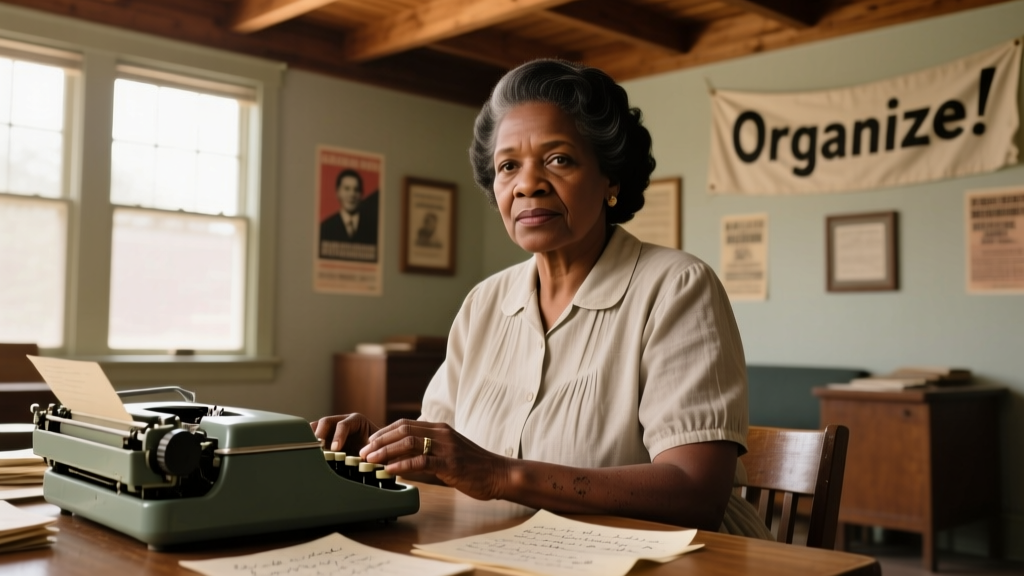
When we discuss personal branding on platforms like Instagram or TikTok, the focus is almost entirely on the individual ego. But what happens when the most powerful brand in American history was built by someone who actively rejected the spotlight? Enter Ella Baker, the legendary civil rights organizer who fundamentally shaped the 20th-century freedom movement while deliberately staying out of the limelight. In an era obsessed with influencer culture, Baker’s philosophy of ‘group-centered leadership’ offers a radical, highly effective alternative for modern digital creators, activists, and community builders.
At lovemebio.com, we usually analyze the Instagram bios and social media strategies of contemporary celebrities. However, to truly understand the mechanics of authentic community building, we must look at the architects of real-world movements. This critical review explores the digital legacy of Ella Baker, examining how her estate and modern activists manage her brand online, the pros and cons of her ‘anti-influencer’ approach, and how you can apply her grassroots philosophy to your own social media presence.
Quick Facts: The Architect of Grassroots Organizing
| Attribute | Details |
|---|---|
| Full Name | Ella Josephine Baker |
| Born | December 13, 1903 (Norfolk, Virginia) |
| Passed | December 13, 1986 (New York City) |
| Nationality | American |
| Known For | Civil Rights Organizing, NAACP, SCLC, Co-founding SNCC |
| Core Philosophy | Group-centered leadership; grassroots empowerment |
| Digital Archives | SNCC Digital Gateway, Ella Baker Center for Human Rights |
The Digital Footprint of Ella Baker
Because Ella Baker passed away in 1986, she does not have a personal Instagram, X (formerly Twitter), or TikTok account. However, her ‘brand’ and intellectual property are very much alive in the digital space, managed through a decentralized network of organizations, academic archives, and modern activists. This decentralized footprint is actually a perfect reflection of her organizing philosophy.
The Ella Baker Center for Human Rights
The most prominent digital steward of her legacy is the Ella Baker Center for Human Rights, based in Oakland, California. On Instagram (@ellabakercenter), their bio is a masterclass in mission-driven branding. Rather than focusing on individual personalities, their bio centers on community potential: “Building a world where all people can achieve their full human potential.” They use their platform not to elevate a single leader, but to highlight local organizers, policy wins, and community resources. Their engagement strategy relies on educational carousels and shareable infographics that break down complex systemic issues into digestible, actionable content.
The SNCC Digital Gateway
From an archival perspective, Duke University’s SNCC Digital Gateway serves as the definitive online hub for Baker’s methodology. The site preserves her organizing manuals, letters, and speeches. For digital historians and modern community managers, this site is a goldmine. It shows how Baker used the 1960s equivalent of viral networking—mimeographed newsletters, phone trees, and localized workshops—to build a national movement. Her digital footprint is not measured in follower counts, but in the enduring institutional frameworks she built, which are now preserved online for future generations of activists.
Pros & Cons: A Critical Review of the Grassroots Brand
Applying a modern branding lens to a historical figure requires nuance. Baker actively resisted the charismatic leadership model championed by her male contemporaries, like Dr. Martin Luther King Jr. Here is a critical review of the pros and cons of the ‘Ella Baker Brand’ as it exists in the digital and cultural consciousness today.
The Pros: Authenticity and Evergreen Trust
- Unmatched Authenticity: In a digital landscape plagued by performative activism, Baker’s legacy represents the gold standard of authenticity. Brands and creators who align themselves with her philosophy signal a deep, genuine commitment to community over clout.
- High Community Trust: Baker’s model focuses on empowering the audience rather than creating dependency on the creator. Digital communities built on this model (like mutual aid networks or decentralized activist groups) boast incredibly high retention and trust metrics because the power is shared.
- Timeless Relevance: Her famous assertion that “Strong people don’t need strong leaders” is frequently cited in modern web3, open-source, and decentralized tech communities. Her brand transcends civil rights history and applies to modern digital organizing.
The Cons: Algorithmic Invisibility and Fragmentation
- The ‘Behind-the-Scenes’ Penalty: Social media algorithms heavily favor charismatic, ego-driven, and highly visible personalities. Because Baker’s brand is inherently anti-ego, it struggles to achieve the viral, mainstream name recognition of figures who embraced the spotlight. Her digital footprint is often overshadowed by more recognizable civil rights icons.
- Fragmented Estate Control: There is no single, verified ‘Ella Baker’ hub. Her legacy is split between the Ella Baker Center, various university archives, and thousands of independent activists. This fragmentation can make it difficult for users seeking a centralized, authoritative source for her quotes and teachings.
- Risk of Misappropriation: Because her brand is decentralized, her quotes are frequently pulled out of context on platforms like Pinterest and Instagram to sell generic empowerment merchandise, stripping away the radical, systemic critique inherent in her original work.
How Her Philosophy Shapes Modern Instagram Bios
While Baker herself never wrote an Instagram bio, her ideological fingerprints are all over the platform. If you browse the profiles of modern grassroots organizers, mutual aid founders, and nonprofit directors, you will frequently see her influence. Many use her quotes as bio anchors to signal their values to their audience. Phrases like “Organizer | Believer in group-centered leadership” or quoting her mandate to “give light to the people” are common bio strategies used to differentiate genuine community builders from performative influencers.
According to the National Museum of African American History and Culture (NMAAHC), Baker’s greatest skill was her ability to listen and translate the needs of local people into actionable movements. Modern creators who adopt this ‘listening-first’ approach often use their Instagram bios to ask questions rather than make statements, utilizing features like the ‘Questions’ sticker or linking directly to community feedback forms, mirroring Baker’s town-hall methodology.
Personal Branding Takeaways for Modern Creators
You don’t need to be a civil rights leader to learn from Ella Baker. Whether you are building a personal brand, a niche community page, or a small business, her grassroots philosophy offers powerful takeaways for your social media strategy.
1. Build Communities, Not Audiences
An audience watches you; a community works with you. Baker believed that the movement was more important than the leader. Audit your Instagram bio and content strategy: Are you positioning yourself as an untouchable guru, or as a facilitator of community growth? Use your bio to highlight the community you serve, not just your personal accolades.
2. The Power of the ‘Link in Bio’ as an Organizing Tool
Baker was a master of logistics and resource distribution. Today, your ‘link in bio’ is your logistical hub. Don’t waste it on a generic homepage. Use tools like Linktree or Carrd to provide your followers with actionable resources, mutual aid funds, educational reading lists, and local event sign-ups. Make your profile a utility, not just a billboard.
3. Elevate Others in Your Captions and Tags
Baker spent her life identifying and nurturing young leaders, eventually guiding the formation of the Student Nonviolent Coordinating Committee (SNCC). You can replicate this digitally by using your platform to amplify smaller creators, local businesses, and marginalized voices. Tagging, sharing, and co-authoring posts builds a reciprocal network of trust that algorithmic hacks simply cannot replicate.
Final Thoughts: The Ultimate Anti-Influencer
Ella Baker remains the ultimate anti-influencer. In a digital ecosystem that constantly demands we center ourselves, her legacy is a vital reminder that true impact comes from empowering others. By studying how organizations like the Ella Baker Center maintain her digital footprint, and by applying her group-centered philosophy to our own bios and content strategies, we can build online spaces that are more authentic, resilient, and impactful. The next time you update your Instagram bio, ask yourself: Am I building a monument to my ego, or am I building a tool for my community?
Sources & Further Reading
- SNCC Digital Gateway (Duke University): An extensive archive of the Student Nonviolent Coordinating Committee, featuring primary sources on Ella Baker’s organizing methodologies.
- The Ella Baker Center for Human Rights: Official digital hub and social media channels continuing her mission of systemic justice and community empowerment.
- National Museum of African American History and Culture (NMAAHC): Digital collections and historical analyses detailing Baker’s crucial, behind-the-scenes role in the Civil Rights Movement.