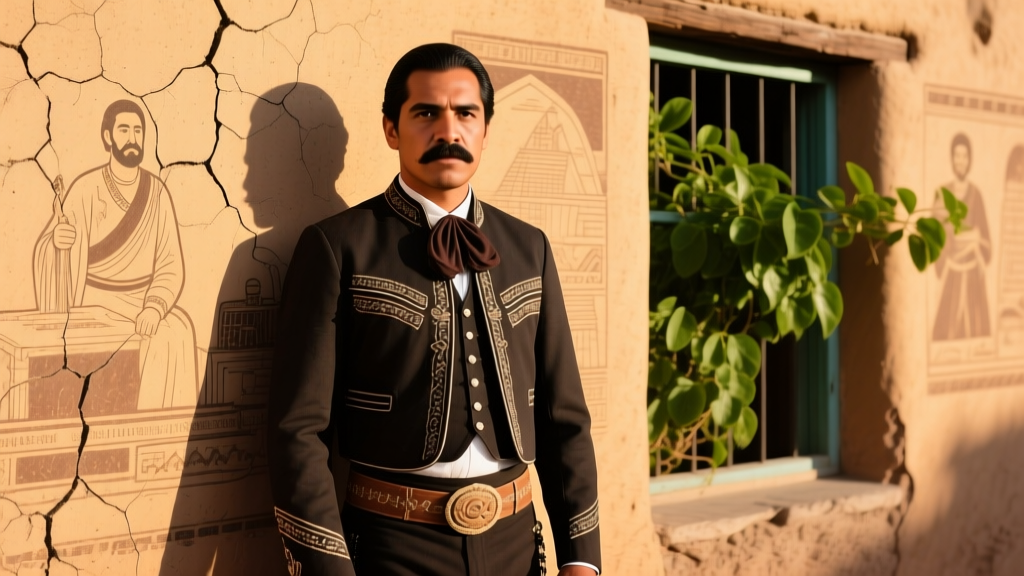
When discussing historical figures who mastered personal branding long before the internet, Emiliano Zapata stands in a league of his own. As a leading figure in the Mexican Revolution, Zapata didn't have Instagram or TikTok, but his visual identity, unwavering mission statement, and iconic slogans created a legacy that dominates social media feeds today. At lovemebio.com, we usually analyze modern influencers, but exploring Emiliano Zapata through the lens of FAQ and common misconceptions reveals timeless lessons in authenticity, visual consistency, and purpose-driven branding. Let's separate historical fact from internet fiction, debunk the myths, and decode the ultimate revolutionary bio.
Quick Facts: The Man Behind the Myth
| Attribute | Details |
|---|---|
| Full Name | Emiliano Zapata Salazar |
| Born | August 8, 1879 (Anenecuilco, Mexico) |
| Died | April 10, 1919 (Chinameca, Mexico) |
| Nationality | Mexican |
| Known For | Leading the Liberation Army of the South, Agrarian Reform |
| Iconic Slogan | 'Tierra y Libertad' (Land and Liberty) |
| Digital Legacy | Managed by cultural institutions, muralists, and the EZLN |
Emiliano Zapata on Social Media: Managing a Historical Legacy
Because Emiliano Zapata passed away in 1919, he does not possess personal social media accounts. However, his 'brand' is one of the most active and heavily curated historical legacies on platforms like Instagram, TikTok, and X (formerly Twitter). His digital presence is managed by a decentralized network of cultural institutions, indigenous rights activists, and digital artists.
On Instagram, searching his name yields millions of results dominated by a specific aesthetic: high-contrast sepia photography, vibrant street art murals, and typography featuring his iconic mustache and sombrero. Cultural heritage accounts, such as those run by the Mexican government, frequently use his image to promote national identity and historical tourism. Meanwhile, grassroots activists use his likeness to champion modern agrarian and indigenous rights.
The most fascinating aspect of his digital footprint is the Zapatista Army of National Liberation (EZLN). In 1994, the EZLN launched an uprising in Chiapas, Mexico, adopting Zapata's name and ideology. They became pioneers of digital branding, utilizing the early internet to broadcast their communiques globally, effectively creating the first 'internet-fueled' revolution. Today, modern Zapatista networks and allied activist accounts use Twitter and independent blogs to share updates, maintaining Zapata's anti-establishment, pro-indigenous brand identity in the digital age. His image is not just a historical artifact; it is a living, breathing digital banner for social justice.
FAQ: Common Misconceptions About Zapata's Brand
When building a personal brand, controlling the narrative is crucial. For Emiliano Zapata, his narrative was heavily contested during his life and continues to be misunderstood online today. Let's address the most frequent FAQs and misconceptions.
Myth 1: He was an uneducated bandit.
The Reality: This was a deliberate smear campaign orchestrated by the Porfirio Díaz dictatorship and later rival factions to delegitimize his movement. In reality, Zapata was a strategic, deeply principled leader. While he may not have held advanced academic degrees, he was highly intelligent and surrounded himself with intellectual allies, such as Otilio Montaño, a schoolteacher who helped him articulate his political vision. His brand was built on calculated justice, not random lawlessness.
Myth 2: His movement was purely violent and lacked a political framework.
The Reality: Social media memes often reduce revolutionaries to mere warriors. However, Zapata's core brand was rooted in legal and political restitution. He wasn't fighting to conquer; he was fighting to restore stolen land titles to indigenous communities. His movement had a highly structured political framework centered on agrarian reform, making him a champion of the working class rather than a mere warlord.
Myth 3: The government and the rebels share the exact same 'Zapata' brand.
The Reality: There is a massive ideological tug-of-war over his image online. The Mexican state often appropriates his image for institutional branding, portraying him as a unified nationalist hero. Conversely, modern grassroots movements and the EZLN use his image to critique the government, arguing that the state abandoned his true mission. When you see his image on social media, the context of the account posting it drastically changes the underlying message.
The Ultimate Bio: The Plan of Ayala as a Mission Statement
At lovemebio.com, we always tell our readers that a great bio needs a clear mission statement. Emiliano Zapata's equivalent of a 'link in bio' or personal manifesto was the Plan of Ayala, drafted in 1911. This document is a masterclass in clear, uncompromising personal branding.
Instead of vague political promises, the Plan of Ayala had a sharp, easily digestible hook: Reforma, Libertad, Justicia y Ley (Reform, Liberty, Justice, and Law). It outlined exactly what he stood against (the betrayal of Francisco Madero) and exactly what he stood for (the immediate return of stolen lands to the villages). It was the ultimate historical 'elevator pitch.' It gave his followers a unifying banner and a clear set of core values that could not be diluted by political rivals. To this day, the Plan of Ayala remains the foundational text for anyone studying his ideology.
Personal Branding Takeaways from a Revolutionary
What can modern content creators, entrepreneurs, and professionals learn from a 20th-century revolutionary? Here are three personal branding takeaways inspired by Emiliano Zapata.
- Visual Consistency is Powerful: Zapata was almost always photographed in his traditional Charro suit, complete with a wide-brimmed sombrero and a meticulously groomed mustache. He understood the power of visual identity. He didn't dress like the elite politicians in Mexico City; he dressed like the people he represented. Takeaway: Ensure your profile aesthetics, colors, and imagery align authentically with your core values and target audience.
- Define Your 'Tierra y Libertad': 'Land and Liberty' wasn't just a catchy slogan; it was the boundary of his brand. He refused political compromises that didn't include land reform. Takeaway: Your Instagram or LinkedIn bio should clearly state your non-negotiable values. What is the one thing you will never compromise on? Make it the centerpiece of your personal brand.
- Authenticity Outlasts Trends: While other revolutionary leaders chased political power, titles, and international fame, Zapata continually returned to his home state of Morelos to ensure the farmers were actually getting their land back. His authenticity is why his brand survives a century later, while the brands of his more opportunistic rivals have faded into obscurity. Takeaway: Don't chase viral trends that misalign with your mission. Long-term brand equity is built on genuine, consistent action.
Sources and Further Reading
To dive deeper into the history and legacy of Emiliano Zapata, we recommend the following verified historical resources:
- Encyclopædia Britannica: Emiliano Zapata - A comprehensive overview of his life, military campaigns, and political ideology.
- Library of Congress: The Mexican Revolution - Zapata - Archival documents and historical context regarding the Plan of Ayala and agrarian reform.
- EZLN Enlace Zapatista - The official digital archive of the modern Zapatista movement, showcasing how Zapata's legacy is maintained in the digital era.