Welcome to the ultimate VIP profile. In the world of human anatomy and fitness, few structures command as much respect, fear, and admiration as the Erector Spinae. Often treated as a celebrity in the physical therapy and bodybuilding communities, the Erector Spinae is the undisputed superstar of your posterior chain. Whether you are a beginner trying to understand why your lower back aches after a long day at the desk, or an aspiring fitness influencer looking to decode how anatomy pages build massive followings, this beginner-friendly explainer will break down everything you need to know.
Unlike human celebrities who rely on publicists and talent agents, this anatomical VIP relies on biomechanics and the central nervous system to maintain its star power. Let us dive into the 'career' of this incredible muscle group, analyze how it is portrayed across social media by top educators, and extract powerful personal branding lessons you can apply to your own Instagram bio and digital presence.
Quick Facts: The Erector Spinae Profile
| Attribute | Details |
|---|---|
| Full Name | Erector Spinae Muscle Group (Massa Spinalis) |
| 'Born' | Embryonic development (Epaxial musculature) |
| Nationality | Universal (Present in all human vertebrates) |
| Known For | Spinal extension, posture maintenance, lifting heavy loads |
| Social Media Reps | @squat_university, @jeffnippard, @the.prehab.guys |
| Primary 'Agents' | Central Nervous System (Spinal Nerves) |
Career Highlights: The Erector Spinae Anatomical Breakdown
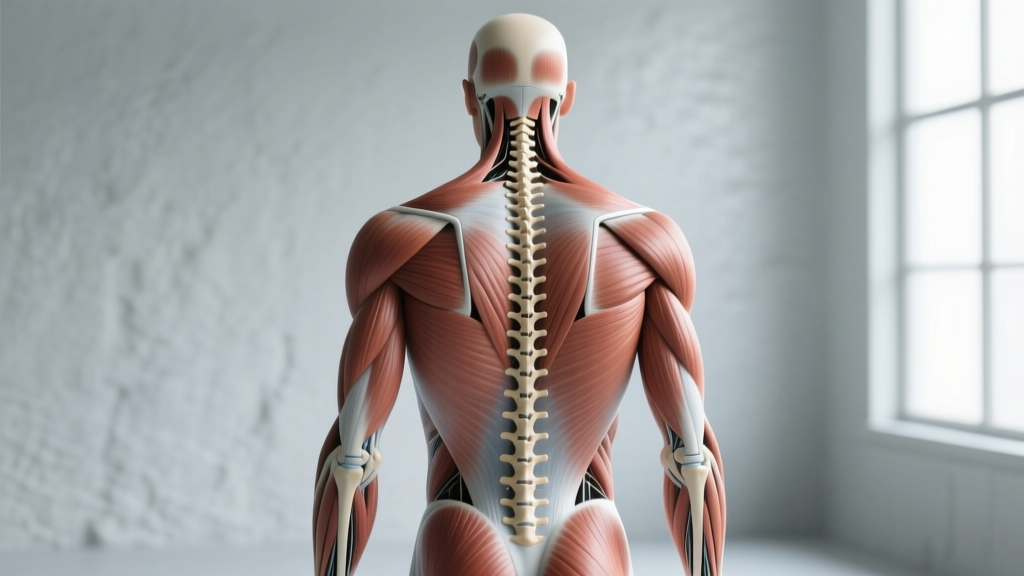
To understand the star power of the Erector Spinae, you have to look at its 'filmography'—the daily movements it performs to keep you upright and functional. This muscle group is not just one single muscle; it is a trio of performers running parallel to your spine. Think of them as the heavy-duty suspension cables of a massive bridge, keeping the structure stable against gravity and external loads.
The Three Pillars of the Group
- Iliocostalis: The outermost muscle. It connects your pelvis to your ribs, acting as the primary stabilizer when you bend sideways or carry heavy, uneven loads like groceries.
- Longissimus: The middle and largest muscle. It is the workhorse responsible for extending your spine and helping you stand up straight after bending over.
- Spinalis: The innermost muscle, sitting closest to the vertebrae. It provides fine-tuned, micro-adjustments to your posture and spinal alignment.
For beginners, the most important takeaway is that the Erector Spinae is constantly working. Even when you are just sitting at your desk scrolling through Instagram, these muscles are firing isometrically to keep your torso from collapsing forward. Furthermore, the Erector Spinae does not work alone. It integrates seamlessly with the thoracolumbar fascia, creating a 'brand synergy' that connects your lats to your glutes. When fitness influencers talk about 'core strength,' they are often secretly referring to the endurance and stability of this exact posterior network.
Social Media Presence: How Fitness Influencers Frame the Back
While the Erector Spinae does not have its own verified TikTok account, its 'PR team' consists of top-tier fitness educators, physical therapists, and biomechanics experts. By analyzing how these creators present the Erector Spinae online, we can uncover brilliant social media strategies that drive millions of views and followers.
Bio Optimization and Keyword Targeting
Accounts like Squat University (Dr. Aaron Horschig) and Jeff Nippard use highly optimized Instagram bios. They do not just say 'Fitness Guy.' They use authority-building keywords like 'DPT,' 'Biomechanics,' and 'Spinal Health.' When they post content about the Erector Spinae, they use carousel graphics with bold, contrasting text that simplifies complex anatomy into digestible, beginner-friendly slides. The hook is almost always pain-point driven: 'Why your lower back hurts during deadlifts.' This immediately captures the attention of anyone suffering from gym-related discomfort.
Visual Storytelling and Engagement Tactics
The most successful anatomy posts featuring the Erector Spinae use 3D anatomical models or red-highlighted muscle overlays on videos of compound lifts. This visual storytelling immediately grabs attention and stops the scroll. Furthermore, these creators drive engagement by asking polarizing or highly relatable questions in their captions, such as 'Do you wear a lifting belt for your working sets?' This turns a simple anatomy lesson into a community debate, boosting algorithmic reach and signaling to the platform that the content is highly valuable.
Personal Branding Takeaways for Your Own Bio
What can the undisputed VIP of the back teach you about crafting the perfect Instagram bio and building a personal brand? Here are three beginner-friendly lessons inspired by the Erector Spinae that you can apply to your own digital presence today.
1. Highlight Your 'Three Pillars'
Just as the Erector Spinae relies on three distinct columns (Iliocostalis, Longissimus, Spinalis) to function perfectly, your social media bio needs three clear pillars to convert visitors into followers.
Pillar 1 (Identity): Who are you? (e.g., 'SEO Copywriter')
Pillar 2 (Value): What do you do for the audience? (e.g., 'Helping brands rank higher and convert better')
Pillar 3 (Action): What should they do next? (e.g., 'Grab my free ranking guide below')
2. Be the 'Suspension Cable' for Your Audience
The primary job of the Erector Spinae is to support the spine and prevent collapse under heavy loads. Your personal brand should do the exact same thing for your niche. Use your bio and content to solve heavy, stressful problems for your audience. If you are a financial advisor, your bio should not just list your certifications; it should say, 'Taking the weight off your retirement planning.' Position yourself as the support system your followers desperately need, and they will trust you implicitly.
3. Flexibility Prevents Breaking
In biomechanics, a rigid Erector Spinae muscle is prone to tearing, while a mobile, conditioned one can handle immense stress and adapt to weird angles. In personal branding, rigidity is equally dangerous. If you only post one type of content or refuse to adapt to new platform features (like Reels, Carousels, or Threads), your audience engagement will snap. Show your human side, adapt to trends, and let your personality flex. Authenticity and adaptability are the hallmarks of a resilient personal brand.
Common Injuries and 'PR Management'
Every celebrity has scandals, and for the Erector Spinae, the scandal is the dreaded lower back spasm. Usually caused by poor lifting mechanics, prolonged sitting, or weak glutes (its co-stars), a back spasm is the muscle's way of going on a strike to protect the spine from further damage.
Beginner-friendly 'PR management' (rehabilitation) involves gentle mobility work, bird-dog exercises, and learning proper hip-hinge mechanics. Fitness educators constantly remind their audiences that you cannot out-train a bad hip hinge. By addressing the root cause rather than just treating the symptom with painkillers, you keep the star of the show healthy and performing at its peak. Remember, the best PR strategy is prevention: warm up properly, brace your core, and respect the limits of your anatomy.
Verified Sources and Further Reading
- Physiopedia: 'Erector Spinae Muscle' - A comprehensive, peer-reviewed breakdown of origin, insertion, and biomechanical actions.
- Kenhub: 'Back Muscles: Anatomy and Functions' - Detailed visual guides and quizzes on the three columns of the massa spinalis.
- PubMed / NCBI: 'Electromyographic analysis of the erector spinae during dynamic lifting' - Peer-reviewed studies on muscle activation during compound movements like the deadlift and squat.