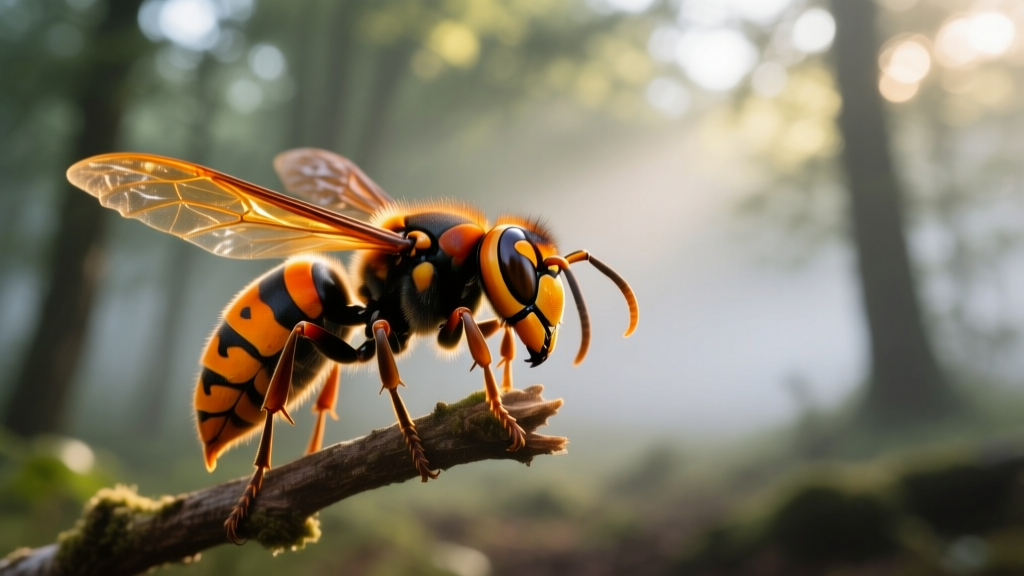
When we think of celebrities with a massive public relations problem, we usually picture human influencers caught in a social media scandal. But in the natural world, no creature has faced a more severe case of mistaken identity, brand defamation, and viral panic than the European Hornet. Known scientifically as Vespa crabro, this impressive insect is the undisputed heavyweight champion of European social wasps. Yet, despite its crucial ecological role and relatively docile nature, the European Hornet has spent decades fighting a vicious rumor mill.
In recent years, the rise of nature-focused social media communities like BugTok and wildlife photography on Instagram has given this misunderstood celebrity a platform to reclaim its narrative. By analyzing how the European Hornet is presented online, how entomologists act as its unofficial PR team, and how it differentiates itself from its more aggressive cousins, we can uncover brilliant personal branding lessons. Whether you are building a personal brand, crafting the perfect Instagram bio, or trying to overcome a public misconception, the European Hornet’s journey from feared pest to respected ecological hero offers a masterclass in authentic personal branding.
Quick Facts: The European Hornet Profile
| Attribute | Details |
|---|---|
| Full Name | Vespa crabro (European Hornet) |
| Debut (Taxonomy) | 1761 (Described by Carl Linnaeus) |
| Nationality / Origin | Eurasian (Introduced to North America in 1840s) |
| Known For | Largest social wasp in Europe; master pest controller |
| Social Media Hubs | #BugTok, #WildlifePhotography, #Entomology |
| Brand Colors | Aposematic Red-Brown and Yellow Stripes |
The European Hornet's Rise to Wildlife Celebrity Status
To understand the European Hornet’s current brand positioning, we must look at its origins. First categorized in the 18th century, this insect has long been a staple of Eurasian folklore, often cast as the villain in rural tales of aggressive, nest-guarding monsters. However, its 'international tour' began in the mid-19th century when it was accidentally introduced to North America. Like many celebrities who expand into new markets, the European Hornet faced immediate backlash from locals who misunderstood its intentions.
Unlike the native yellowjackets that crash human picnics and scavenge for sugary drinks, the European Hornet operates with a strict, professional code of conduct. It is primarily nocturnal and highly focused on hunting live prey to feed its colony. For decades, its brand was entirely defined by human fear of its massive size and loud, intimidating flight. It wasn't until the advent of high-definition macro photography and educational nature channels that the European Hornet received a proper rebrand. Wildlife cinematographers began showcasing its intricate nest-building abilities and its dedication to colony maintenance, shifting the public perception from 'mindless stinging machine' to 'complex, highly organized society.' This transition highlights a crucial branding lesson: if you do not control your own narrative and showcase your behind-the-scenes process, the public will fill the void with their own assumptions.
Career Highlights & Ecological Impact
Every major celebrity has a discography or a filmography—a body of work that proves their value to the industry. For the European Hornet, its 'greatest hits' are its ecological contributions. If you are looking to build a personal brand based on tangible value rather than just aesthetics, take note of the European Hornet’s resume:
- Master Pest Control: The European Hornet is a voracious predator of garden-destroying pests. They consume thousands of caterpillars, flies, and agricultural pests per season, acting as a free, organic pest control service for farmers and gardeners.
- Architectural Marvels: Their nests are constructed from chewed wood fibers mixed with saliva, creating a papery, multi-tiered masterpiece that regulates temperature and humidity with astonishing precision.
- Tree Sap Pruning: Interestingly, European Hornets strip bark from certain trees (like lilacs and birches) to access sap. While this looks destructive, it actually prunes the trees and creates sap flows that feed dozens of other butterfly and moth species during late summer.
By focusing on these tangible benefits, nature educators have successfully pivoted the European Hornet’s brand from a 'nuisance' to an 'essential ecological partner.'
Social Media Presence: BugTok and Nature Influencers
In the modern digital landscape, the European Hornet’s social media presence is largely managed by a dedicated fanbase of entomologists, macro photographers, and nature educators on platforms like TikTok, Instagram, and YouTube. If you search #BugTok or #VespaCrabro, you will find a highly engaged community dedicated to myth-busting.
The content strategy for the European Hornet online relies heavily on 'myth versus reality' formats. Influencers frequently post side-by-side comparison videos showing the European Hornet peacefully eating a fallen apple or hunting a horsefly, contrasted with the frantic, aggressive behavior of common yellowjackets. This comparative content is a brilliant SEO and engagement strategy. By addressing the exact pain points and fears of their audience (the fear of being stung), creators build trust and authority.
Furthermore, the visual branding of the European Hornet on Instagram is stunning. Macro photographers leverage its striking aposematic coloration—the deep red-brown thorax and bold yellow-and-black striped abdomen. In personal branding, your visual identifiers matter. The European Hornet’s color palette is a warning to predators, but on social media, it serves as a highly recognizable, scroll-stopping aesthetic that instantly communicates power, rarity, and natural beauty.
The PR Problem: Overcoming a Fearsome Public Image
No celebrity profile is complete without addressing the scandals, and the European Hornet faced the ultimate brand identity crisis in 2020. When the Asian Giant Hornet (Vespa mandarinia) made international headlines as the so-called 'Murder Hornet,' the European Hornet suffered massive collateral damage. Panic ensued, and thousands of innocent European Hornets were exterminated by terrified homeowners who could not tell the difference between the two species.
This crisis required an immediate, aggressive PR intervention from the scientific community. Entomologists took to Twitter, Reddit, and Facebook to launch a massive educational campaign. They created simple, easy-to-read infographics highlighting the key differences: the European Hornet’s smaller size, distinct reddish-brown head, and harmless nature compared to its Asian counterpart.
From a personal branding perspective, this is a masterclass in crisis management and brand differentiation. When a competitor or a viral trend threatens to dilute or damage your personal brand, you cannot stay silent. You must proactively clarify your unique value proposition (UVP). The European Hornet’s 'PR team' successfully reclaimed the narrative by leaning into education, turning a moment of public panic into an opportunity for widespread ecological literacy.
Personal Branding Takeaways from the European Hornet
What can human creators, entrepreneurs, and professionals learn from a giant, misunderstood wasp? Here are the top personal branding and bio takeaways inspired by the European Hornet:
- 1. Clarify Your Bio to Prevent Misconceptions: Just as the European Hornet had to be differentiated from the Asian Giant Hornet, your Instagram or LinkedIn bio must clearly state who you are and, just as importantly, who you are not. If your industry is plagued by stereotypes or 'murder hornet' equivalents, use your bio to address them head-on with clarity and professionalism.
- 2. Let Your Work Speak Louder Than Rumors: The European Hornet doesn't waste energy chasing humans; it focuses on hunting pests and building its colony. In your own career, focus on producing undeniable, high-quality work. A strong portfolio will always outshine internet gossip or industry rumors.
- 3. Own Your Niche Visual Identity: The Hornet’s striking red and yellow patterns make it instantly recognizable in a dense forest. On social media, consistency in your color palette, photography style, and tone of voice helps you stand out in a crowded digital feed. Don't be afraid to use bold 'warning colors' if they align with your authentic brand.
- 4. Turn Your 'Flaws' Into Educational Content: People are intimidated by the Hornet's size and loud buzzing. Instead of hiding these traits, nature educators use them as hooks for educational content. Take the things that make you 'intimidating' or different in your professional life and use them as unique talking points in your content strategy.
Final Thoughts on Nature's Most Misunderstood Brand
The European Hornet proves that a bad reputation can be reversed with time, education, and a shift in perspective. It is not a mindless monster, but a vital, hardworking pillar of its ecosystem. As you craft your own personal brand and design your social media bios, remember the resilience of Vespa crabro. Stay true to your ecological niche, protect your community, and never let a little mistaken identity stop you from doing the vital work you were put on this earth to do.