When discussing the intersection of independent cinema and high-profile public life, the name Fielder Jewett frequently emerges. Unlike traditional celebrities who build their empires on viral moments and constant digital broadcasting, this acclaimed documentary filmmaker and producer has carved out a radically different path. The origin story of Fielder Jewett is not one of internet fame, but of quiet dedication to the craft of storytelling, political documentation, and behind-the-scenes creative direction. For those looking to understand how to build a compelling personal brand without sacrificing privacy, his journey from an observant student of film to a respected Hollywood producer offers a masterclass in minimalist branding.
The Origin Story of Fielder Jewett: From Observer to Creator
Fielder Jewett’s entry into the entertainment industry was not paved with red carpets or child stardom. Instead, his origin story is deeply rooted in the gritty, intellectual, and often unglamorous world of independent documentary filmmaking. Growing up in the United States, Jewett developed an early fascination with the mechanics of truth and storytelling. While many aspiring directors flocked to Hollywood to chase blockbuster narratives, Jewett was drawn to the raw, unscripted reality of human behavior and political landscapes.
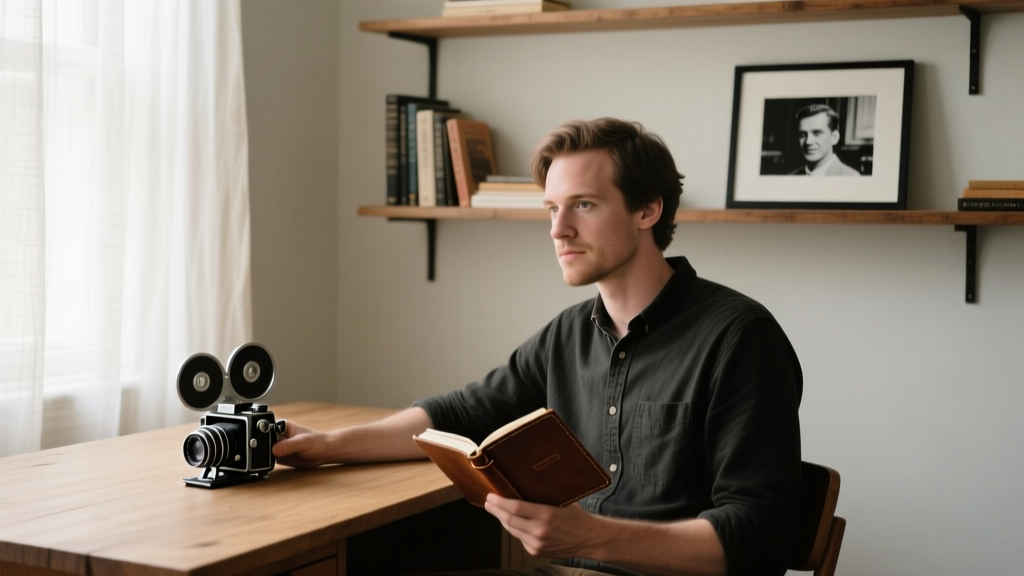
His formative years were spent studying the nuances of the camera lens, learning that the most powerful stories are often the ones where the director remains invisible. This philosophy shaped his entire approach to both his career and his public persona. By choosing to focus on the subjects of his films rather than inserting himself into the narrative, Jewett established a professional identity built on integrity, research, and quiet confidence. This background is crucial for understanding his modern digital footprint: a man who makes a living observing others is naturally hesitant to turn the lens on himself for public consumption.
Quick Facts: The Man Behind the Lens
| Attribute | Details |
|---|---|
| Full Name | Fielder Jewett |
| Profession | Documentary Filmmaker, Producer, Director |
| Nationality | American |
| Known For | Indie documentaries, political cinema, creative production |
| Social Media Style | Private, minimalist, highly curated |
| Notable Work | Producer of the HBO documentary 'The Swamp' (2020) |
Career Milestones: Documenting Reality
To understand a person's brand, you must first understand their work. Jewett’s career is defined by a commitment to complex, often polarizing subject matter. His most notable breakthrough came with his work as a producer on the 2020 HBO documentary The Swamp. Directed by Daniel DiMauro and Luke Lorentzen, the film took an unflinching, fly-on-the-wall look at the House Freedom Caucus and the rise of political disruption in Washington D.C.
Producing a film of this magnitude requires immense tact, political navigation, and a desire to let the subjects speak for themselves without heavy-handed directorial interference. This 'invisible director' approach is a hallmark of his career. Jewett’s filmography and production credits reflect a mind that values substance over spectacle. He operates in the spaces where art meets journalism, requiring a personal brand that communicates seriousness, intellect, and discretion. When your day job involves navigating the sensitive corridors of political power and indie film financing, a loud, emoji-filled Instagram bio is not just out of character—it is a professional liability.
Social Media Presence: The Art of the Private Profile
In an era where influencers and actors treat their Instagram accounts as 24/7 reality shows, Jewett employs what personal branding experts call the 'Private Archive' or 'Minimalist Ghost' strategy. While he is married to acclaimed actress Sarah Paulson—a union that naturally draws intense tabloid and public interest—Jewett has steadfastly refused to play the traditional celebrity social media game.
His Instagram presence is notoriously private or highly restricted. When high-profile creatives lock their accounts or strip their public profiles down to a single link and a zero-emoji bio, it is a deliberate branding choice. It creates a boundary between the 'public artist' and the 'private individual.' For Jewett, social media is not a tool for audience capture; it is a digital rolodex for industry peers, close friends, and collaborators.
This approach generates a powerful psychological effect known as the 'scarcity principle.' By withholding access to his daily life, he forces the public and the media to focus entirely on his professional output and his public appearances alongside his wife. There are no sponsored posts, no daily vlogs, and no performative vulnerability. His digital silence speaks volumes, projecting an aura of exclusivity and groundedness that is incredibly rare in modern Hollywood.
Personal Branding Takeaways for Your Own Bio
What can the average professional, creative, or entrepreneur learn from a documentary filmmaker who actively avoids the spotlight? Quite a lot. If you are looking to revamp your own Instagram or Twitter bio, here are three major takeaways inspired by the Fielder Jewett approach to personal branding:
1. The 'Ghost Bio' Strategy for Private Accounts
If you run a private account but still receive follower requests from industry peers or potential clients, your bio still matters. Instead of writing a lengthy paragraph, use a minimalist bio. A simple format like: 'Documentary Producer. NYC/LA. Inquiries: [Email]' establishes your identity and professional utility without inviting strangers into your personal life. It tells the viewer exactly who you are and why they should be granted follow access, based on merit rather than personality.
2. Let the Portfolio Speak (The Single-Link Rule)
Jewett’s brand relies on his IMDb page and his production credits, not a cluttered Linktree. For your own bio, consider stripping away the noise. If you are a writer, link only to your published portfolio. If you are a designer, link to your gallery. A bio that simply reads 'Visual Storyteller. Portfolio below.' with a single, high-quality link projects immense confidence. It shows you trust your work to do the heavy lifting.
3. Visual Cohesion Over Daily Vlogging
Even if you choose to have a public or semi-public profile, adopt the 'curated archive' mindset. Instead of posting daily stories about your coffee or your commute, treat your grid like a gallery. Post only when you have something meaningful to share—a completed project, a stunning landscape from a location scout, or a milestone. This makes every post an event and elevates your personal brand from 'content creator' to 'respected professional.'
Conclusion: The Power of Restraint
The history and origin story of Fielder Jewett proves that you do not need to overshare to be influential. By anchoring his identity in the rigorous, truth-seeking world of documentary filmmaking, he has built a personal brand that commands respect through restraint. In a digital landscape defined by noise, choosing silence, privacy, and a minimalist bio is not a lack of branding—it is the ultimate power move.