
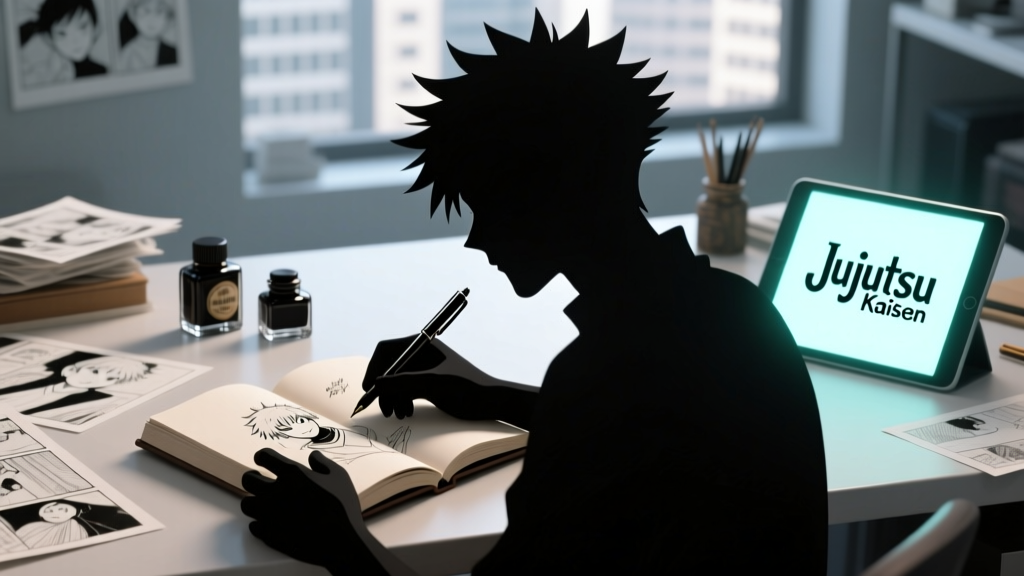
In the hyper-connected landscape of modern digital media, creators are constantly told to show their faces, share their daily routines, and build parasocial relationships with their audiences. Yet, Gege Akutami, the mastermind behind the global phenomenon Jujutsu Kaisen, has achieved unprecedented success by doing the exact opposite. As the manga industry experiences a massive global renaissance, Akutami's deliberate choice to remain anonymous represents a fascinating counter-trend. This profile explores how Gege Akutami leverages digital silence, quirky avatars, and publisher-mediated communication to build a mystique that rivals the lore of their own dark fantasy universe.
Quick Facts: The Enigma Behind the Ink
| Attribute | Details |
|---|---|
| Full Name | Unknown (Pen name: Gege Akutami) |
| Born | February 26, 1992 (Iwate Prefecture, Japan) |
| Nationality | Japanese |
| Known For | Jujutsu Kaisen, Jujutsu Kaisen 0, No.9 |
| Social Media Handles | None (Represented by Shueisha / JJK Official PR) |
| Gender | Officially Unconfirmed / Ambiguous |
Career Highlights and Manga Bibliography
Before dissecting the personal branding of this elusive creator, it is essential to understand the sheer weight of their bibliography. Akutami's career trajectory is a masterclass in iterative world-building and dark fantasy storytelling, evolving from rough prototypes to a polished global juggernaut.
- No.9 (2014): A one-shot that served as the conceptual prototype for the sorcery and cursed energy mechanics later seen in their magnum opus. It showcased an early version of the gritty, high-stakes combat that would define their career.
- Nikkai Asa (2015): Another early one-shot showcasing Akutami's distinct, slightly jagged art style and affinity for supernatural horror and urban legends.
- Jujutsu Kaisen 0 (2017): Originally serialized as Tokyo Metropolitan Curse Technical School, this prequel established the emotional core and power system of the franchise, focusing on Yuta Okkotsu and the tragic villainy of Suguru Geto.
- Jujutsu Kaisen (2018-2024): The flagship serialization in Weekly Shonen Jump. Spanning 271 chapters, it became a cultural phenomenon, breaking sales records and spawning a massively successful anime adaptation by studio MAPPA. The series concluded in late 2024, cementing Akutami's legacy in the shonen pantheon alongside titans like Masashi Kishimoto and Eiichiro Oda.
The Gege Akutami Anonymity Trend: Digital Silence as a Strategy
In an era where mangaka like Tatsuki Fujimoto (Chainsaw Man) and ONE (One Punch Man) use X (formerly Twitter) to share unfiltered, often memetic thoughts, Akutami's complete absence from personal social media is a glaring anomaly. This is not a mere oversight; it is a calculated branding decision that aligns perfectly with current trends regarding creator burnout, privacy, and the rejection of the attention economy.
The modern digital landscape is plagued by the 'curse' of overexposure. Creators are expected to be content machines, leading to severe burnout—a reality famously documented by Hunter x Hunter creator Yoshihiro Togashi, whose health struggles have been heavily tied to the grueling serialization schedule. By refusing to maintain a personal Instagram, X, or TikTok account, Akutami forces the public discourse to remain entirely focused on the work. There are no controversial late-night tweets to apologize for, no parasocial boundaries to enforce, and no personal life to dissect by overzealous fans.
Instead, the 'bio' of Gege Akutami is written entirely through the weekly chapters and the highly anticipated 'Author Notes' found in the back of the tankobon (collected volume) releases. These author notes are where Akutami's true personality shines. Fans eagerly await them not just for lore drops, but for Akutami's self-deprecating humor, bizarre analogies, and unapologetic love for horror movies and niche manga references. This creates a unique engagement loop: the audience starves for connection, and Akutami provides it in highly curated, infrequent, and deeply entertaining bursts via the publisher, Shueisha.
The Avatar: Visual Branding Without a Face
When an author refuses to show their face, the market still demands a visual anchor. Enter the Gege Akutami avatar. Historically, Akutami has used a variety of self-drawn caricatures for author photos and event appearances, most notably a cat holding a pen, an owl, or a bizarre, jagged-toothed creature. This choice taps into a broader digital trend: the rise of the VTuber and the faceless creator. By utilizing a mascot, Akutami achieves several branding goals simultaneously:
- Merchandisability: A cute or weird mascot can be turned into official goods, stickers, and plushies, creating an additional revenue stream and brand touchpoint that a standard author photo could never achieve.
- Gender Ambiguity: Despite intense internet sleuthing regarding Akutami's gender, the use of an animal avatar allows the creator to maintain strict ambiguity, ensuring readers project their own interpretations onto the text without gender bias influencing their reading experience.
- Event Participation: When Akutami does appear at events like Jump Festa, they do so in costume or via a mascot suit, turning a standard PR obligation into a viral, theatrical spectacle that generates organic social media buzz without compromising personal privacy.
Personal Branding Takeaways for Digital Creators
What can everyday social media users, indie artists, and digital entrepreneurs learn from the mastermind behind Jujutsu Kaisen? You do not need to draw a cursed spirit to apply these lessons to your own Instagram bio and personal brand.
1. Let Your Portfolio Be Your Bio
Akutami proves that your output is your strongest personal brand asset. Instead of filling your Instagram bio with endless adjectives about how 'passionate' or 'driven' you are, curate a feed that serves as a living portfolio. Let the quality of your work generate the mystique. If your content is compelling enough, your audience will not care what you had for breakfast; they will care about what you create.
2. The Power of the Mascot
If you are camera-shy or value your privacy, design a distinct avatar or mascot. A consistent, recognizable illustration can become the face of your brand across all platforms. It acts as a shield for your personal life while still providing a friendly, engaging visual hook for your profile picture and branding materials. This is highly effective for digital artists, streamers, and niche newsletter writers.
3. Scarcity Drives Engagement
Constant posting leads to audience fatigue. Akutami's reliance on monthly volume releases for personal commentary proves that scarcity creates value. Consider shifting your strategy from daily, low-effort updates to weekly or monthly 'deep dives' or newsletters. Make your audience anticipate your voice rather than expecting it on demand. When you do speak, make it count.
4. Establish Firm Parasocial Boundaries
In your bio, clearly define what your page is about. If you are a digital artist, state 'Commissions Closed' or 'Art Only.' Use your link-in-bio tools to direct traffic to your work, not your personal life. Establishing these boundaries early prevents the toxic entitlement that often plagues modern creators and keeps your comment sections focused on your craft rather than your personal affairs.
Sources and Further Reading
To dive deeper into the world of Jujutsu Kaisen and the publishing strategies of Shueisha, consult the following official and industry resources:
- Anime News Network: Comprehensive industry data and encyclopedia entries on Gege Akutami and the serialization history of Jujutsu Kaisen (https://www.animenewsnetwork.com/encyclopedia/people.php?id=175174).
- Viz Media: The official English localization publisher for Jujutsu Kaisen, offering insights into the global marketing and volume releases (https://www.viz.com/jujutsu-kaisen).
- MANGA Plus by Shueisha: The primary digital distribution platform where the global audience consumed the weekly chapters and official author statements (https://mangaplus.shueisha.co.jp/).