When discussing British fashion royalty, Giles Deacon stands out as a master of juxtaposition. Since launching his eponymous label in 2004, the Central Saint Martins alumnus has dressed everyone from Sarah Jessica Parker to Princess Eugenie. Yet, despite his high-profile clientele and global recognition, the digital narrative surrounding him is often clouded by industry myths. Is he purely an avant-garde provocateur, or a commercial powerhouse? In this FAQ and misconception-busting guide, we dive deep into the Giles Deacon brand. We will analyze his digital footprint, debunk the most common myths about his design philosophy, and extract actionable personal branding takeaways that you can apply to your own social media bio and creative portfolio.
Quick Facts: The Designer Behind the Brand
| Attribute | Details |
|---|---|
| Full Name | Giles Deacon |
| Born | 1969, Darlington, County Durham, England |
| Nationality | British |
| Education | Central Saint Martins (Graduated 1992) |
| Known For | Eponymous fashion label, royal bridal wear, avant-garde tailoring, fashion illustration |
| Social Media | Instagram (@gilesdeacon) |
Common Misconceptions About Giles Deacon
The fashion industry is rife with assumptions, and luxury designers often find themselves boxed into narrow categories by the media. Let us address the most frequent FAQs and debunk the myths surrounding this iconic British designer.
Myth 1: He only designs avant-garde, unwearable runway art
The FAQ: 'Is Giles Deacon just about shock value and theatrical runway pieces?'
The Reality: While Deacon is celebrated for his dramatic silhouettes, laser-cut leather, and playful motifs (like his famous Pac-Man dresses or swan motifs), his foundation is deeply rooted in commercial luxury and impeccable tailoring. Before launching his own label, he honed his craft at some of the most commercially successful houses in the world, including Ralph Lauren, Bottega Veneta, and Louis Vuitton. Furthermore, his status as the go-to designer for high-society bridal and reception wear—most notably designing Pippa Middleton's wedding dress in 2017 and Princess Eugenie's reception dress in 2018—proves his mastery of traditional, elegant, and highly structured garments. His brand balances theatricality with profound wearability.
Myth 2: His personal brand is entirely separate from his corporate identity
The FAQ: 'Does he maintain a strict divide between his personal life and his fashion house?'
The Reality: Unlike many legacy fashion houses that maintain a sterile, corporate facade, Deacon seamlessly blends his personal passions with his professional output. His love for the English countryside, his dogs, wildlife, and hand-drawn illustrations are not hidden away; they are integral to his brand's DNA. This holistic approach to personal branding makes his label feel intimately connected to his actual lifestyle, fostering a deeper parasocial connection with his audience and clientele.
Myth 3: He relies purely on London Fashion Week for relevance
The FAQ: 'Is he strictly a London-based designer who only caters to the UK market?'
The Reality: Although he is a stalwart of the British fashion scene and a recipient of the British Fashion Council's Designer of the Year award, his reach is decidedly global. He has showcased collections in Paris, collaborated with international high-street giants like New Look to reach a broader demographic, and maintains a private client list that spans Hollywood actors, European royalty, and global musicians. His brand is a global export of British eccentricity and elegance.
Analyzing the Giles Deacon Social Media Presence
To understand how a luxury creative builds a digital identity, we must look at how Deacon utilizes platforms like Instagram. His approach is a masterclass in 'quiet luxury' mixed with 'creative transparency.'
The Minimalist Bio Strategy
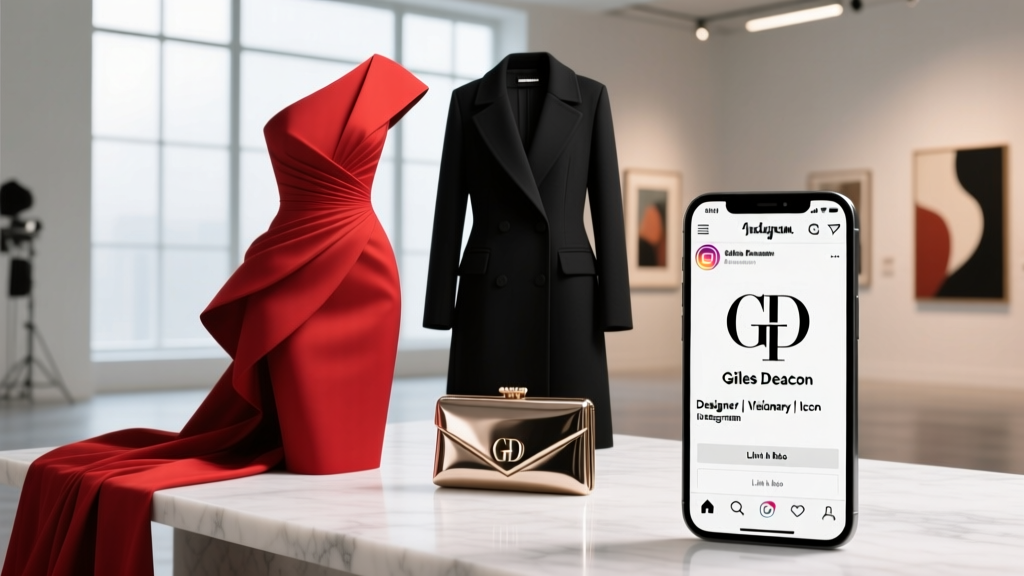
If you visit his Instagram profile, you will notice a distinct lack of clutter. Luxury designers rarely use their bio space for lengthy manifestos or emoji-laden lists. Instead, the bio typically features his name, his title (Designer/Creative Director), the studio's location (London), and a clean link to his latest collection, press feature, or digital portfolio. This minimalism signals confidence. It tells the visitor that the work speaks for itself. For aspiring creatives, this is a crucial lesson: your bio does not need to explain everything you do; it only needs to direct traffic to where your work lives.
The 'Atelier' Grid Aesthetic
Deacon's posting style avoids the overly polished, heavily filtered influencer aesthetic. Instead, his grid serves as a digital scrapbook and a window into the atelier. Followers are treated to raw, hand-drawn fashion sketches, close-ups of intricate fabric swatches, half-draped mannequins, and behind-the-scenes moments from fittings. By sharing the process rather than just the final product, he elevates his audience from mere consumers to insiders. This builds immense trust and justifies the luxury price point of his garments, as followers can visually track the hours of meticulous craftsmanship involved.
Engagement and Community
While his follower count may not rival fast-fashion influencers, the quality of his engagement is exceptionally high. Comments frequently come from fashion editors, fellow designers, stylists, and high-net-worth clients. By engaging authentically with his creative community and tagging the artisans, embroiderers, and photographers he collaborates with, he reinforces his position as a respected industry leader rather than just a brand logo.
Personal Branding Takeaways for Your Own Bio
What can you learn from the digital strategy of a royal dressmaker and avant-garde tailor? Here are three actionable takeaways to elevate your own social media bio and personal brand.
- Adopt the 'Minimalist Bio, Maximalist Portfolio' Approach: If you are a creative, designer, or freelancer, strip the clutter from your Instagram or Twitter bio. Use a simple formula: [Your Name] | [Your Core Discipline] | [Your City/Location] | [Link to Portfolio]. Let your actual content grid serve as the 'maximalist' expression of your talent. A clean bio looks professional and reduces cognitive load for potential clients visiting your page.
- Show the Scaffolding, Not Just the Building: Deacon's success on social media stems from showing the messy, beautiful reality of creation. Do not just post the final logo, the published article, or the finished photograph. Post the initial sketches, the messy desk, the fabric scraps, or the rejected drafts. People connect with the human effort behind the art. Use your Instagram Stories to document your daily creative process, and save them to highlighted reels on your profile.
- Integrate Your 'Off-Duty' Passions: Your personal brand should not be a one-dimensional corporate brochure. Deacon's inclusion of his love for nature, animals, and illustration makes him relatable and adds texture to his brand identity. Identify one or two personal passions that complement your professional work and weave them into your content strategy. If you are a tech developer who loves baking, or a financial analyst who paints, let those facets peek through. It makes you memorable in a sea of identical professionals.
- Leverage Strategic Collaborations: Notice how luxury designers elevate their status by associating with master craftspeople. In your own bio and tagging strategy, highlight the people you work with. If you are a web designer, tag the copywriter and the photographer. Building a network of mutual endorsement strengthens your personal brand's authority and expands your reach into adjacent creative communities.
Sources & Further Reading
To dive deeper into the career and design philosophy of this iconic British tailor, explore the following industry resources:
- Vogue: Giles Deacon Designer Profile & Runway Collections - A comprehensive archive of his seasonal collections and editorial features.
- The Business of Fashion: Giles Deacon - Insights into the business strategy, commercial collaborations, and industry impact of his eponymous label.