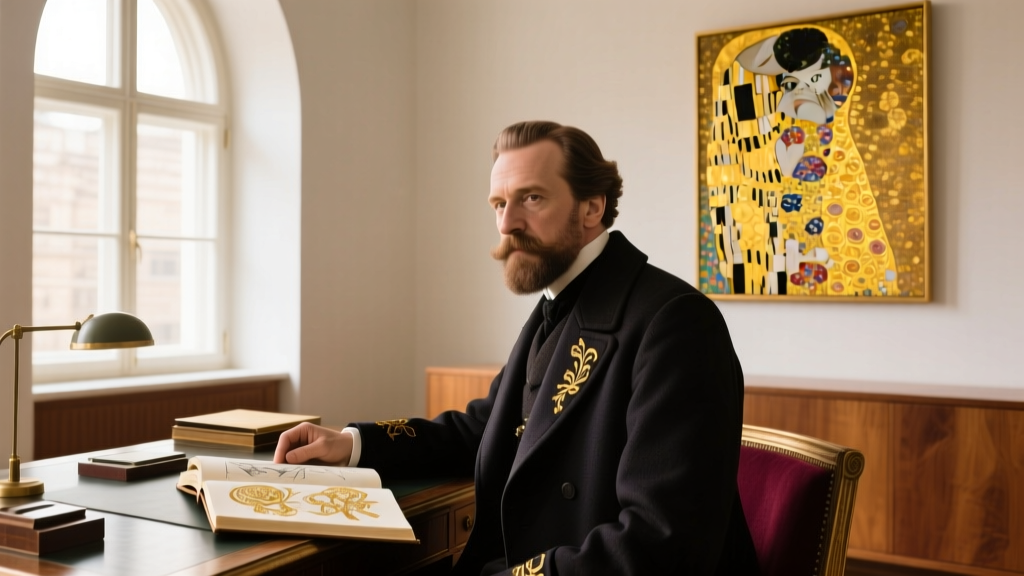
When you think of iconic personal branding, a 19th-century painter might not be the first figure that comes to mind. Yet, Gustav Klimt remains one of history’s greatest masters of visual identity. Long before Instagram grids and digital aesthetics, Klimt cultivated a highly distinctive, instantly recognizable brand that continues to dominate social media today. For modern creators, artists, and professionals looking to craft the perfect online presence, analyzing the Gustav Klimt legacy offers a brilliant, beginner-friendly masterclass in standing out. Let us explore how his golden aesthetic translates to modern social media and what you can learn for your own bio.
Who Was Gustav Klimt? A Beginner’s Overview
Gustav Klimt (1862–1918) was an Austrian symbolist painter and one of the most prominent members of the Vienna Secession movement. In 1897, Klimt and a group of like-minded artists broke away from the conservative, traditional academic art institutions of Vienna. This act of “secession” was essentially a rebranding of their entire artistic philosophy. They sought to create art without boundaries, blending fine art with decorative arts, and embracing symbolism, eroticism, and unconventional materials. Klimt’s most famous period, known as his “Golden Phase,” utilized actual gold leaf to create mesmerizing, mosaic-like masterpieces such as The Kiss and Portrait of Adele Bloch-Bauer I. His commitment to a singular, opulent visual style made him a legend in his time and an enduring icon in the digital age.
Quick Facts: The Man Behind The Gold
| Attribute | Details |
|---|---|
| Full Name | Gustav Klimt |
| Born | July 14, 1862 (Baumgarten, Austria) |
| Died | February 6, 1918 (Vienna, Austria) |
| Nationality | Austrian |
| Known For | Vienna Secession, Symbolism, Golden Phase paintings |
| Iconic Works | The Kiss, Portrait of Adele Bloch-Bauer I |
| Digital Legacy | Managed via @belvederemuseum, @klimtfoundation, global immersive exhibits |
The Gustav Klimt Social Media Presence & Digital Legacy
Because Klimt passed away long before the internet existed, his “social media presence” is curated by major cultural institutions, digital archives, and millions of fans. The official Instagram account of the Belvedere Museum (@belvederemuseum), which houses his most famous works, frequently uses Klimt’s art as its primary digital hook. Their strategy is a masterclass in visual storytelling: they post extreme macro-photography of his gold leaf brushstrokes, behind-the-scenes restoration videos, and high-contrast carousel posts that break down the hidden symbols in his paintings.
Furthermore, the hashtag #GustavKlimt boasts millions of posts on Instagram and TikTok. Modern digital branding agencies and immersive art experiences (like the globally touring Immersive Klimt exhibits) leverage his brand identity to attract younger demographics. They use his iconic geometric patterns and gold color palettes in motion graphics, creating highly shareable, aesthetic-driven content. For the everyday Instagram user, Klimt’s brand represents luxury, romance, and artistic rebellion. Users frequently quote his famous sayings, such as “Art is a line around your thoughts,” in their own bios to signal creativity and depth.
Deconstructing the “Golden Phase” Aesthetic
What makes the Gustav Klimt brand so resilient on visual platforms like Instagram and Pinterest? The answer lies in his radical consistency. During his Golden Phase, Klimt didn’t just paint; he engineered a visual language. He repeatedly used specific motifs: spirals, concentric squares, triangles, and the contrast between realistic faces and highly abstract, patterned clothing.
In modern social media terms, Klimt had a perfectly curated “grid.” If you were to scroll through his body of work from 1901 to 1909, the color palette (golds, deep blacks, vibrant mosaic accents) and the thematic elements remain incredibly cohesive. He understood that to build a lasting brand, you must give your audience a visual anchor. When people see a shimmering gold mosaic intertwined with organic shapes, they immediately think of Klimt. He didn’t chase every passing art trend; he doubled down on the unique materials and symbols that resonated with his personal vision.
Personal Branding Takeaways for Your Bio & Profile
How can you apply the legacy of a 19th-century Austrian painter to your modern Instagram, TikTok, or LinkedIn profile? Here are four beginner-friendly takeaways to elevate your personal brand.
1. Find Your “Gold Leaf” (Signature Element)
Klimt used literal gold to make his work pop. On social media, your “gold leaf” is your signature element. This could be a specific color grading preset you use on all your photos, a recurring emoji in your captions, or a unique sign-off phrase in your videos. Identify one visual or textual hook and use it consistently across your profile to build instant recognition.
2. Write a “Secession” Bio
The Vienna Secession was all about breaking away from boring, traditional norms to champion new ideas. Your bio should do the same. Instead of writing a generic list of job titles, use your bio to state what you stand against and what you stand for. For example: “Breaking away from boring marketing. Building brands with soul & strategy.” This immediately tells your audience what makes you different.
3. Use Symbols to Communicate Quickly
Klimt used symbols like the all-seeing eye, the tree of life, and geometric shapes to convey complex emotions without words. In the limited character space of an Instagram or Twitter bio, symbols and strategic emojis act as visual shorthand. Use minimalist emojis (like ◆, ✨, or ○) to separate lines of text and add an aesthetic, premium feel to your profile, much like Klimt’s decorative borders.
4. Curate a Cohesive Visual Grid
Just as Klimt’s Golden Phase paintings feel like they belong to the same universe, your social media grid should feel cohesive. You don’t need to be a professional photographer, but maintaining a consistent lighting style, subject matter, or color palette ensures that when a new visitor lands on your page, they immediately understand your brand’s vibe and aesthetic.
Sources & Further Reading
- Belvedere Museum Vienna – Official custodians of Klimt’s largest collection, offering insight into his digital curation and exhibition branding.
- Encyclopedia Britannica: Gustav Klimt – Comprehensive biographical data and historical context regarding the Vienna Secession movement.
- The Klimt Foundation – Archives and historical research dedicated to preserving the artist’s legacy and authenticating his visual estate.