When we think of A-list celebrities, we usually picture actors, musicians, or athletes walking the red carpet. But in the high-stakes world of aerospace and global defense, one name commands more respect, fear, and viral engagement than almost any human star: Helikopter Apache. Known formally as the Boeing AH-64, this iconic machine is the undisputed heavyweight champion of the skies. From its dramatic Cold War origin story to its massive footprint across defense-focused social media channels, the Apache has cultivated a personal brand built on raw power, reliability, and an unmistakable visual silhouette. In this deep dive, we explore the history, digital footprint, and branding mastery of the ultimate aerial icon, and how you can apply its legendary status to your own digital presence.
Quick Facts: The Ultimate Aerial Icon
| Attribute | Details |
|---|---|
| Full Name | Boeing AH-64 Helikopter Apache |
| Born (First Flight) | July 27, 1975 |
| Nationality | American (Global Icon) |
| Known For | Close air support, viral combat footage, acoustic dominance |
| Social Media Proxies | @USArmy, @BoeingDefense, @TaskAndPurpose |
The Origin Story of Helikopter Apache
Every great celebrity has a compelling origin story, and the history of Helikopter Apache reads like a high-stakes Hollywood script. In the early 1970s, the United States Army found itself in a strategic bind. The Cold War was at its peak, and the sheer volume of Soviet armored divisions in Eastern Europe required a revolutionary answer. The existing AH-1 Cobra, while effective in Vietnam, lacked the survivability and heavy firepower needed to dismantle advanced tank formations in broad daylight or pitch-black night.
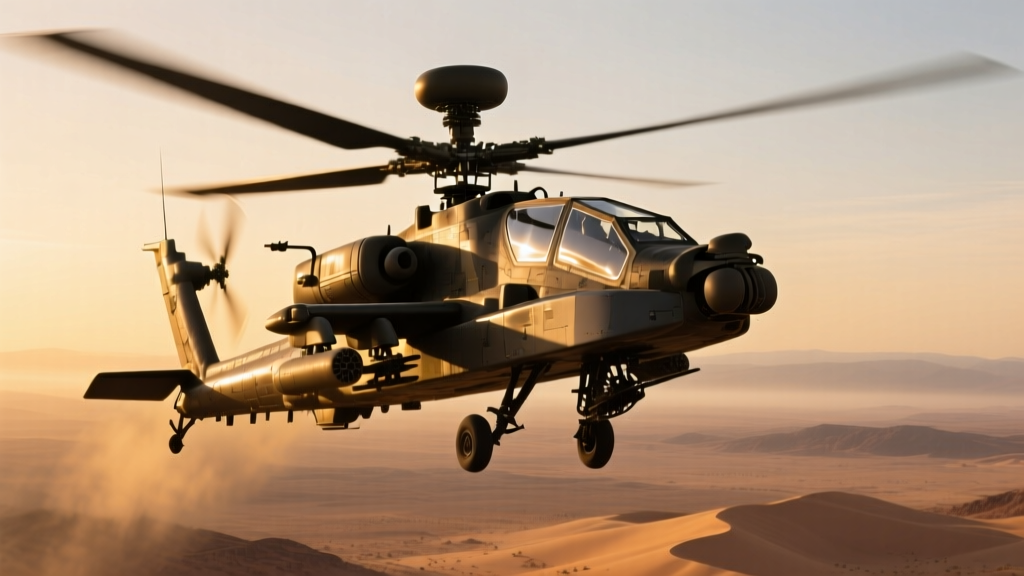
Enter the Advanced Attack Helicopter (AAH) program in 1972. The competition was fierce, ultimately narrowing down to two aerospace giants: Bell Helicopter with the YAH-63, and Hughes Helicopters with the YAH-64. Hughes won the contract, and the foundation for a legend was laid. The design was revolutionary, featuring a tandem cockpit that reduced the aircraft's frontal silhouette, making it harder for enemy gunners to target. But it was the nose-mounted Target Acquisition and Designation Sights / Pilot Night Vision Sensor (TADS/PNVS) that gave the aircraft its distinctive, 'bug-eyed' face. This unique facial structure became the recognizable profile of an aerospace superstar, instantly identifiable to military enthusiasts and casual observers alike.
When McDonnell Douglas acquired Hughes Helicopters in 1984, and later merged with Boeing in 1997, the Apache's 'management team' changed, but its core brand identity remained untouchable. It was built for one purpose: absolute aerial dominance.
Career Highlights and Pop Culture Dominance
A celebrity is only as good as their breakout performance, and for Helikopter Apache, that debut came during Operation Desert Storm in 1991. The Apache didn't just participate; it stole the show. Tasked with destroying early warning radar sites on the opening night of the conflict, Apaches fired the very first shots of the ground war. Throughout the campaign, they decimated hundreds of armored vehicles, proving their Hellfire missiles and 30mm chain gun were unmatched. This 'blockbuster debut' cemented the Apache's reputation as the ultimate tank killer.
Beyond the battlefield, the Apache has enjoyed a massive career in pop culture, effectively crossing over into mainstream stardom. It has appeared in blockbuster films like Transformers: Dark of the Moon, where its menacing profile added instant credibility to military scenes. In the gaming world, it is a staple of the Call of Duty franchise and Grand Theft Auto (rebranded as the Hunter or Cargobob depending on the variant), introducing its iconic design to millions of younger fans who might never read a defense journal. This cross-media presence ensures the Apache's brand remains relevant across generations.
The 'Guardian' Rebrand: Evolving a Legacy
Even the biggest celebrities must reinvent themselves to stay relevant. In 2012, the U.S. Army and Boeing introduced the AH-64E, the most advanced version of the aircraft to date. Recognizing that this wasn't just a minor update but a generational leap in avionics, drone integration, and composite rotor blades, the military officially rebranded the 'E' model as the 'Apache Guardian.' This was a masterclass in personal branding. By adopting a new moniker, they honored the legacy of the original name while signaling to allies and adversaries alike that this was a modernized, smarter, and more lethal entity. It is the aerospace equivalent of a legendary musician dropping a critically acclaimed, genre-defining comeback album.
Social Media Presence and Viral Stardom
You might wonder how a 10-ton military machine maintains a social media presence. While Helikopter Apache doesn't have its own verified Instagram account, its digital footprint is massive, managed through proxy accounts and viral user-generated content. On platforms like TikTok and YouTube Shorts, the Apache is a viral sensation.
The secret to its digital engagement lies in its acoustic signature. The heavy, rhythmic thwump-thwump of its four-blade main rotor is instantly recognizable. Defense influencers and military branches frequently use this audio to create 'hype' videos, generating millions of views. Channels like Task & Purpose and Garand Thumb regularly feature the Apache, breaking down its targeting systems and flight mechanics for civilian audiences. On Reddit's r/MilitaryAviation, high-resolution photos of the Apache in flight routinely dominate the front page, with comment sections dissecting its hardpoints and aerodynamics. The Apache's 'fanbase' is a mix of aviation geeks, military historians, and tech enthusiasts who engage deeply with every piece of content released by Boeing Defense or the U.S. Army.
Personal Branding Takeaways for Your Own Bio
What can a high-tech attack helicopter teach you about crafting the perfect Instagram bio or LinkedIn profile? Surprisingly, a lot. Here are the personal branding lessons we can extract from the legacy of Helikopter Apache:
1. The Power of a Signature Silhouette
The Apache's TADS/PNVS sensor array gives it a 'face' that cannot be mistaken for any other aircraft. Your Takeaway: Your social media profile needs a visual signature. Whether it's a consistent color palette in your Instagram grid, a specific emoji combination in your bio, or a highly professional headshot on LinkedIn, ensure your audience can recognize your 'silhouette' at a single glance. Don't blend in; stand out.
2. Let Your Track Record Speak (Metrics Over Buzzwords)
The Apache doesn't need to claim it's 'passionate about tank destruction.' Its combat record and technical specifications do the talking. Your Takeaway: Stop using vague adjectives in your bio like 'hardworking' or 'visionary.' Instead, use hard metrics. 'Helped 50+ brands scale' or 'Author of 3 bestselling guides' establishes instant authority and trust.
3. Own Your Niche Completely
The Apache was built for one specific, vital purpose: close air support and anti-armor operations. It doesn't try to be a stealth bomber or a troop transport. Your Takeaway: The most compelling personal brands are highly focused. Use your bio to clearly state exactly what problem you solve and for whom. A targeted, niche-specific bio will always attract a more loyal and engaged audience than a generic one.