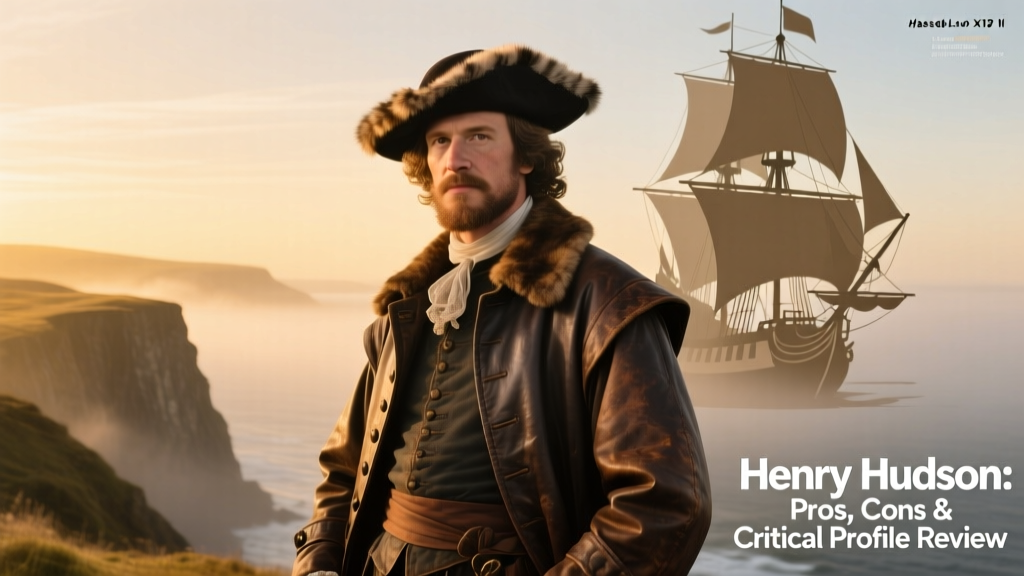
When we analyze the personal branding and legacy of historical figures, few present as complex a case study as the English navigator Henry Hudson. While modern creators and entrepreneurs rely on Instagram bios, LinkedIn headlines, and digital portfolios to pitch their value, Hudson relied on high-stakes, in-person pitches to the most powerful venture capitalists of the 17th century: the Muscovy Company and the Dutch East India Company (VOC). Applying a modern critical review to his career reveals a masterclass in visionary pitching, juxtaposed against catastrophic failures in internal team management. For founders, creators, and personal brands today, Hudson’s trajectory offers profound lessons on how to sell a vision, pivot when necessary, and the fatal dangers of neglecting your 'crew.' Here is a comprehensive pros, cons, and critical review of the Henry Hudson brand.
Quick Facts: The Explorer's Profile
| Attribute | Details |
|---|---|
| Full Name | Henry Hudson |
| Born | c. 1565, England |
| Nationality | English |
| Known For | Exploring the Hudson River, Hudson Bay, and the relentless pursuit of the Northwest Passage |
| Primary 'Sponsors' | The Muscovy Company (England), Dutch East India Company (VOC) |
| Archival Handles | Curated digitally by the New York Historical Society, Britannica Archives, and global maritime museums |
Henry Hudson: Pros, Cons & Critical Review
To evaluate Hudson’s 'brand' is to evaluate his ability to secure funding, execute a vision, and leave a lasting legacy. His career can be audited through distinct advantages and fatal flaws.
The Pros: Visionary Pitching and Brand Pivots
1. Master of the Pitch Deck: Hudson’s primary brand promise was the discovery of the Northwest or Northeast Passage—a shortcut to the lucrative spice markets of Asia. He successfully sold this vision multiple times. After failing to find a northeast passage for the English Muscovy Company in 1607 and 1608, he didn't let his brand die. He pivoted, taking his pitch to the Dutch East India Company in 1609. This demonstrates incredible resilience and an understanding that if one market (England) rejects your proposal, you must find a new audience (the Dutch) that values your specific skill set.
2. The Power of the Pivot: When the Dutch hired him to sail north, ice blocked his path. Instead of returning empty-handed and damaging his reputation as an explorer, Hudson made a rogue, unauthorized pivot. He sailed west across the Atlantic to explore a route claimed by the English, eventually mapping the river that now bears his name. In modern branding terms, Hudson recognized when a strategy wasn't working and pivoted to a new content vertical, ultimately delivering massive value (the foundation of New Netherland) to his sponsors, even if it broke the original contract.
3. Geographic Naming Rights: The ultimate flex in personal branding is having your name become synonymous with a category or location. Hudson secured perpetual legacy branding. The Hudson River, Hudson Bay, Hudson Strait, and the city of Hudson, New York, serve as permanent, real-world 'tags' that ensure his name remains in the global lexicon centuries after his death.
The Cons: Toxic Team Culture and Poor Community Management
1. Catastrophic Crew Relations: A personal brand is only as strong as the team that supports it. Hudson was notoriously secretive, authoritarian, and deeply mistrusted by his crews. He failed to build internal brand loyalty. During his final 1610-1611 voyage on the Discovery, his inability to manage morale, ration transparency, and crew grievances led directly to a mutiny. His 'community management' was so poor that his own men cast him, his son, and seven loyal crew members adrift in a small boat in James Bay, never to be seen again.
2. Overpromising and Underdelivering: Hudson’s brand was built on the promise of finding a passage to Asia. While he mapped vital parts of North America, he never actually delivered the core product he was funded to find. In the modern creator economy, this is akin to building a massive following on the promise of a specific course or product, only to deliver something entirely different. His sponsors eventually lost patience, and his final voyage was plagued by the weight of his unfulfilled brand promises.
Social Media Presence & Digital Archival Footprint
Because Henry Hudson lived and died in the 17th century, he does not possess a literal Instagram, TikTok, or X account. However, analyzing his 'social presence' requires looking at how his personal brand is curated, shared, and engaged with across today’s digital archives and institutional platforms. His historical footprint offers a fascinating look at legacy management.
His 'Bio' and Archival Curation
Hudson’s digital 'bio' is managed by premier historical institutions. The New York Historical Society and various maritime museums act as his modern social media managers. They curate his narrative, focusing on his role in the globalization of trade and the mapping of North America. His 'about me' section is permanently etched in digital encyclopedias like Britannica, framing him not just as an explorer, but as a catalyst for the colonial era. For modern professionals, this highlights the importance of letting reputable third parties (like industry publications or major clients) host and validate your portfolio.
Posting Style: The Ship Logs as Content Marketing
Hudson’s 'posting style' survives through the meticulous ship logs and journals kept by his crew members, most notably his first mate Robert Juet. These logs are raw, unfiltered, and highly detailed. They document the day-to-day struggles, the weather, the interactions with Indigenous populations, and the dwindling rations. In today’s terms, Hudson’s brand relied on long-form, documentary-style content rather than polished, superficial updates. The raw authenticity of these journals is exactly what keeps historians and digital audiences engaged with his story today. It is a reminder that authentic, behind-the-scenes documentation often outlasts highly produced, artificial content.
Follower Engagement and Legacy Metrics
While we cannot measure Hudson's engagement in likes or shares, his 'follower engagement' is measured by his enduring cultural relevance. Millions of digital searches, Wikipedia page views, and academic citations occur annually under his name. Furthermore, his brand engagement is physically manifested in the millions of people who live in, visit, or study the regions bearing his name. He achieved the ultimate viral permanence: his brand became infrastructure.
Personal Branding Takeaways from Hudson's Voyages
What can a modern entrepreneur, freelancer, or Instagram creator learn from a doomed 17th-century navigator? The Henry Hudson case study provides several actionable takeaways for your own bio and brand strategy.
- Your Bio is Your Pitch Deck: Hudson secured funding because his 'bio'—his reputation as a skilled navigator willing to take on impossible routes—was clear and compelling. Ensure your Instagram or LinkedIn bio clearly states the exact problem you solve for your 'investors' (clients, followers, or employers). Do not be vague about your value proposition.
- Master the Strategic Pivot: When the ice blocked Hudson’s path to the Northeast, he didn't quit; he sailed West. If your current content niche, business model, or platform algorithm changes, be willing to pivot your strategy while keeping your core skills intact. Adaptability is a crucial personal branding trait.
- Align Internal and External Branding: Hudson’s external brand was that of a brilliant, visionary leader. His internal reality was that of a paranoid, divisive captain. This disconnect destroyed him. If your public persona is collaborative and kind, but your private treatment of your team, assistants, or community is toxic, your brand will eventually collapse from the inside out. Culture is a core component of your brand.
- Document the Journey Authentically: The only reason we know the intimate details of Hudson’s voyages is because they were documented in real-time. Use your social media platforms to document your actual process, including the struggles and the 'ice-blocked' moments. Audiences connect with the reality of the journey, not just the polished final destination.
- Aim for Legacy Over Virality: Hudson wasn't looking for a quick payout; he was looking to map the unknown and secure a permanent place in history. Build your personal brand with a long-term mindset. Create assets, frameworks, or content that will remain relevant and valuable long after the current trend cycle has faded.
Sources & Historical References
The critical review and historical data regarding Henry Hudson’s voyages, mutiny, and legacy are sourced from the following verified historical archives:
- Encyclopedia Britannica: Comprehensive biographical data on Hudson's voyages for the Muscovy Company and the Dutch East India Company. (britannica.com/biography/Henry-Hudson)
- New York Historical Society: Archival records and digital exhibitions detailing the Hudson-Fulton-Champlain Quadricentennial and the lasting geographic impact of his 1609 voyage. (nyhistory.org)
- The Canadian Encyclopedia: Detailed accounts of the 1610-1611 Discovery voyage, the wintering in James Bay, and the subsequent mutiny. (thecanadianencyclopedia.ca)