When true crime enthusiasts and history buffs search for H.H. Holmes, they are frequently met with a tangled web of sensationalized myths, Hollywood dramatizations, and wildly exaggerated body counts. Herman Webster Mudgett, universally known by his primary alias H.H. Holmes, is often labeled 'America's First Serial Killer.' However, beyond the macabre legends surrounding the 1893 Chicago World's Fair, Holmes was a master of early personal branding—albeit a deeply deceptive, sinister, and ultimately fatal one. At LoveMeBio, we typically analyze modern digital influencers, but examining the historical 'brand' of H.H. Holmes offers a fascinating masterclass in how charm, aesthetics, and fabricated credentials can manipulate public perception. In this FAQ and misconception-busting guide, we separate historical fact from yellow journalism fiction, analyze how his legacy is branded across social media today, and extract crucial lessons about the importance of authenticity in your own personal brand.
Quick Facts: The Man Behind the H.H. Holmes Alias
| Attribute | Details |
|---|---|
| Full Name | Herman Webster Mudgett |
| Born | May 16, 1861 (Gilmanton, New Hampshire) |
| Nationality | American |
| Known For | Con artist, insurance fraudster, true crime historical figure, architect of the 'Murder Castle' |
| Primary Aliases (Historical 'Handles') | H.H. Holmes, Henry Mansfield Howard, Dr. Thomas Snell |
| Modern Social Media Presence | Subject of millions of TikTok/YouTube true crime videos; no personal accounts (deceased 1896) |
The Original Deceptive Personal Brand: How H.H. Holmes Marketed Himself
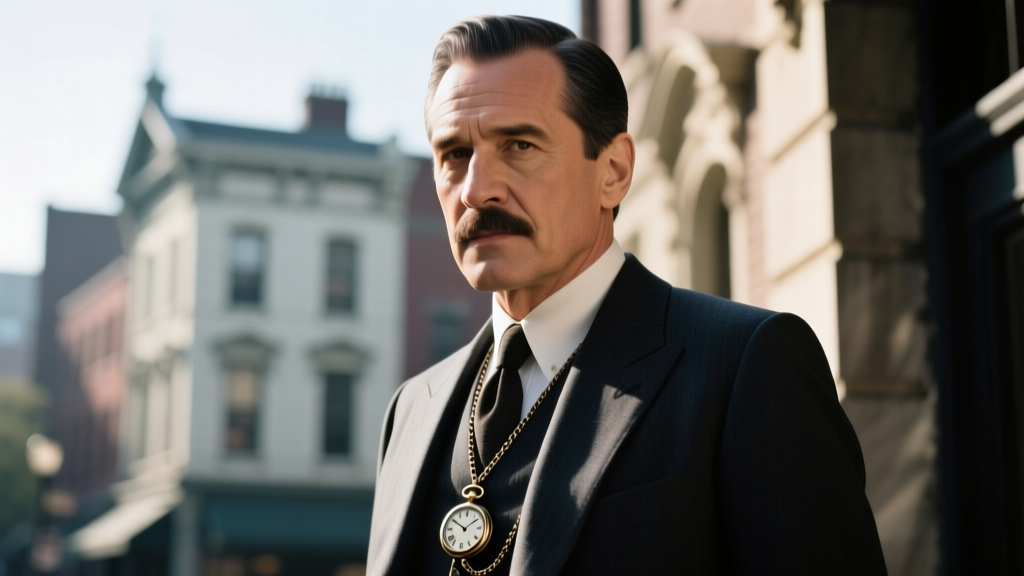
Long before Instagram bios and LinkedIn profiles, H.H. Holmes crafted a meticulous, albeit entirely fraudulent, personal brand. In the late 19th century, your 'bio' was comprised of your business cards, your attire, your letters of introduction, and your reputation in the local newspaper. Holmes understood that people trust authority and aesthetics. He branded himself as a wealthy, eccentric, and highly educated physician and pharmacist. He wore impeccably tailored suits, carried a gold pocket watch, and spoke with a calm, hypnotic cadence that disarmed his victims and business partners alike.
Holmes used his medical degree (which he obtained through questionable means and cheating) as the ultimate 'verified badge' of his era. Just as modern users seek the blue checkmark to establish authority, Holmes used the title of 'Doctor' to secure loans, charm women, and deflect suspicion. His 'link in bio' equivalent was his placement of classified ads in newspapers, recruiting young women looking for work or marriage with promises of wealth and security. His personal brand was built entirely on the projection of success, stability, and high social status. The tragic reality, however, was that his entire persona was a house of cards built on stolen identities, forged signatures, and unpaid debts.
Social Media Presence: How True Crime Communities Brand Him Today
While H.H. Holmes cannot manage his own social media accounts, his 'brand' is actively maintained, debated, and monetized by the massive true crime community on TikTok, YouTube, and Instagram. If we analyze the digital footprint of H.H. Holmes today, we see a highly specific aesthetic and engagement strategy used by content creators.
The Aesthetic: On platforms like TikTok and Instagram, Holmes is heavily associated with the 'Dark Academia' and 'Victorian Gothic' aesthetics. Creators use sepia-toned filters, vintage architectural blueprints of his Chicago boarding house, and eerie phonograph music to build a hook within the first three seconds of a video. The 'Murder Castle' has become a recognizable visual logo for his brand, much like a modern influencer's signature color palette.
Engagement & Follower Dynamics: Videos tagged with #HHHolmes or #MurderCastle routinely garner millions of views. Creators drive engagement by leaning into the mystery and the 'genius' mythos, often asking viewers to comment on how they would have escaped the labyrinthine hotel. However, a growing subset of historical true crime creators are actively rebranding him, shifting the narrative from 'criminal mastermind' to 'sloppy conman,' using his historical blunders as a way to debunk older, more sensationalized content. This shift mirrors a broader social media trend where audiences demand factual authenticity over dramatized storytelling.
FAQ & Common Misconceptions About H.H. Holmes
To truly understand the man behind the myth, we must address the most common misconceptions that have inflated his 'brand' over the last century.
FAQ 1: Was the 'Murder Castle' a high-tech, labyrinthine killing machine?
The Myth: Pop culture and early 20th-century yellow journalism depicted Holmes's Chicago hotel as a technological marvel of death, complete with soundproof vaults, gas lines controlled from a master bedroom, trapdoors, and a labyrinth of hallways designed to trap victims forever.
The Reality: While the building did contain hidden compartments, false doors, and a sealed vault, it was not a mastermind's fortress. It was a poorly constructed, hastily built boarding house. The 'labyrinth' was largely the result of Holmes constantly changing floor plans to avoid paying his contractors, rather than a genius architectural trap. The myth was heavily exaggerated by William Randolph Hearst's newspapers to sell copies during the 1895 trial.
FAQ 2: Did H.H. Holmes really kill hundreds of people?
The Myth: Holmes is often credited with murdering anywhere from 20 to over 200 people, with some sensationalized books claiming he kept a meticulous diary of hundreds of victims.
The Reality: Holmes confessed to 27 murders while awaiting execution, but investigators at the time only verified 9 victims. Modern historians and criminologists believe the actual number is likely closer to his verified count, or perhaps slightly higher, but nowhere near the hundreds claimed by tabloids. Holmes was primarily a fraudster and a bigamist; murder was a secondary byproduct of his scams being discovered, not his primary vocation.
FAQ 3: Was he a criminal mastermind who outsmarted the police?
The Myth: The Holmes brand portrays him as a Moriarty-esque genius who was only caught due to a stroke of incredible luck by the Pinkerton Detective Agency.
The Reality: Holmes was remarkably sloppy. He was not caught through a brilliant police manhunt regarding the missing women in Chicago. He was arrested in Boston for a mundane, poorly executed insurance fraud scheme involving a stolen horse and a fake corpse. His 'genius' brand was largely a retrospective invention of the media, which he happily leaned into during his trial to ensure his autobiography would sell for a high price.
Personal Branding Takeaways: Authenticity vs. The Conman's Bio
What can modern professionals, creators, and everyday social media users learn from the dark legacy of H.H. Holmes? The primary takeaway is the absolute necessity of authenticity in your personal brand. Holmes built a persona on a foundation of fabricated credentials, stolen identities, and exaggerated wealth. While his 'brand' successfully manipulated people in the short term, it ultimately led to his complete destruction.
When crafting your Instagram bio, LinkedIn summary, or personal website, avoid the temptation to inflate your titles or claim expertise you do not possess. If you brand yourself as a 'CEO' or an 'Industry Expert' without the verifiable experience to back it up, you are building a digital 'Murder Castle'—a facade that looks impressive from the outside but is structurally unsound and destined to collapse under scrutiny. True influence and long-term personal branding rely on transparency, genuine value, and verifiable achievements. Let your real accomplishments be the hook, rather than a fabricated persona.
Sources & Further Reading
- Larson, Erik. The Devil in the White City: Murder, Magic, and Madness at the Fair That Changed America. Crown Publishers, 2003.
- Smithsonian Magazine. 'The True Story of H.H. Holmes and the Murder Castle.' (smithsonianmag.com)
- Chicago History Museum Archives. 'The 1893 World's Columbian Exposition and Local Crime.' (chicagohistory.org)