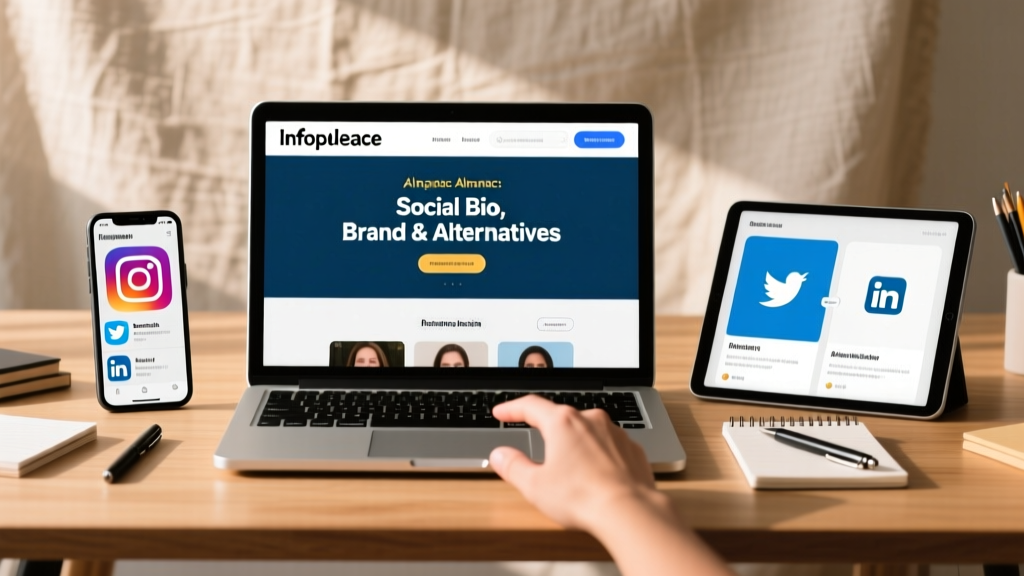
When building a personal brand, we often look to human influencers, but some of the most masterful lessons in digital authority come from institutional 'celebrities.' In the realm of trivia, history, and facts, Infoplease Almanac operates as a heavyweight digital personality. Originally born from a 1930s radio quiz show and evolving into a staple print reference, its transition to a digital powerhouse offers a masterclass in niche branding. For students, educators, and trivia buffs, Infoplease Almanac is the ultimate authority figure. But how does a legacy reference brand maintain its celebrity status in an era of crowdsourced wikis and AI? In this comparison and alternatives analysis, we dissect the social media bios, digital presence, and branding strategies of Infoplease Almanac, comparing it to top alternatives to see what you can steal for your own Instagram, TikTok, or LinkedIn bio.
| Attribute | Details |
|---|---|
| Full Name | Infoplease Almanac (Digital & Print Entity) |
| Born | 1938 (Radio origins) / 1998 (Web launch) |
| Nationality | American |
| Known For | Authoritative trivia, homework help, global statistics |
| Social Handles | @infoplease (X/Twitter), Infoplease (Facebook) |
The Digital Persona of Infoplease Almanac
To understand the personal branding of Infoplease Almanac, you have to look at its 'bio' not just on social media, but across its entire digital footprint. The brand's core identity is rooted in utility, nostalgia, and unimpeachable accuracy. Unlike modern influencers who rely on parasocial relationships and lifestyle curation, Infoplease Almanac builds its celebrity on being the ultimate 'smart friend' you call when you need to settle a bar bet or finish a research paper. Its website's About page serves as its ultimate long-form bio, establishing authority by tracing its lineage back to the 1938 radio program Information Please. This legacy positioning is a brilliant branding move. It tells the user: 'We were here before the internet, and we will be here after.' For anyone crafting a professional bio, this highlights the importance of leveraging your origins. You do not need to be a legacy brand to use this tactic; simply anchoring your profile to your foundational 'why' or your earliest professional milestone creates immediate trust.
Social Media Presence and Follower Engagement
Analyzing the social media presence of Infoplease Almanac reveals a strategy that prioritizes consistency over virality. On platforms like X (formerly Twitter) and Facebook, the brand's bio is succinct, often pointing directly to its utility: 'Your trusted source for homework help, trivia, and facts.' They do not use emojis to clutter their bio, nor do they use slang. The voice is distinctly academic yet accessible. Their content strategy relies heavily on the 'On This Day' hook, posting historical anniversaries, daily trivia, and statistical snapshots. This creates a highly predictable content loop that followers can rely on. Engagement is driven by educators sharing posts with their classrooms and trivia enthusiasts debating historical minutiae in the comments. The takeaway for personal branding is the power of the 'Utility Hook.' If your social media bio and content strategy solve a specific, recurring problem for your audience—whether that is daily coding tips, historical fashion facts, or daily affirmations—you build a loyal following that returns out of habit, not just hype.
Comparison and Alternatives Analysis
To truly understand the branding genius of Infoplease Almanac, we must compare its digital persona to its primary alternatives in the reference and trivia space. How do competing 'celebrities' in the fact-checking world position their bios and social presence?
Alternative 1: The World Almanac
The Bio Approach: The World Almanac leans heavily into its status as a 'Bestselling' and 'Traditional' print entity. Its social bios often highlight its physical book sales and long-standing history as a stocking stuffer.
The Contrast: While World Almanac brands itself as a physical artifact and a holiday tradition, Infoplease Almanac brands itself as an always-on digital utility.
Lesson for Your Bio: Decide if your personal brand is an 'event' (like a yearly book release or major product launch) or a 'daily utility.' If you are a daily utility, your bio should reflect constant availability.
Alternative 2: Wikipedia
The Bio Approach: Wikipedia has no singular 'personal brand' or curated social voice because it is a crowdsourced collective. Its authority comes from the community, not a central persona.
The Contrast: Infoplease Almanac maintains a curated, editorial voice. When Infoplease posts a fact, it carries the weight of an editorial board. Wikipedia carries the weight of the crowd.
Lesson for Your Bio: Curated authority wins in niche markets. Use your Instagram or LinkedIn bio to state your specific editorial lens. Instead of 'I post about movies,' use 'Curating the forgotten history of 1970s cinema.'
Alternative 3: Guinness World Records
The Bio Approach: Guinness brands itself around the sensational, the visual, and the extreme. Its social bios are packed with emojis, exclamation points, and calls to action to watch their YouTube stunts.
The Contrast: Infoplease Almanac is academic and grounded. It does not need to shout; it simply states the facts.
Lesson for Your Bio: Match your bio's punctuation and tone to your niche. A stuntman needs exclamation points; an accountant, a researcher, or a data scientist should adopt the clean, authoritative, emoji-free bio style of Infoplease.
Personal Branding Takeaways for Your Own Profile
What can a regular user, freelancer, or aspiring creator learn from the institutional celebrity of Infoplease Almanac? Here are three actionable takeaways to apply to your own social media bios:
- Establish Your 'Since' Date: Infoplease leverages its 1938 origins to build trust. If you have been in your industry for a decade, put 'Est. 2014' or 'Designing since 2014' in your bio. Longevity implies reliability.
- The Utility-First Bio Formula: Stop using your bio to describe your personality and start using it to describe your utility. Formula: [Target Audience] + [The Specific Problem You Solve] + [Frequency]. Example: 'Daily Excel shortcuts for financial analysts.' This mimics the almanac's promise of daily, reliable facts.
- Create a Signature Content Hook: Infoplease uses 'On This Day' to anchor its social presence. Create a signature hook for your own profile that matches your bio. If your bio says 'Weekly teardowns of SaaS landing pages,' ensure your pinned post and highlights reflect that exact promise.
Sources and Further Reading
To dive deeper into the history and digital trust metrics referenced in this analysis, consult the following sources:
- Infoplease Official About Page - Details the brand's lineage from the 1938 radio show to the modern digital almanac.
- Pew Research Center - Studies on digital trust, highlighting how legacy brands maintain authority over crowdsourced alternatives in educational spaces.
By treating your personal brand with the same editorial rigor and utility-focused branding as Infoplease Almanac, you transform your social media profile from a simple digital resume into a trusted, daily resource for your audience.