
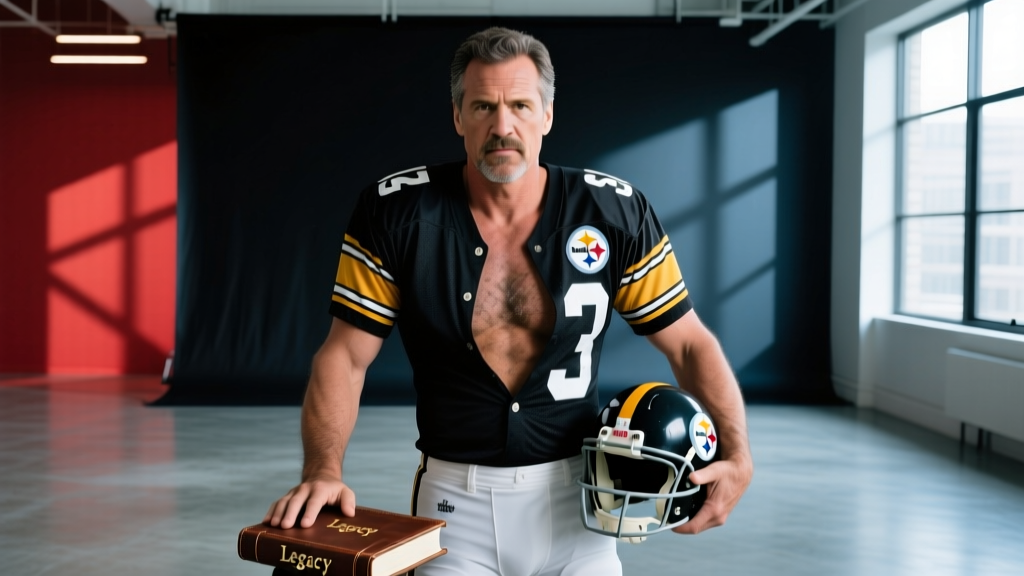
In an era where personal branding is synonymous with daily vlogs, curated Instagram grids, and oversharing on social platforms, the concept of the “silent brand” feels almost radical. Yet, when we conduct a critical review of Jack Lambert, the legendary Pittsburgh Steelers linebacker, we uncover a masterclass in mystique, authenticity, and the sheer power of letting your actions dictate your legacy. Lambert didn’t need a link-in-bio, a podcast, or a viral dance to cement his status as one of the most intimidating and respected figures in sports history. For creators, professionals, and athletes looking to refine their own digital footprint, analyzing the pros, cons, and unique offline-to-online translation of the Jack Lambert brand offers profound lessons in standing out by doing less. Here at LoveMeBio, we believe that sometimes the most powerful bio is the one you don't have to write yourself, because your reputation speaks first.
Quick Facts: The Gridiron Enforcer
| Attribute | Details |
|---|---|
| Full Name | Jack Lambert |
| Born | July 8, 1952 (Mantorville, Ohio) |
| Nationality | American |
| Known For | 4x Super Bowl Champion, 9x Pro Bowl, 'Steel Curtain' Defense |
| Social Media Handles | None (Legacy managed via @Steelers & NFL Archives) |
Career Highlights & The Steel Curtain Legacy
To understand the Jack Lambert brand, you must first understand the product he delivered on the field. Drafted in the second round of the 1974 NFL Draft out of Kent State, Lambert used his perceived draft-day slight as a lifelong chip on his shoulder. He became the emotional and tactical anchor of the Pittsburgh Steelers' legendary “Steel Curtain” defense, a unit that fundamentally changed how football was played and consumed by the masses.
Over his 11-season career, Lambert recorded an astonishing 1,479 tackles, 23.5 sacks, and 30 interceptions. He was a nine-time Pro Bowler, a two-time NFL Defensive Player of the Year, and a four-time Super Bowl Champion (IX, X, XIII, and XIV). But stats only tell half the story of his personal brand. The other half was visual and visceral. Lambert famously lost his front teeth in a high school basketball game and refused to wear a mouthpiece or get them capped during his NFL career. The resulting gap-toothed, screaming, blood-stained visage became one of the most iconic images in sports photography, perfectly captured in the legendary 1975 “Teeth” photo. According to the Pro Football Hall of Fame, Lambert’s intensity was unmatched; he played with a manic, calculating aggression that made him the ultimate embodiment of 1970s blue-collar Pittsburgh.
Social Media Presence: The Jack Lambert Digital Void
If you search for Jack Lambert on Instagram, X, or TikTok, you will not find a verified personal account. In a landscape where retired athletes rush to monetize their nostalgia through social media sponsorships and YouTube channels, Lambert has opted for total digital silence. However, from a branding perspective, this void is incredibly active.
When a public figure opts out of the digital rat race, their brand is instead curated by institutions, fans, and archival algorithms. Lambert’s “social media presence” is a proxy brand, managed primarily by the NFL Films archive, the official Pittsburgh Steelers alumni network, and thousands of dedicated fan pages. When the NFL posts a vintage clip of Lambert intercepting a pass or delivering a bone-crushing hit, it routinely garners hundreds of thousands of views and deeply emotional engagement from older fans and younger football purists alike. His “bio” is essentially written by history and narrated by the legendary John Facenda, whose poetic NFL Films voiceovers immortalized Lambert as a modern-day gladiator. This lack of personal digital footprint creates a fascinating dynamic: Lambert is everywhere in football culture, yet entirely untouchable in the digital space.
Critical Review: Pros & Cons of the Lambert Brand
How does the “anti-influencer” approach hold up when we weigh the pros and cons of modern personal branding? Let’s break down the mechanics of the Lambert mystique.
The Pros: Unmatched Mystique and Authenticity
- Scarcity Creates Value: Because Lambert does not post daily, his rare public appearances, interviews, or autograph signings become massive events. In branding, overexposure can dilute a legacy; Lambert’s scarcity keeps his brand premium and highly respected.
- Zero Digital Risk: Without a personal social media account, there are no late-night controversial tweets, no tone-deaf sponsorships, and no cancel-culture vulnerabilities. His brand is permanently locked in the amber of his on-field achievements.
- Pure Meritocracy: Modern influencers often have to manufacture drama to maintain engagement. Lambert’s brand is built entirely on undeniable, documented competence. He didn't tell the world he was the best; the game film proved it.
The Cons: Zero Direct Engagement and Narrative Control
- Lack of Direct Monetization: By refusing to engage with modern platforms, Lambert leaves significant revenue on the table. He cannot directly market his own merchandise, launch a podcast, or secure digital-first brand deals.
- Narrative Reliance on Third Parties: When you don't control your own digital channels, you rely on the Pittsburgh Steelers and the NFL to keep your name relevant. If the league's algorithm shifts away from vintage content, a silent legend risks fading from the consciousness of Gen Z and Gen Alpha audiences.
- One-Dimensional Perception: Without a personal platform to share his off-field thoughts, hobbies, or philanthropy, the public only knows Lambert as the screaming, violent linebacker. He lacks the digital space to showcase his reported high football IQ, his dry sense of humor, or his post-retirement life.
Personal Branding Takeaways for Your Own Profile
You might not be a Hall of Fame linebacker, but the core tenets of the Jack Lambert brand can be directly applied to your Instagram bio, LinkedIn profile, or personal website. Here is how to channel the “Lambert Method” for your own personal branding:
1. The Minimalist Bio Strategy
Lambert didn’t need a paragraph to explain his value; his presence on the field said it all. If your Instagram or LinkedIn bio is cluttered with emojis, buzzwords, and excessive links, you are diluting your impact. Strip your bio down to a single, powerful statement of competence. Let your portfolio or your content do the heavy lifting. A bio that reads “Architect. Building the future of urban spaces.” is often more authoritative than a laundry list of certifications and podcast links.
2. Cultivate a Signature Visual
Lambert had the gap-toothed scowl and the intense, unblinking stare. What is your professional signature? This doesn't mean you need to be intimidating, but you should have a consistent visual or thematic anchor. Whether it’s a specific color palette in your portfolio, a distinct photography style, or a recognizable formatting choice in your newsletters, a signature visual helps people instantly recognize your work before they even read your name.
3. Let Your Work Be Your Loudest Post
The biggest lesson from Lambert’s legacy is that authenticity cannot be faked. In an age of AI-generated content and curated lifestyles, audiences are starving for raw, undeniable skill. Instead of spending hours crafting the perfect caption to tell people how hard you work, spend that time creating a case study, a brilliant piece of code, or a stunning design. When your work is undeniably excellent, your personal brand markets itself.
4. Embrace the Power of Scarcity
You do not need to post every single day to remain relevant. The pressure to constantly feed the algorithm often leads to burnout and mediocre content. Adopting a “less is more” approach—posting only when you have something highly valuable, insightful, or beautifully crafted to share—trains your audience to pay attention when you do speak up. Quality over quantity is the ultimate flex in a noisy digital world.
Sources & Further Reading
- Pro Football Hall of Fame: Jack Lambert Biography
- Pittsburgh Steelers Official History & Alumni
- NFL Films Archives & Historical Broadcasts