
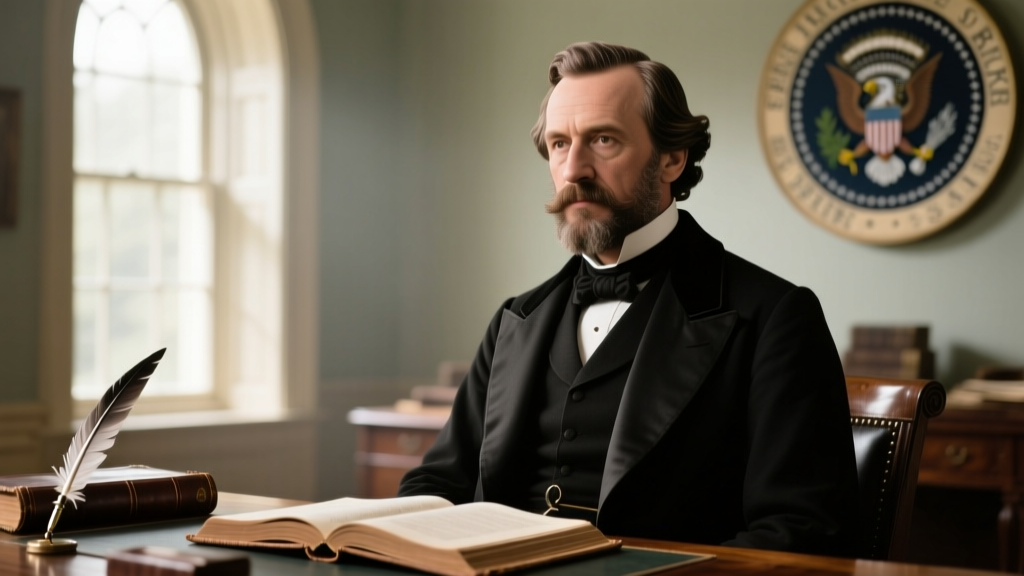
When analyzing historical personal brands, few figures command the intellectual weight and tragic fascination of James Garfield. As the 20th President of the United States, a Civil War hero, and a renowned scholar, his public persona was meticulously crafted through syndicated speeches, prolific letter-writing, and strategic newspaper engagement. Long before the advent of social media, Garfield mastered the art of mass communication, positioning himself as the ultimate 'self-made' intellectual. Today, analyzing the personal brand of James Garfield offers a masterclass in historical reputation management, origin-story storytelling, and inbound audience engagement. In this critical review, we break down the pros, cons, and modern digital legacy of a man whose brand was built on humility, intellect, and a revolutionary campaign strategy.
Quick Facts: The Man Behind the Legacy
| Attribute | Details |
|---|---|
| Full Name | James Abram Garfield |
| Born | November 19, 1831 (Moreland Hills, Ohio) |
| Died | September 19, 1881 (Elberon, New Jersey) |
| Nationality | American |
| Known For | 20th U.S. President, Civil War Major General, Hiram College President |
| Modern Digital Custodians | National Park Service (NPS), UVA Miller Center, White House Historical Association |
The Pros: Strengths of the James Garfield Brand
The Ultimate 'Self-Made' Origin Story
Every great personal brand needs a compelling origin story, and Garfield’s was unparalleled. Born in a log cabin and orphaned at age two, he worked on farms and canal boats to fund his education. This 'log cabin to White House' narrative was heavily leveraged during his 1880 presidential run. For modern creators, this highlights the power of authenticity; Garfield didn't hide his impoverished roots—he made them the cornerstone of his relatability and work ethic.
Intellectual Authority and Unique Differentiators
Garfield was not just a politician; he was a genuine intellectual heavyweight. Before entering Congress, he served as the president of Hiram College. His most famous party trick—writing in Latin with his right hand and Greek with his left hand simultaneously—became a legendary anecdote that circulated in newspapers. This unique differentiator cemented his brand as a brilliant, multifaceted thinker, separating him from the standard political operatives of his era.
Prolific Communication Strategy
Garfield was a relentless communicator. He left behind a massive archive of over 10,000 letters and detailed diaries. In the 19th century, letter-writing and newspaper syndication were the equivalents of a high-frequency content strategy. His willingness to articulate complex political thoughts in written form built deep trust with his peers and the public, proving that consistency in messaging builds long-term authority.
The Cons: Weaknesses and Historical Criticisms
Caught in Factional Infighting
One of the primary weaknesses of Garfield’s brand was his positioning as a compromise candidate. At the 1880 Republican National Convention, he emerged as a 'dark horse' to bridge the bitter divide between the 'Stalwarts' and the 'Half-Breeds.' While this won him the nomination, it meant his brand lacked a singular, aggressive ideological anchor. He was perceived by some as a political weather vane rather than a staunch visionary, which complicated his early executive authority.
The Truncated Executive Legacy
The most glaring con of the Garfield brand is its abrupt end. Assassinated by Charles Guiteau just six months into his term, Garfield never had the opportunity to transition his brand from 'promising candidate' to 'established executive.' His legacy is forever frozen in potential, making it difficult for historians to evaluate his actual governance, leaving his brand heavily reliant on what-ifs rather than tangible legislative achievements.
Social Media Presence & Modern Digital Legacy
While James Garfield lived a century before the internet, his modern social media presence is a fascinating case study in legacy management. Today, his digital footprint is primarily curated by the National Park Service (NPS) through the James A. Garfield National Historic Site, alongside academic institutions like the UVA Miller Center.
On platforms like X (formerly Twitter), Facebook, and Instagram, the NPS utilizes Garfield’s archival letters, photographs of his Mentor, Ohio estate, and quotes to drive engagement. Historical hashtags such as #OTD (On This Day), #PresidentialHistory, and #CivilWar connect his 19th-century life with modern history buffs. The engagement metrics on these posts reveal a niche but highly dedicated audience that values primary source documents over polished modern graphics.
Furthermore, Garfield’s 'Front Porch Campaign' of 1880 is frequently analyzed on digital marketing forums and LinkedIn as a historical precursor to inbound marketing and the modern webinar model. Instead of touring the country, Garfield stayed at his farm and invited thousands of citizens to come to him. He delivered tailored speeches to specific demographics (farmers, veterans, teachers) who traveled to his porch. Today, digital marketers cite this as an early masterclass in 'inbound engagement'—creating a destination so valuable that the audience willingly comes to your platform.
Personal Branding Takeaways for Modern Creators
1. Own Your Origin Story
Garfield’s log cabin narrative was his strongest political asset. For modern personal branding, do not scrub your resume of early struggles or unconventional beginnings. Audiences connect with the journey of overcoming adversity. Frame your early challenges as the foundation of your current work ethic and unique perspective.
2. Master Inbound Engagement
The 1880 Front Porch Campaign proved that you don't always need to chase the algorithm or the audience; sometimes, you need to build a platform so compelling that the audience comes to you. Whether through a high-value newsletter, a specialized podcast, or a niche community, focus on creating a 'front porch' where your audience can gather and engage with you directly.
3. Leverage Unique Differentiators
Garfield’s ambidextrous polyglot abilities made him memorable in a sea of standard politicians. Identify what makes you uniquely 'you'—whether it's a rare combination of skills, a quirky hobby, or a specific methodology—and weave it into your bio and content. Memorability is a critical metric in personal branding.
Sources & Further Reading
- National Park Service: James A. Garfield National Historic Site - Primary digital custodians of his physical and archival legacy.
- UVA Miller Center: James Garfield - Comprehensive analysis of his political career and campaign strategies.
- White House Historical Association - Biographical data and historical context of his presidential tenure.