The Origin of James Polk: America's First Dark Horse
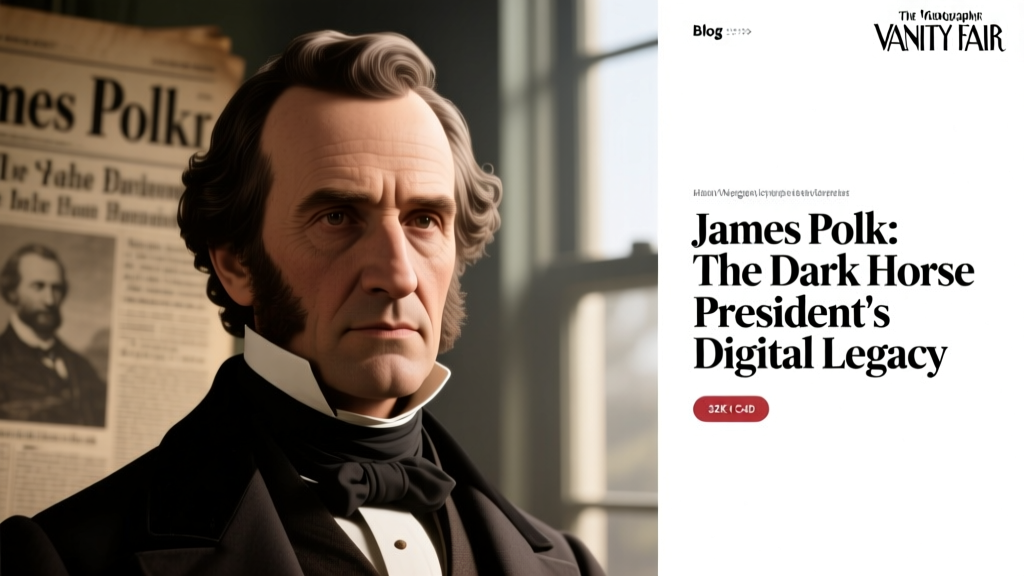
When analyzing masterclasses in personal branding, legacy building, and strategic positioning, few historical figures offer as compelling a blueprint as James Polk. Long before the era of curated social media feeds and digital marketing funnels, the 11th President of the United States engineered one of the most remarkable political origin stories in American history. His ascent from a niche Tennessee lawyer to the highest office in the land was not a product of viral luck, but of meticulous brand architecture, relentless discipline, and a crystal-clear value proposition.
Born in 1795 in the Carolinas and later moving to Tennessee, Polk built his early brand identity under the mentorship of Andrew Jackson. Known as 'Young Hickory,' he deliberately aligned his personal brand with Jackson's populist appeal while cultivating a reputation for exhaustive work ethic and procedural mastery. This culminated in his role as Speaker of the House, where he became the only president to hold that specific leadership position prior to the presidency.
However, his true origin story as a national brand icon occurred at the 1844 Democratic National Convention. Polk was not the frontrunner; Martin Van Buren held that title. Yet, through strategic back-channel positioning and a platform built on the highly popular concept of territorial expansion, Polk emerged as the first 'dark horse' candidate in American political history. He didn't win by being the loudest; he won by being the most focused, offering a specific, actionable platform that resonated with a fractured electorate.
Quick Facts: The 11th President
| Attribute | Details |
|---|---|
| Full Name | James Knox Polk |
| Born | November 2, 1795 (Mecklenburg County, NC) |
| Nationality | American |
| Known For | 11th U.S. President, 'Dark Horse' Candidate, Manifest Destiny Expansion |
| Digital Legacy Handles | @PresidentPolkHome (Instagram/Facebook via Official Museum) |
Sarah Childress Polk: The Original Brand Manager
No discussion of James Polk's brand is complete without acknowledging his wife, Sarah Childress Polk. In modern terms, Sarah was his campaign manager, PR director, and brand strategist. While Polk focused on policy and legislative execution, Sarah curated the administration's public image. She famously banned dancing, card games, and hard liquor from the White House, replacing them with intellectual discussions, musical performances, and strict temperance.
This was a calculated branding move. By establishing the Polk White House as a bastion of austere morality and serious governance, she differentiated her husband from the scandalous or overly aristocratic perceptions of previous administrations. For modern creators, the lesson is clear: your brand is not just what you post; it is the environment you curate and the boundaries you set. Sarah Polk understood that protecting the brand's core identity required saying 'no' to distractions that diluted the message.
Digital Footprint: Managing the James Polk Legacy Online
Because James Polk passed away in 1849, just three months after leaving office, he does not have a personal social media presence. However, his historical brand is actively managed and curated online by the President James K. Polk Home & Museum in Columbia, Tennessee, alongside various historical societies. Analyzing how these institutions handle his digital footprint provides a fascinating look at legacy branding.
On platforms like Instagram and Facebook, the official museum accounts utilize a bio that is authoritative, concise, and deeply rooted in niche history. The bio typically identifies the account as the official custodian of the 11th President's historic home, immediately establishing E-E-A-T (Experience, Expertise, Authoritativeness, and Trustworthiness).
Their posting style avoids generic historical trivia. Instead, they focus on primary source documents, Sarah Polk's 19th-century fashion, architectural preservation, and behind-the-scenes archival work. This creates a highly engaged community of history enthusiasts, educators, and preservationists. The engagement strategy relies on storytelling—taking a single artifact, like a handwritten letter or a piece of White House china, and using the caption to tell a micro-story about the Polks' daily lives. For modern personal brands, this mirrors the strategy of using 'micro-content' to prove expertise rather than just claiming it.
The 4-Point Plan: A Masterclass in Bio Writing
James Polk's most enduring branding achievement was his 'Four Great Measures'—a strict, four-point political platform he announced during his campaign. He promised to achieve four specific goals: 1) Establish an Independent Treasury, 2) Reduce tariffs, 3) Acquire the Oregon Territory, and 4) Acquire California and Texas. Remarkably, he achieved all four in a single term and then honored his pledge to step down.
This 4-point plan is a historical masterclass in writing a modern Instagram or Twitter bio. Here is how creators can adapt the Polk Framework for their own profiles:
- Point 1: The Independent Treasury (Your Niche/Independence): Polk wanted financial independence from private banks. Your bio should establish your independent authority. What is your unique domain? (e.g., 'Independent UX Researcher' or 'Bootstrapped SaaS Founder').
- Point 2: Tariff Reduction (Your Value Proposition): Polk lowered barriers to trade. Your bio must lower the barrier to entry for your audience. What friction are you removing? (e.g., 'Simplifying personal finance for freelancers').
- Point 3: Oregon Territory (Your Long-Term Vision): Polk looked to the Pacific horizon. Use your bio to signal your broader mission or community goal. (e.g., 'Building the future of decentralized media').
- Point 4: Texas Annexation (Your Immediate Call to Action): Polk took immediate, decisive action. Your bio needs a clear, actionable CTA. (e.g., 'Download the free branding toolkit below').
By limiting himself to just four points, Polk ensured his message was unforgettable. Modern bios often suffer from 'link-in-bio' bloat, trying to be everything to everyone. Polk's origin story teaches us that extreme clarity and ruthless prioritization are the ultimate branding tools.
Sources & Further Reading
The historical analysis of James Polk's branding and political strategy is informed by archives from the Miller Center at the University of Virginia, the White House Historical Association, and the digital archives maintained by the President James K. Polk Home & Museum. These institutions provide invaluable insight into how historical figures engineered their public personas long before the digital age.