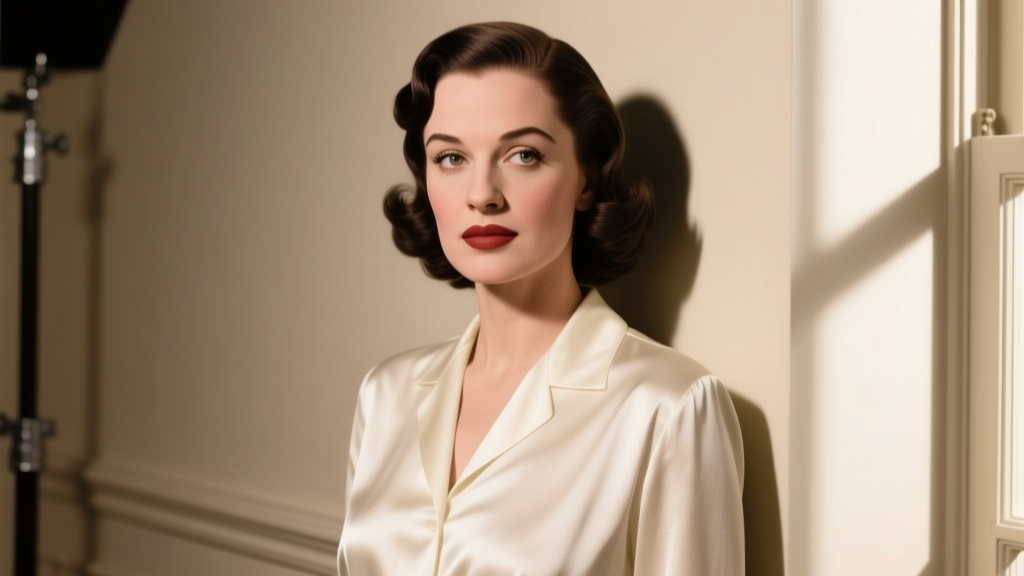
When you think of Golden Age Hollywood glamour, you might picture stars who lived for the spotlight, constantly feeding the press and publicizing their every move. Then, there is Jean Arthur. Born Gladys Georgianna Greene, Jean Arthur was one of the most beloved comedic and dramatic actresses of the 1930s and 1940s, yet she famously despised fame. For modern creators, introverts, and professionals trying to craft the perfect social media bio, her legacy offers a fascinating masterclass in the 'anti-brand.' How do you build a personal brand when you actively avoid the public eye? In this beginner-friendly explainer, we break down the enigma of Jean Arthur, analyze her posthumous digital footprint, and reveal how you can use her signature mystique to write a captivating, minimalist Instagram or LinkedIn bio today.
Quick Facts: The Woman Behind the Legend
| Attribute | Details |
|---|---|
| Full Name | Gladys Georgianna Greene |
| Born | October 17, 1900 (Saratoga Springs, New York) |
| Died | June 19, 1991 (Carmel, California) |
| Nationality | American |
| Known For | Screwball comedies, Frank Capra films, distinctive raspy voice |
| Notable Films | Mr. Smith Goes to Washington, The More the Merrier, Shane |
| Social Media Handles | None (Deceased; legacy managed by film archives and fan estates) |
Career Highlights: Building a Brand on Authenticity
To understand Jean Arthur's personal brand, you have to look at her career trajectory. She started in silent films and Broadway, but it was the advent of 'talkies' that revealed her secret weapon: a highly distinctive, raspy, half-sobbing voice that audiences instantly recognized. Instead of trying to fix her unconventional voice to fit the polished mold of a traditional Hollywood leading lady, she leaned into it. It became her trademark.
Her collaborations with director Frank Capra in films like Mr. Deeds Goes to Town (1936) and Mr. Smith Goes to Washington (1939) cemented her image as the quintessential 'girl next door' with a sharp wit and a strong moral compass. Yet, off-screen, Arthur was notoriously shy. She suffered from stage fright, avoided Hollywood premieres, and rarely gave interviews. In 1944, at the height of her fame, she walked away from her studio contract. Years later, she famously left the set of the sitcom The Jean Arthur Show (1966) because the pressure of live performance became too much. She eventually found her true calling not in front of a camera, but in the classroom, teaching drama at Vassar College, where she was known as a deeply private but fiercely dedicated mentor.
Jean Arthur's Digital Footprint and Social Media Presence
Because Jean Arthur passed away in 1991, long before the advent of social media, she does not have an official Instagram, TikTok, or X (formerly Twitter) account. However, analyzing her 'digital footprint' provides incredible insights into how authentic personal branding outlasts daily content creation. Her online presence is entirely legacy-driven, curated by institutions and passionate communities.
- Institutional Archives: Platforms like Turner Classic Movies (TCM) and the American Film Institute (AFI) maintain extensive, highly detailed profiles on her. The engagement on these platforms is focused entirely on her craft, her filmography, and her historical impact.
- Fan Communities: On Reddit (such as r/ClassicFilm) and dedicated Facebook groups, fans share high-resolution stills, rare interview quotes, and discussions about her acting technique. The 'brand' here is one of deep respect and nostalgia.
- The Power of Absence: In an era where modern influencers overshare their breakfast routines and personal drama, Jean Arthur's digital absence is striking. There are no scandalous tweets to dig up, no overly curated lifestyle vlogs. Her digital footprint is purely her art. This proves a vital branding rule: if your core output is exceptional, your audience will curate and protect your legacy for you.
The Psychology of Mystique in Modern Social Media
Why are we so drawn to figures who hide from us? In personal branding, mystique is a powerful psychological trigger. When someone shares every detail of their life, the audience feels they 'know' them, which can inadvertently lower their perceived authority or star power. By holding back, Jean Arthur forced the public to focus entirely on her work. For modern professionals, artists, and writers, adopting a 'low-profile, high-impact' digital strategy can make you stand out in a sea of noisy, oversharing competitors. A minimalist bio signals confidence. It tells the visitor: 'My work speaks for itself; I don't need to beg for your attention with emojis and buzzwords.'
The Beginner's Guide to the 'Enigmatic' Bio Strategy
If you are an introvert, a serious artist, or simply someone who values privacy, how do you translate the Jean Arthur method into a modern social media bio? Here is a beginner-friendly breakdown of how to craft an enigmatic, high-converting profile.
1. The Power of the Minimalist Bio
Most beginners make the mistake of treating their Instagram or LinkedIn bio like a resume, cramming in every hobby, job title, and emoji. The Jean Arthur approach is about radical minimalism. State exactly what you do, and leave the rest to the imagination. Use clean formatting, avoid excessive hashtags, and let your portfolio or grid do the heavy lifting.
2. Embrace Your 'Flaws' as Trademarks
Jean Arthur's raspy voice was initially seen by studio executives as a liability. She turned it into her greatest asset. When writing your bio, don't try to sound like every other corporate robot or aesthetic influencer. If your brand is quirky, sarcastic, or highly academic, let that unique 'voice' shine through in your bio copy. Authenticity cuts through algorithmic noise.
3. Create a 'Velvet Rope' Boundary
You do not owe the internet your personal life. Use your bio to set expectations. If you are a freelance designer who only wants to be contacted for high-ticket projects, your bio should act as a velvet rope. A simple, direct call-to-action (CTA) like 'Inquiries via email only' or 'Booking for Q3' establishes professional boundaries, much like Arthur's refusal to engage with the Hollywood gossip press.
Personal Branding Takeaways: Templates Inspired by Jean Arthur
Ready to rewrite your bio? Here are three beginner-friendly templates inspired by the private, work-focused ethos of Hollywood's most elusive star.
Template 1: The Quiet Professional (LinkedIn / Portfolio)
'Architect specializing in sustainable urban design. Letting the structures speak for themselves. Inquiries: [Email]'
Template 2: The Enigmatic Creator (Instagram / TikTok)
'Visual storyteller. Oil on canvas. Rarely posting, always painting. Gallery link below.'
Template 3: The Boundary-Setter (Freelancer / Consultant)
'Strategic copywriter for B2B tech. Currently at capacity. Read my published work here: [Link]'
Sources and Further Reading
To dive deeper into the life, career, and enduring legacy of this remarkable woman, explore the following verified historical archives:
- Turner Classic Movies (TCM): Jean Arthur Biography and Filmography
- American Film Institute (AFI) Catalog: Jean Arthur
- Vassar College Archives: Historical Faculty and Drama Department Records
Ultimately, Jean Arthur teaches us that true personal branding isn't about how much of yourself you give away to the public. It is about establishing a core identity so strong, so authentic, and so undeniably talented, that the world remembers you long after you've left the room.