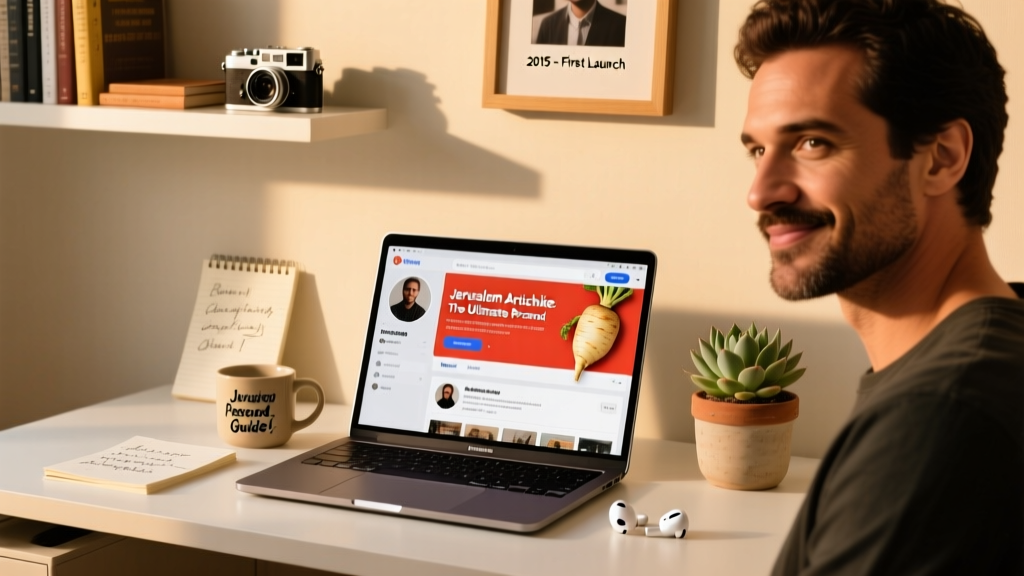
When discussing icons that have completely transformed the culinary and wellness landscapes, few names carry the earthy gravitas of Jerusalem Artichoke. Despite a deeply misleading moniker, this North American native has cultivated a massive, dedicated following across global foodie communities, Michelin-starred kitchens, and wellness-focused social media feeds. For personal branding enthusiasts, the story of this knobby, unassuming tuber is nothing short of a masterclass in reinvention, niche positioning, and aesthetic storytelling. In this comprehensive deep dive, we analyze the 'career' of this botanical celebrity, examining how it conquered international markets, survived a centuries-long identity crisis, and ultimately secured its status as a darling of the modern farm-to-table movement. Whether you are a chef, a forager, or simply someone looking to optimize your own Instagram bio, the branding journey of this iconic ingredient offers profound lessons in authenticity and market positioning.
Quick Facts: The Jerusalem Artichoke Profile
| Attribute | Details |
|---|---|
| Full Name | Helianthus tuberosus |
| Stage Names | Jerusalem Artichoke, Sunchoke, Earth Apple |
| Born | Pre-Columbian Era (Cultivated by Indigenous Peoples of North America) |
| Nationality | North American (Global Citizen) |
| Known For | Nutty flavor profile, inulin-rich gut health benefits, rustic fine-dining plating |
| Social Media Presence | #Sunchoke (150K+ IG Posts), #Foraging (TikTok Trends), Farm-to-Table Menus |
The Career Trajectory of Jerusalem Artichoke
Every great celebrity has an origin story, and the Jerusalem Artichoke is no exception. Long before it was featured in moody, high-contrast Instagram reels by avant-garde chefs, it was a foundational staple for Native American tribes who cultivated it for its resilience and nutritional density. Its big 'breakout role' on the global stage occurred in 1605 when French explorer Samuel de Champlain introduced it to European royal courts. Almost overnight, it became the 'it' ingredient of the 17th-century Parisian elite, celebrated for its artichoke-like flavor and sunflower lineage.
However, the path to stardom was not without controversy. The name 'Jerusalem Artichoke' is widely considered by culinary historians to be a massive PR blunder. It is neither from Jerusalem (the name is likely a corruption of the Italian word for sunflower, girasole) nor is it related to the globe artichoke. This misbranding led to centuries of consumer confusion. Furthermore, its high inulin content—which is fantastic for gut health—caused digestive distress for unprepared 18th-century diners, temporarily relegating the tuber to livestock feed and earning it a notorious reputation. It took a massive rebranding effort in the mid-20th century to bring this botanical star back into the spotlight.
The 'Sunchoke' Rebrand: A Masterclass in Aliases
In the personal branding world, knowing when to change your name or handle is crucial. Think of it like a musician adopting a new stage name to shed past controversies. In the 1960s, the Jerusalem Artichoke was facing a severe market slump. Enter Frieda Caplan, a legendary produce distributor known as the 'Queen of Exotic Produce.' Caplan realized that the name was a barrier to entry for modern home cooks. She initiated a naming contest and officially rebranded the tuber as the 'Sunchoke'—a clever portmanteau honoring its sunflower (Helianthus) roots and its artichoke-like taste.
This strategic pivot is a legendary case study in branding. By adopting the 'Sunchoke' alias, the ingredient shed its historical baggage and positioned itself as a trendy, accessible, and health-forward superfood. Today, high-end restaurants and wellness influencers use 'Sunchoke' to signal culinary literacy and modernity, while 'Jerusalem Artichoke' is often reserved for historical or botanical contexts. For anyone building a personal brand, the lesson is clear: if your current handle or bio creates friction or confusion, do not be afraid to execute a strategic pivot that better reflects your core value proposition.
The Social Media Presence of Jerusalem Artichoke
On platforms like Instagram and TikTok, the Jerusalem Artichoke has found a massive, highly engaged audience. Unlike highly polished, artificial influencers, the branding of this tuber leans heavily into the 'cottagecore' and 'dark academia' food aesthetics. When analyzing its presence across foodie networks, a distinct visual and textual language emerges.
Visual Identity: The tuber is rarely photographed in sterile, brightly lit environments. Instead, top food stylists and chefs present it dusted with rich, dark soil, roasted in cast-iron skillets, or shaved raw over moody, dimly lit plates. The visual branding screams 'authenticity,' 'foraged,' and 'grounded.' It appeals to an audience exhausted by hyper-processed foods and curated perfection.
The 'Bio' and Caption Strategy: When chefs and wellness advocates post about this ingredient, their captions (the equivalent of a personal bio) rely on specific, high-converting keywords. You will rarely see generic descriptors. Instead, the copy highlights niche benefits: prebiotic, heirloom, foraged, gut-microbiome, earthy, nutty. By leaning into its functional health benefits (specifically inulin, a powerful prebiotic fiber), the ingredient positions itself not just as food, but as a lifestyle choice for the wellness-conscious consumer.
Personal Branding Takeaways for Your Own Bio
What can a knobby root vegetable teach you about crafting the perfect Instagram bio or LinkedIn profile? Surprisingly, a great deal. Here are the core branding takeaways you can apply to your own digital presence, inspired by the market dominance of this ingredient:
- Audit Your Handle for Clarity: Just as the shift from 'Jerusalem Artichoke' to 'Sunchoke' removed consumer friction, your social media handle and display name should be instantly understandable. If your current username is a confusing string of numbers or an inside joke, consider a strategic rebrand that clearly communicates your niche.
- Highlight Your 'Inulin' (Your Unique Value): The tuber doesn't try to compete with potatoes on starchiness; it competes on gut health. In your bio, do not list generic skills. Identify your unique 'prebiotic'—the specific, niche value you bring to your industry that no one else can offer. Use exact keywords that your target audience is searching for.
- Embrace Earthy Authenticity: The visual branding of this ingredient proves that audiences crave raw, unpolished reality. In your profile picture and grid aesthetic, avoid overly filtered, corporate sterility. Show the 'soil'—the behind-the-scenes reality of your craft, your workspace, and your genuine personality.
- Own Your Origin Story: Despite its global fame, the ingredient's marketing frequently honors its Indigenous North American roots. Authenticity requires acknowledging where you came from. Use your bio's link-in-bio or highlights to tell your genuine origin story, building deeper parasocial trust with your followers.
Sources and Further Reading
The historical and botanical data informing this branding analysis is sourced from leading culinary and botanical institutions. For those looking to dive deeper into the 'career' of this remarkable plant, we recommend the following resources:
- Kew Gardens: Helianthus tuberosus Profile - A comprehensive botanical breakdown of the plant's origins and global spread.
- Serious Eats: The Sunchoke Renaissance - An in-depth culinary analysis of how modern chefs have rebranded and utilized the tuber in contemporary gastronomy.