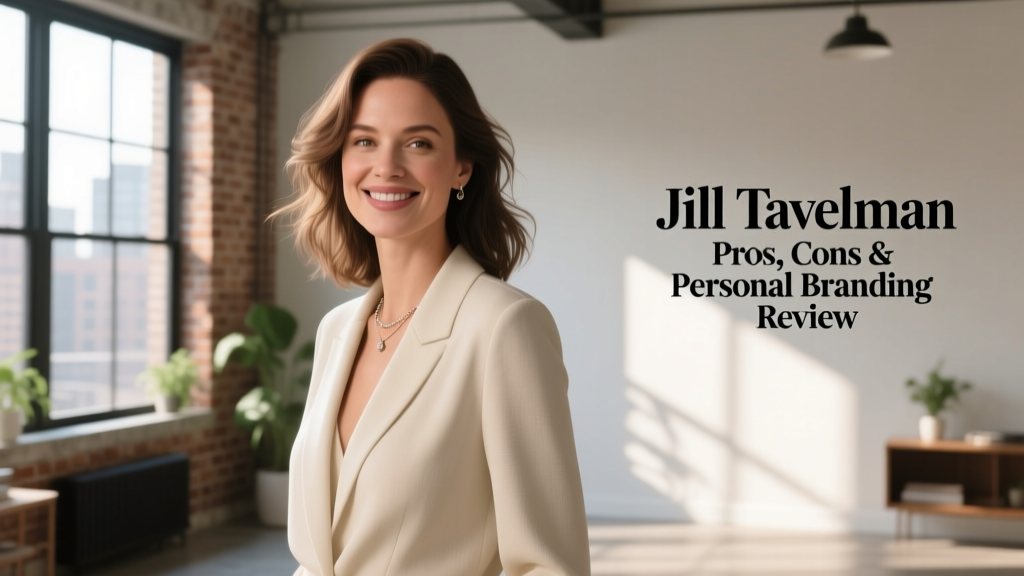
When we think of personal branding, we often picture influencers with meticulously curated Instagram grids, link-in-bio storefronts, and viral TikTok hooks. But what happens when a public figure chooses the exact opposite? Jill Tavelman, an accomplished American architect, designer, and the mother of actress Lily Collins, presents a fascinating case study in digital minimalism. While she is widely known to the public through her past marriage to musician Phil Collins and her daughter's Hollywood success, Tavelman's personal brand is defined by what she doesn't share. In this critical review, we analyze the pros, cons, and strategic realities of the 'ghost brand' approach, and how you can apply the principles of quiet luxury and boundary-setting to your own social media bios and digital presence.
To understand the power of a minimalist digital footprint, we must first look at the individual behind the strategy. Tavelman operates in the high-stakes, high-aesthetics world of Beverly Hills architecture and design. In this industry, your portfolio speaks louder than your social media engagement metrics. By refusing to play the influencer game, she positions herself not as a personality to be consumed, but as a serious professional to be hired. This distinction is crucial for anyone looking to build a personal brand rooted in expertise rather than virality.
Quick Facts: The Architect Behind the Scenes
| Attribute | Details |
|---|---|
| Full Name | Jill Tavelman |
| Born | 1956 (Texas, USA) |
| Nationality | American |
| Known For | Architecture, Design, Beverly Hills Women's Club, Mother of Lily Collins |
| Social Media Handles | Highly Private / No Official Public Instagram |
The Jill Tavelman Social Media Presence: A Study in Privacy
Analyzing the digital footprint of a fiercely private individual requires looking at the spaces between the posts. The Jill Tavelman social media presence is essentially an exercise in absence. She does not maintain a verified, public-facing Instagram account with millions of followers. Instead, her digital 'bio' is aggregate and crowdsourced, written through the lens of her professional affiliations, her tenure as president of the Beverly Hills Women's Club, and the affectionate, curated tributes from her daughter on Mother's Day. In the context of modern personal branding, a bio isn't just the 150 characters on your profile; it is the sum of your digital reputation. By keeping her own accounts private or non-existent, Tavelman creates an aura of exclusivity. When a user searches for her, they don't find a grid of sponsored selfies; they find architectural achievements and high-society philanthropy. This is the ultimate 'stealth wealth' bio strategy.
Pros of the 'Quiet Luxury' Digital Strategy
There are distinct advantages to adopting a low-profile personal brand, particularly for professionals in legacy industries. The first major pro is the ultimate protection from public scrutiny. In an era where a single poorly worded tweet can lead to cancellation or misrepresentation, saying nothing at all is a bulletproof shield. Tavelman avoids the exhausting cycle of public opinion, maintaining her dignity and privacy.
Secondly, this approach enforces a strict separation between professional output and personal life. For architects and designers, the work should be the focal point. By not offering up her daily routines or personal struggles for public consumption, she ensures that clients focus entirely on her design acumen. Finally, there is the allure of scarcity. In a digital economy saturated with oversharing, being inaccessible makes you more intriguing. It signals that your time and attention are reserved for high-value, real-world interactions, not casual digital scrollers.
Cons of a Low-Profile Personal Brand
However, the 'ghost brand' strategy is not without significant drawbacks. The most glaring con is relinquishing narrative control. When you do not define your own digital bio, the tabloids, biographers, and algorithmic gossip pages will do it for you. Much of the public's perception of Tavelman was shaped by external forces, including the highly publicized memoirs of her ex-husband, rather than her own voice.
Secondly, a lack of direct digital presence creates networking friction. Modern business development often relies on the casual connectivity of platforms like Instagram or LinkedIn. By remaining hidden, independent professionals risk losing out on organic discovery and digital-first client acquisitions. Lastly, there is the burden placed on family members or PR teams to act as the sole conduits of your public image, which can create an unbalanced dynamic where your legacy is entirely dependent on how others choose to tag or mention you.
Critical Review: Controlling the Narrative
From a critical branding perspective, the Jill Tavelman approach is a masterclass in boundary-setting, but it is highly dependent on established privilege and industry positioning. For an established architect with a robust offline network and high-society affiliations, digital scarcity reads as elegant and exclusive. It is the hallmark of 'old money' and legacy professionalism. However, if an emerging freelancer or new creative were to adopt this exact strategy, it would likely be perceived as aloof, outdated, or simply invisible. The critical takeaway is that you must earn the right to be private. You can only leverage the 'mysterious and exclusive' bio angle if your offline reputation, portfolio, and real-world networking are already operating at an elite level. Privacy is a luxury brand strategy; it requires a foundation of undeniable real-world value to work effectively.
Personal Branding Takeaways for Your Own Bio
So, how can you adapt the principles of this private, elegant branding to your own Instagram or professional bios? First, embrace the 'Minimalist Bio Formula'. If you want to project quiet luxury and serious professionalism, strip away the emojis, the lengthy quotes, and the personal anecdotes. Use a simple, high-contrast format: [Your Title] | [Your City] | [Your Portfolio Link]. This tells visitors exactly what you do without begging for their parasocial engagement.
Second, utilize the 'Digital Business Card' approach. Instead of using your Instagram grid as a personal diary, treat it as a curated visual portfolio. Keep your account public, but restrict the content strictly to your work, your design inspirations, and your professional milestones. This allows you to be discoverable without being vulnerable.
Finally, consider the 'VIP Finsta' strategy. Many high-profile professionals maintain a sterile, highly professional public-facing profile with a strict, boundary-setting bio, while keeping their actual personal lives on a heavily guarded, private account reserved only for close friends and family. This allows you to satisfy the modern requirement of having a digital footprint for networking, while fiercely protecting your personal peace. Ultimately, your bio should reflect your goals. If your goal is mass influence, you need a loud, engaging bio. But if your goal is high-ticket consulting, architectural design, or exclusive networking, taking a page from the Tavelman playbook of elegant restraint might be your most powerful branding move.