Long before influencers curated their feeds and optimized their Instagram bios for maximum engagement, Hollywood’s Golden Age stars relied on a different kind of personal branding. Yet, few mastered the art of the authentic, relatable public persona quite like Jimmy Stewart. In an era of manufactured glamour, Stewart built a legacy on humility, quiet confidence, and an unmistakable vocal cadence that made him the ultimate cinematic 'Everyman.' For modern creators, entrepreneurs, and professionals looking to craft a personal brand that resonates deeply, the Jimmy Stewart origin story offers a masterclass in authenticity. By examining his roots, his career-defining choices, and how his estate manages his digital legacy today, we can uncover timeless personal branding takeaways to elevate your own social media presence.
The Origin Story: From Indiana, Pennsylvania to Hollywood
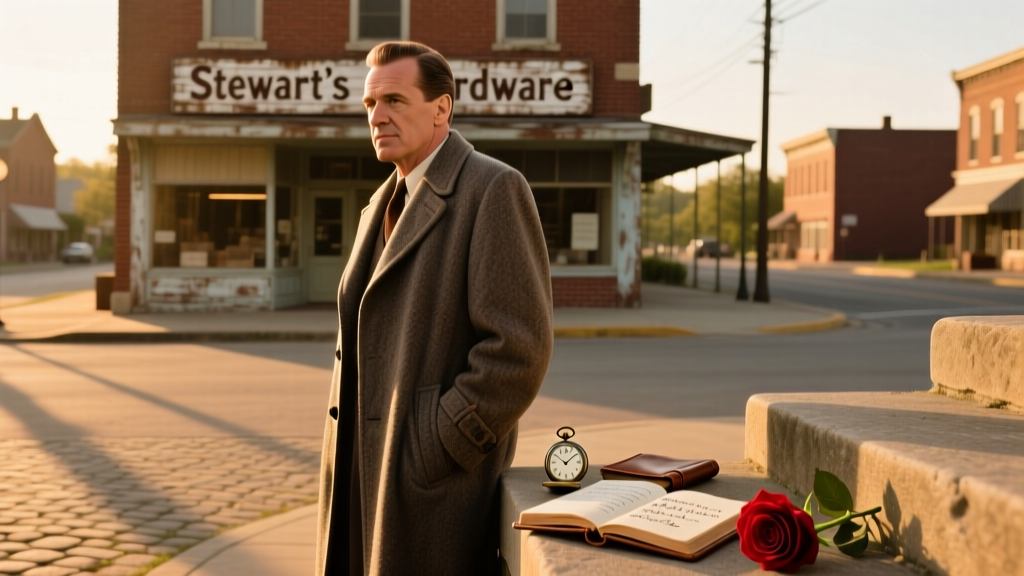
James Maitland Stewart was born on May 20, 1908, in the small, tight-knit town of Indiana, Pennsylvania. His upbringing in his father’s hardware store instilled in him a deep sense of Midwestern-style work ethic, modesty, and community values—traits that would later become the bedrock of his public persona. Unlike many of his contemporaries who actively sought the limelight, Stewart initially pursued a practical path, enrolling at Princeton University to study architecture. He graduated in 1932 with a degree that he kept as a quiet fallback plan, a testament to his pragmatic nature.
His pivot to acting was almost accidental, sparked by his involvement in the Princeton Triangle Club and a subsequent summer stint with the University Players in Falmouth, Massachusetts. It was here that he forged lifelong friendships with Henry Fonda and Joshua Logan. When the Great Depression hit and architecture jobs vanished, Stewart followed Fonda to New York and eventually to Hollywood. According to the Jimmy Stewart Museum, his early Hollywood days were marked by extreme shyness and a lanky, awkward physique that didn't fit the traditional 'leading man' mold of the 1930s. However, MGM Studios saw something unique in his genuine, unpolished charm. They didn't try to fix his awkwardness; they leaned into it, branding him as the relatable, boy-next-door who stumbled through life with endearing sincerity.
Quick Facts: The Architect of the Everyman
| Attribute | Details |
|---|---|
| Full Name | James Maitland Stewart |
| Born | May 20, 1908 (Indiana, Pennsylvania) |
| Died | July 2, 1997 (Los Angeles, California) |
| Nationality | American |
| Education | Princeton University (B.S. Architecture, 1932) |
| Known For | It's a Wonderful Life, Vertigo, Mr. Smith Goes to Washington, The Philadelphia Story |
| Military Service | Brigadier General, United States Air Force (WWII & Vietnam Era) |
| Legacy Digital Presence | The Jimmy Stewart Museum, Turner Classic Movies, AFI Archives, Fan-curated Instagram Tributes |
Crafting the Persona: Filmography & The 'Hesitation' Technique
Stewart’s personal brand was inextricably linked to his on-screen performances, which consistently reinforced his off-screen reputation. His breakthrough came with Frank Capra’s Mr. Smith Goes to Washington (1939), where he played an idealistic, naive politician. This role cemented his brand archetype: the moral compass in a corrupt world. He won his only competitive Academy Award for The Philadelphia Story (1940), proving he could hold his own alongside sharp-tongued icons like Katharine Hepburn and Cary Grant.
However, his most defining branding asset was his voice. Stewart famously utilized a 'hesitation' technique—a deliberate stuttering, drawling cadence that made his dialogue feel unscripted, spontaneous, and deeply human. As documented by Turner Classic Movies, this vocal quirk wasn't a natural speech impediment but a carefully cultivated acting choice designed to convey a man searching for the right words, overwhelmed by emotion or sincerity. In personal branding terms, Stewart took a perceived weakness (awkwardness) and turned it into his most recognizable trademark. Post-WWII, his brand evolved from the naive idealist to the complex, sometimes cynical, but ultimately moral protagonist in masterpieces like It’s a Wonderful Life (1946) and Alfred Hitchcock’s Vertigo (1958) and Rear Window (1954). The American Film Institute ranks him as one of the greatest male screen legends of all time, a testament to the enduring power of his carefully crafted, yet deeply authentic, persona.
Jimmy Stewart in the Digital Age: Social Media & Legacy Presence
Because Jimmy Stewart passed away in 1997, long before the advent of modern social media, analyzing his 'social media presence' requires looking at how his estate, classic film institutions, and global fan bases maintain his digital footprint today. On platforms like Instagram, TikTok, and X (formerly Twitter), the Jimmy Stewart brand is fiercely protected and consistently curated. Fan pages and legacy accounts dedicated to classic Hollywood use his image to represent nostalgia, traditional masculinity, and unwavering integrity.
If we treat his collective digital legacy as a unified 'bio,' it rests on three distinct pillars. First, his Cinematic Genius, highlighted through high-definition restorations of his Hitchcock and Capra collaborations. Second, his Small-Town Roots, frequently referenced in digital quotes and behind-the-scenes anecdotes that emphasize his humility and love for his family. Third, and perhaps most importantly for his modern brand, is his Military Honor. Stewart paused his booming Hollywood career at its peak to enlist in the US Army Air Forces during WWII, eventually flying combat missions and rising to the rank of Brigadier General. On digital platforms, military history buffs and classic film fans alike share images of Stewart in uniform, creating a powerful, unspoken narrative of duty and sacrifice that no modern PR team could ever fabricate. His digital 'bio' doesn't need to boast; the historical record speaks for itself.
Personal Branding Takeaways from Jimmy Stewart
How can a modern professional, creator, or entrepreneur apply the Jimmy Stewart origin story to their own Instagram bio, LinkedIn profile, or personal website? Here are the core branding lessons from Hollywood’s favorite Everyman:
1. Own Your 'Stutter' (Embrace Your Quirks)
Stewart didn't try to sound like the polished, transatlantic-accented actors of his day. He leaned into his Pennsylvania drawl and his hesitation technique. The Bio Lesson: Don't use generic corporate jargon in your bio. If you have a unique background, a niche hobby, or an unconventional career path, highlight it. Your quirks are what make you memorable in a sea of optimized, cookie-cutter profiles.
2. The Power of the 'Quiet Confidence' Bio
Despite being a massive star and a decorated war hero, Stewart was notoriously humble. He rarely gave interviews about his military service, believing he simply did his duty. The Bio Lesson: Avoid the 'humble brag.' Instead of writing a bio that screams about your accolades, use a tone of quiet confidence. Let your portfolio, your content, or your linked website do the heavy lifting. A simple, understated bio like 'Architect. Storyteller. Building things that matter.' often commands more respect than a paragraph stuffed with buzzwords.
3. Consistency Between the 'Bio' and the 'Feed'
Stewart’s off-screen life perfectly matched his on-screen persona. He was known in Hollywood as a polite, family-oriented man who avoided scandal. The Bio Lesson: Your bio is a promise; your content is the delivery. If your bio claims you are an 'authentic, transparent founder,' but your feed is full of highly filtered, boastful content, you break trust. Ensure your digital footprint reflects the core values stated in your bio.
4. Highlight Your 'Service' Over Your 'Status'
Stewart’s legacy is heavily defined by his service to his country, not just his box office receipts. The Bio Lesson: Modern audiences connect with purpose. In your bio, include a line about who you help or what problem you are solving, rather than just listing your job titles. Shifting your bio from 'CEO of X Company' to 'Helping small businesses scale through design' instantly makes you more relatable and valuable to your audience.
Ultimately, the Jimmy Stewart origin story proves that the most powerful personal brand isn't the one that tries to be everything to everyone. It’s the one that stays true to its roots, embraces its unique cadence, and lets a legacy of good work speak louder than words.