
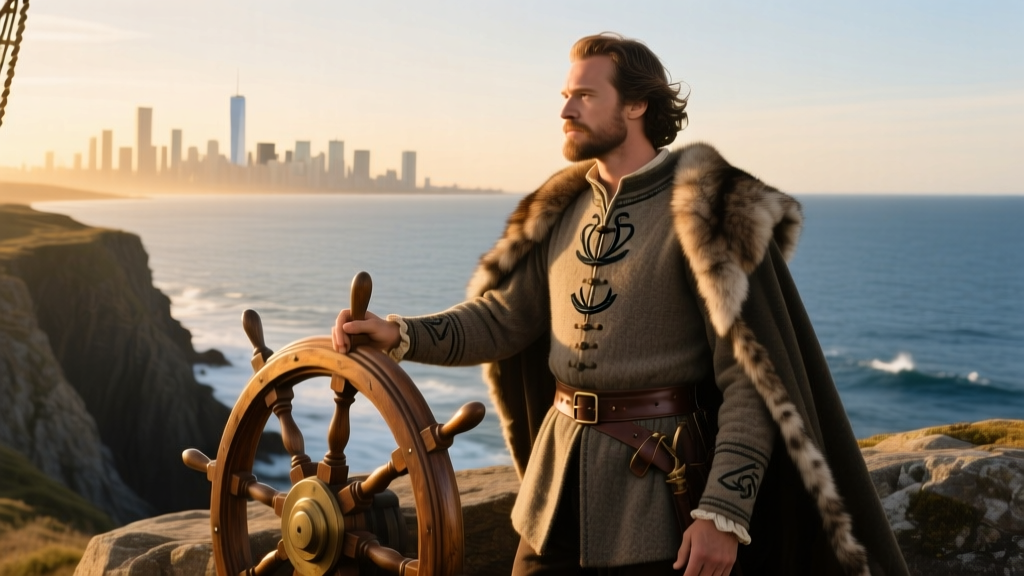
Long before the invention of social media, LinkedIn summaries, or Instagram bios, ambitious individuals had to master the art of the personal pitch. For 15th-century explorers, your “bio” was a matter of royal patronage, survival, and historical legacy. John Cabot, born Giovanni Caboto, remains one of history’s most fascinating case studies in personal rebranding and niche positioning. While he did not possess a digital footprint during his lifetime, the origin story of John Cabot offers profound lessons in how to present oneself to powerful stakeholders, pivot after failure, and carve out a unique legacy in a crowded market. Today, his historical brand is meticulously curated by digital archivists, university projects, and heritage tourism boards. Let us explore the history, origin story, and modern digital legacy of the man who claimed North America for England.
The Origin Story of John Cabot: From Genoa to Bristol
To understand the personal brand of John Cabot, we must first examine his origins and his remarkable ability to pivot. Born Giovanni Caboto around 1450 in Genoa, Italy, he eventually moved to Venice, the maritime powerhouse of the Mediterranean. In 1476, he officially became a Venetian citizen, a crucial “verified badge” of his era that allowed him to engage in lucrative international trade. He spent years navigating the eastern Mediterranean, trading in spices and silks, which built his foundational expertise in navigation and global commerce.
However, Cabot’s early career was not without severe setbacks. By 1488, he was facing financial ruin and bankruptcy. Forced to flee Venice to escape his creditors, he embarked on a geographical and professional pivot that would define his legacy. He moved to Valencia, then Seville, and finally arrived in Bristol, England, in 1495. In modern personal branding terms, Cabot realized his current market was saturated and his reputation damaged, so he relocated to a new hub where his specific skill set—deep knowledge of Atlantic and Mediterranean navigation—was in high demand. Bristol was England’s premier western port, and Cabot positioned himself perfectly to capitalize on the era's obsession with finding new trade routes.
Quick Facts: The Explorer's Profile
| Attribute | Details |
|---|---|
| Full Name | Giovanni Caboto (Anglicized as John Cabot) |
| Born | c. 1450, Genoa, Republic of Genoa |
| Nationality | Italian (Naturalized Venetian Citizen, 1476) |
| Known For | 1497 Voyage to North America aboard the Matthew |
| Primary Patron | King Henry VII of England |
| Digital Custodians | @BristolMuseums, The Cabot Project (Univ. of Bristol), @HistoricEngland |
Pitching the Crown: The 15th-Century Bio
How does an unknown, bankrupt Italian immigrant convince the King of England to fund a transatlantic expedition? Cabot’s “bio” and pitch to King Henry VII is a masterclass in establishing a Unique Value Proposition (UVP). At the time, Christopher Columbus was dominating the headlines by sailing west under the Spanish flag, claiming southern routes to the Indies. Cabot knew he could not compete with Columbus on the same terms or in the same geographical niche.
Instead, Cabot differentiated his brand. He argued that because the earth was a sphere, a northern route across the Atlantic would be significantly shorter and faster than Columbus’s southern route. He presented himself not just as a sailor, but as a Venetian-trained expert in cosmography and navigation. His persistence paid off in March 1496, when Henry VII granted him Letters Patent. This document was the ultimate 15th-century endorsement, giving Cabot the authority to sail under the English flag. Cabot’s successful pitch teaches modern creators the importance of finding an underserved niche (the Northern Route) and securing high-level validation (Royal Patronage) to build instant credibility.
Social Media Presence & Digital Legacy
Because John Cabot disappeared from the historical record after his second voyage in 1498—likely perishing at sea—he has no personal social media accounts. However, his “brand” is highly active online, managed by institutional proxies, historians, and heritage organizations. Analyzing how these entities curate his digital presence offers brilliant insights into legacy branding.
The Cabot Project (University of Bristol)
Led by historian Dr. Evan Jones, The Cabot Project is the premier digital hub for all things related to the explorer. On platforms like X (formerly Twitter) and academic blogs, the project operates much like a niche investigative journalism account. They share high-resolution images of primary source documents, such as the Bristol customs ledgers that prove Cabot was receiving a royal pension. Their social media strategy relies on myth-busting and primary source transparency, engaging history enthusiasts by revealing the gritty, financial realities behind the romanticized myth of exploration.
Bristol Museums and Historic England
On Instagram and Facebook, accounts like @BristolMuseums and @HistoricEngland handle Cabot’s visual branding. They frequently utilize carousel posts featuring the Cabot Tower (built in 1897 to mark the 400th anniversary of his voyage) and the replica ship, the Matthew. The aesthetic is heavily rooted in maritime heritage: deep oceanic blues, parchment textures, and sepia-toned historical maps. They successfully tie Cabot’s 15th-century origin story to modern local pride, using his legacy to drive tourism and community engagement in Bristol.
Canadian Heritage and Tourism Boards
In North America, Cabot’s brand is heavily leveraged by Newfoundland and Labrador tourism boards. On Instagram, his legacy is paired with sweeping, high-definition drone footage of Cape Bonavista and rugged coastal cliffs. The branding here shifts from “maritime trade” to “wilderness discovery.” By associating Cabot’s name with pristine natural landscapes, these digital campaigns use his historical origin story to sell the timeless, untamed beauty of the Canadian Maritimes.
Personal Branding Takeaways for Modern Creators
You may not be pitching a monarch to sail across the Atlantic, but the origin story of John Cabot provides highly actionable personal branding takeaways for today’s digital landscape:
- Pivot Without Apology: Cabot’s bankruptcy in Venice could have ended his career. Instead, he moved to Bristol where his skills were valued. If your current platform, industry, or niche is no longer serving you, rebrand and relocate your digital efforts to where your specific expertise is in demand.
- Find Your “Northern Route” (Niche Differentiation):strong> Don’t copy the market leader. Columbus was already dominating the southern route. Cabot found success by proposing a different, untested angle. Look at what your competitors are doing on social media, and deliberately position your bio and content strategy in the opposite direction.
- Secure Institutional Validation: Cabot’s Letters Patent from Henry VII gave him instant authority. Today, this translates to getting featured by major publications, earning verified badges, or partnering with established brands. Borrowed credibility is a powerful tool for growing your personal brand.
- Build a Legacy That Outlasts You: Cabot’s physical life ended in obscurity, but his brand survived because he tied his name to a monumental geographic milestone. Focus your personal branding on creating evergreen, high-value assets (like comprehensive guides, open-source tools, or foundational community projects) that will continue to generate engagement long after you stop posting daily.
Sources & Historical References
- The Cabot Project (University of Bristol): Ongoing academic research and digital archives detailing Cabot’s Bristol voyages and financial records.
- Dictionary of Canadian Biography: Comprehensive biographical entry on Giovanni Caboto, detailing his Venetian origins and North American landings.
- Historic England Archives: Heritage listings and historical context regarding the Cabot Tower and Bristol’s maritime history.