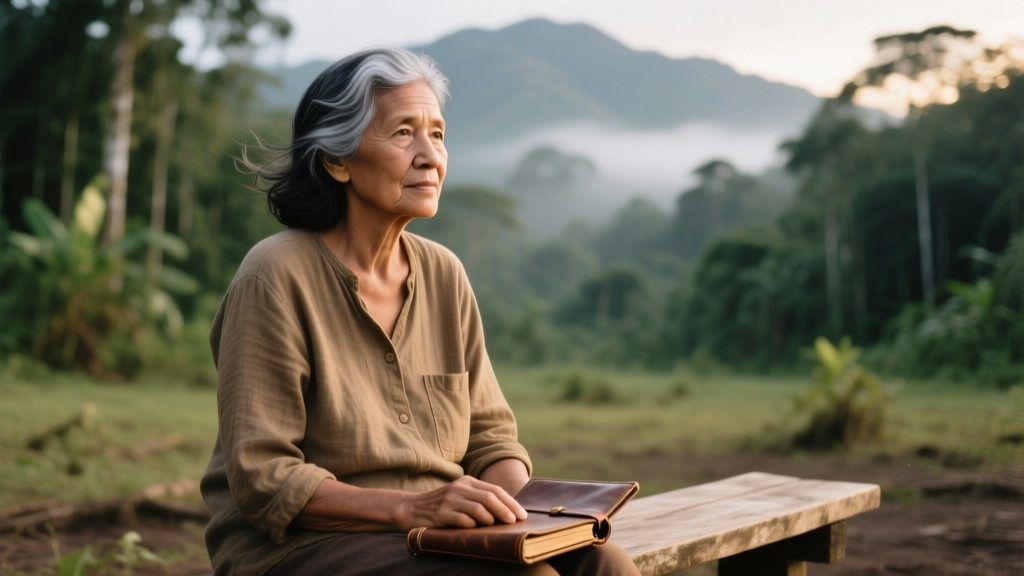
When discussing history's most miraculous survival stories, the name Juliane Koepcke inevitably surfaces. In 1971, at just 17 years old, she fell 10,000 feet into the Peruvian Amazon strapped to her airplane seat and lived to tell the tale. Yet, while the modern internet is obsessed with turning trauma into viral content and monetized influence, Koepcke took a radically different path. She rejected the global spotlight, earned a PhD, and became a highly respected mammalogist. For personal branding enthusiasts and those looking to craft an authentic online presence, her deliberate absence from the digital sphere offers a fascinating case study. Here, we explore common FAQs, debunk persistent myths, and analyze what her fiercely private anti-brand teaches us about curating a meaningful, lasting personal legacy.
Quick Facts: The Woman Behind the Survival Story
| Attribute | Details |
|---|---|
| Full Name | Juliane Margaret Koepcke |
| Date of Birth | October 10, 1954 |
| Birthplace | Lima, Peru |
| Nationality | German-Peruvian |
| Known For | Sole survivor of LANSA Flight 508; Biologist / Mammalogist |
| Social Media | None (Strictly Private / No Public Accounts) |
Juliane Koepcke FAQs: Separating Fact From Fiction
Because Koepcke has spent the last five decades actively avoiding the press, a vacuum of information has formed around her life. This vacuum has inevitably been filled with myths, exaggerations, and tabloid fiction. Let us address the most common misconceptions surrounding her ordeal and her subsequent life.
Myth 1: She was rescued within hours of the crash.
The Fact: Koepcke was not rescued; she rescued herself. After surviving the initial freefall and the impact of the jungle canopy, she awoke completely alone. Relying on survival instincts taught to her by her parents (both prominent zoologists who ran a research station in the rainforest), she followed a small stream downriver. She battled severe injuries, a maggot infestation in her arm, and starvation for 11 days before stumbling upon a lumberjack hut, where local workers eventually found her and transported her to safety.
Myth 2: She capitalized on her fame to build a media empire.
The Fact: Unlike many modern figures who experience viral fame, Koepcke viewed her survival not as a career launchpad, but as a profound trauma. After recovering, she fled the intense media circus in Peru, relocated to Germany, and immersed herself in academia. She never hired a publicist, never launched a speaking tour, and actively declined thousands of interview requests to focus entirely on her biological sciences degree.
Myth 3: She harbors a deep hatred for the Amazon jungle.
The Fact: This is perhaps the most poetic misconception. Koepcke did not grow to hate the environment that nearly claimed her life. Instead, she returned to it. She dedicated her entire professional career to studying and protecting the Amazonian ecosystem, specifically focusing on bat populations, ultimately taking over the management of Panguana, the biological research station her parents founded in 1968.
The Anti-Influencer: Analyzing Her Social Media Presence
How does a branding website analyze the social media presence of someone who does not have one? By recognizing that in an era of chronic oversharing, absence is a powerful branding strategy. Juliane Koepcke possesses what we at LoveMeBio call a ‘Ghost Bio.’ She has no Instagram, no X (formerly Twitter), no TikTok, and no LinkedIn.
When you search for her name today, you are not met with sponsored posts, curated lifestyle selfies, or link-trees. Instead, you find academic papers on Chiroptera (bats), archival news footage from 1971, and citations of her 2011 memoir. This total digital omission creates an aura of profound respect, authenticity, and mystery. Her ‘bio’ is not a 150-character string of emojis; her bio is her body of scientific literature and her tangible contributions to global conservation. For those exhausted by the performative nature of modern social media, Koepcke stands as the ultimate proof that you do not need a digital footprint to possess a monumental legacy.
Career Highlights: From Crash Survivor to Leading Biologist
To truly understand Koepcke’s personal brand, one must look at her professional achievements, which far outweigh her survival story in her own mind. After moving to Germany, she studied biology at the University of Kiel and later earned her doctorate.
- Mammalogy Specialization: She became a leading expert on Neotropical bats, contributing significantly to our understanding of their ecological roles in the Amazon.
- Bavarian State Collection of Zoology: Koepcke spent decades working at this prestigious institution in Munich, cataloging and researching mammalian biodiversity.
- Panguana Conservation: Following the deaths of her parents, she inherited the Panguana biological station in Peru. She successfully campaigned for the Peruvian government to grant the 600-acre reserve official protected status, ensuring its survival against deforestation and illegal mining.
- Wings of Hope (1998): In one of her rare media engagements, she partnered with legendary filmmaker Werner Herzog to revisit the crash site for the documentary Wings of Hope. This was done not for fame, but to reclaim her narrative on her own artistic and emotional terms.
Personal Branding Takeaways: Lessons From A Private Life
While most of our readers are looking to optimize their Instagram bios or build a robust LinkedIn presence, Juliane Koepcke’s life offers vital lessons on boundary-setting, narrative control, and long-term brand equity.
1. Curate Through Omission
You do not need to be everywhere to be impactful. In personal branding, what you choose not to share is just as important as what you post. Establishing firm boundaries between your public achievements and your private life protects your mental health and adds a layer of dignity to your professional reputation. You are allowed to be a ‘ghost’ in your personal life while remaining a giant in your professional field.
2. Anchor Your Brand in Tangible Output
Social media followers are fleeting; published work is permanent. Koepcke’s legacy is anchored in peer-reviewed scientific journals, conservation legislation, and her highly respected memoir, When I Fell From the Sky (2011). When crafting your own bio, focus on linking to substantial, long-form achievements—portfolios, published articles, or community projects—rather than transient viral moments.
3. Reclaim Your Narrative on Your Own Terms
For forty years, tabloids and third-party authors profited off Koepcke’s trauma without her input. By finally writing her own memoir in 2011, she seized control of her story. If you are building a personal brand, do not let the algorithm or public perception dictate who you are. Use your bio, your website, or your own published platforms to define your narrative before others define it for you.
Sources & Further Reading:
1. Koepcke, J. (2011). When I Fell From the Sky (Als ich vom Himmel fiel). Knaur Verlag.
2. Herzog, W. (Director). (1998). Wings of Hope (Julianes Sturz in den Dschungel). Documentary Film.
3. BBC News & The Guardian Archives (2021). Coverage on the 50th Anniversary of the LANSA Flight 508 crash and Panguana conservation efforts.