When we discuss personal branding on lovemebio.com, we typically focus on modern influencers, entrepreneurs, and digital creators. However, to truly understand the raw mechanics of brand architecture, we must examine the most exhaustive, heavily funded, and meticulously controlled personal branding campaign in modern history: that of Kim Il Sung. As the founding leader of North Korea, his public persona was not built for Instagram engagement or sponsorship deals; it was engineered for absolute ideological devotion and generational legacy. Today, analyzing the mechanics of his public image—and how his digital legacy is managed on modern social media platforms—offers profound, albeit cautionary, lessons in visual consistency, narrative control, and audience psychology. For marketers, historians, and personal branding strategists, the Kim Il Sung case study reveals the immense power of repetitive messaging and uniform visual identity.
Quick Facts: The Historical Brand Profile
| Attribute | Details |
|---|---|
| Full Name | Kim Il Sung (born Kim Song-ju) |
| Born | April 15, 1912 |
| Died | July 8, 1994 |
| Nationality | North Korean |
| Known For | Founding leader of North Korea; architect of the Juche ideology |
| Social Media Presence | Legacy managed via state-run media accounts (e.g., DPRK Today, Naenara) and historical archives |
The Architecture of an Extreme Personal Brand
To understand the brand, one must look at the rebranding of the man himself. Born Kim Song-ju, he adopted the name Kim Il Sung, which roughly translates to "become the sun." In personal branding, your name is your primary keyword and identifier. Choosing a name that inherently communicates your value proposition and desired legacy is a masterclass in positioning. The "brand" was built upon the Juche ideology, promoting self-reliance and positioning the leader as the paternal center of the national family. Every touchpoint of his brand was controlled through a monolithic ideological system. There were no unauthorized photos, no candid leaks, and no off-brand moments. While modern creators thrive on authenticity and behind-the-scenes vulnerability, this historical case study proves that absolute curation can build an impenetrable, mythic brand aura. The psychological principle at play is the "mere-exposure effect," where a consistently repeated, uniform image breeds familiarity and, eventually, unquestioned acceptance among the target audience.
Kim Il Sung's Digital Legacy and Social Media Presence
How does a historical figure who passed away in 1994 maintain a social media presence? The answer lies in state-managed legacy accounts and digital archives. On platforms like Instagram, TikTok, and X, the brand of Kim Il Sung is actively maintained by state media outlets such as DPRK Today, as well as by independent historical archives. If we analyze the "bio" of these official legacy accounts, we see a masterclass in authoritative branding. The bios are typically devoid of emojis, utilizing formal, uncompromising language, and linking directly to state portals like Naenara. The posting style relies heavily on archival colorized footage, vintage socialist realism aesthetics, and stoic quotes.
Follower engagement on these posts is highly polarized, drawing historians, political analysts, and internet subcultures fascinated by the retro-authoritarian aesthetic. On TikTok, vintage aesthetics and Cold War history niches often utilize archival footage of his speeches, demonstrating how historical figures are inadvertently absorbed into modern algorithmic trends. The audio from these historical speeches is sometimes remixed or used as atmospheric background tracks, stripping the original context and turning the brand into an aesthetic commodity. This demonstrates a crucial lesson in legacy management: a brand's visual assets and core messaging can outlive the creator, taking on new meanings and attracting new audience segments in digital spaces long after the original campaign has ended.
Visual Motifs and Real-World Branding Examples
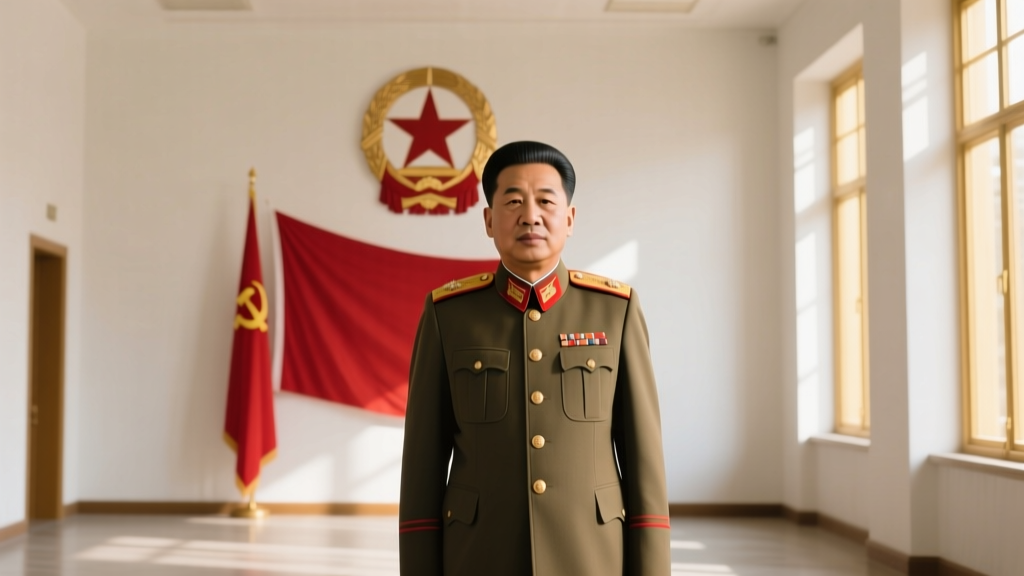
The visual identity of Kim Il Sung was remarkably consistent, anchoring his brand in the minds of millions. His signature "uniform" was a variation of the Mao suit, often referred to as a safari suit. In the modern business world, tech billionaires like Steve Jobs and Mark Zuckerberg adopted uniform dressing to reduce decision fatigue and project a consistent, reliable brand image. Kim Il Sung utilized the military-civilian hybrid suit to project the image of a "man of the people" who was perpetually on duty, bridging the gap between military authority and civilian accessibility.
Furthermore, his visual framing was highly specific. Archival footage almost always depicts him in the act of "on-the-spot guidance"—pointing at factory machinery, examining crops, or gesturing toward infrastructure. Today, when modern CEOs and politicians stage "factory tours" or "site visits" for their social media feeds, they are unconsciously echoing this exact visual trope of the hands-on, omniscient leader. The visual motif of the waving hand and the benevolent smile became inextricably linked to his personal brand, creating a recognizable silhouette that required no additional context.
Personal Branding Takeaways for Modern Creators
While the political and historical realities of North Korea are deeply troubling, the mechanical execution of its founding leader's brand offers several ethical takeaways for modern personal branding:
- 1. The Power of the Signature Uniform: You do not need a totalitarian regime to benefit from visual consistency. Establishing a signature color palette, a specific style of dress, or a recurring visual motif in your Instagram photos helps your audience instantly recognize your content in a crowded feed.
- 2. Own Your Origin Story: The Juche narrative was built on a heavily mythologized origin story. For your own bio, craft a compelling, authentic origin story that explains your "why." People connect with the journey and the struggle, not just the polished final result.
- 3. Intentional Legacy Building: Consider how your digital footprint will age. The archival nature of state media ensures the brand survives decades later. Curate your Instagram grid and LinkedIn articles with evergreen content that will serve as a valuable archive of your expertise for years to come.
- 4. Controlling the Narrative Across Channels: State media ensures the exact same message is broadcast across radio, print, and digital. Ensure your LinkedIn, Instagram, and TikTok bios tell the exact same cohesive story, eliminating brand dissonance.
- 5. The Danger of the Echo Chamber: This is the ultimate cautionary tale. When a brand relies entirely on forced engagement and surrounds itself with yes-men, it loses touch with reality. Modern creators must actively seek genuine, unfiltered feedback from their audience to avoid the stagnation that comes from an artificial echo chamber.
Conclusion
Studying the Kim Il Sung brand architecture is an exercise in understanding the extremes of narrative control and visual consistency. By analyzing how this historical persona is maintained on modern social media, creators can learn the importance of a cohesive visual identity, a strong origin story, and the long-term impact of digital legacy management. True personal branding is not just about what you post today, but about the enduring architecture of the story you leave behind.
Sources & Further Reading
- Myers, B.R. (2010). The Cleanest Race: How North Koreans See Themselves and Why It Matters. Melville House.
- BBC News. "North Korea's digital propaganda and social media presence." (bbc.com/news/world-asia)
- Wikipedia. "Cult of personality around Kim Il-sung." (en.wikipedia.org)