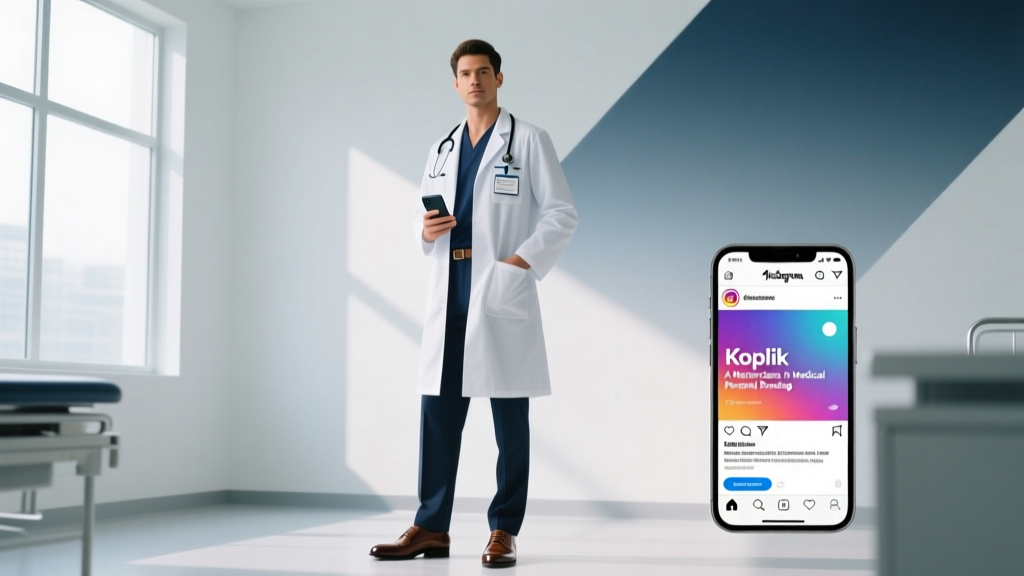
When you think of legendary personal branding, you might picture modern digital influencers. But long before Instagram, pediatrician Henry Koplik established a legacy so powerful that his name became synonymous with a specific medical sign: Koplik Spots. Today, top medical influencers and science communicators use the Koplik Spots case study to build undeniable authority. In this practical, step-by-step guide, we will break down how to build an iconic personal brand and craft an Instagram bio that commands respect, using this historic medical legacy as our ultimate blueprint.
Quick Facts: The Origin of the Koplik Spots Brand
| Attribute | Details |
|---|---|
| Full Name | Henry Koplik (The 'Koplik Spots' Legacy) |
| Born | October 18, 1858 |
| Nationality | American |
| Known For | Pathognomonic measles sign, pediatric hygiene advocacy |
| Social Media Handles | #KoplikSpots, @CDCgov, @WHO, @nejm |
Step 1: Find Your 'Pathognomonic' Niche
In medicine, a 'pathognomonic' sign is a symptom so uniquely characteristic that it guarantees a specific diagnosis. Henry Koplik achieved immortality in the medical community because he identified and relentlessly documented the small white lesions on the buccal mucosa that predict measles. For your personal brand, Step 1 is identifying your pathognomonic niche. What is the one skill, aesthetic, or perspective that you own so completely that your audience immediately associates it with you?
To do this, audit your current content. Are you known for a specific editing style? A unique way of explaining complex finance? A distinct fashion silhouette? Write down three things your peers consistently ask you for advice on. That intersection is your personal 'Koplik Spot.' Once identified, your Instagram bio must immediately state this niche. Do not be a generalist. Be the undeniable authority in your specific micro-niche.
Step 2: Document and Defend Your Discovery
Koplik did not just notice the spots; he published extensively, defended his findings against skepticism, and tied his name to public health initiatives like milk pasteurization. In the digital age, this translates to content consistency and thought leadership. You must document your process and defend your unique methodologies. If you are a fitness coach with a unique mobility framework, create step-by-step carousels, reels breaking down the biomechanics, and long-form captions that explain the 'why' behind your method. Authority is not claimed; it is proven through a relentless archive of valuable content.
Social Media Presence: Analyzing the Medfluencer Phenomenon
To understand how a legacy brand operates on modern social media, we must look at how contemporary 'medfluencers' and institutions handle the Koplik Spots topic today. When accounts like @nejm (The New England Journal of Medicine) or prominent medical educators post clinical case studies featuring Koplik Spots, their engagement metrics skyrocket. Why? Because they leverage the 'guess the diagnosis' format, utilizing high-contrast clinical imagery and authoritative, jargon-free captions.
Their bio structures are meticulously crafted to convert curious scrollers into dedicated followers. A top-tier medical educator's bio typically follows a three-line framework: Line 1 establishes credentials (e.g., 'Board-Certified Pediatrician'), Line 2 states the niche value proposition (e.g., 'Decoding clinical signs for med students'), and Line 3 provides a clear call-to-action (e.g., 'Join my USMLE study group 👇'). The follower engagement on these pages is driven by trust. They do not chase viral dances; they chase clinical accuracy. For your own brand, analyze the top three creators in your niche. Note how they use their 150-character bio limit to establish immediate trust and how their highlight reels serve as a portfolio of their 'pathognomonic' expertise.
Personal Branding Takeaways: Crafting Your Instagram Bio
Now it is time to apply the historical weight of the Koplik Spots legacy to your own Instagram profile. Follow this step-by-step bio optimization checklist to transform your profile from a digital business card into a personal branding powerhouse.
1. Optimize the Name Field for SEO: Your username might be @johnsmith, but your 'Name' field should read 'John Smith | Tech Investor'. Just as 'Koplik' is permanently attached to 'Spots' in medical search queries, your name must be attached to your industry keywords so you appear in Instagram's internal search results.
2. The 'I Help' Statement: Use the first line of your bio to state exactly who you serve. 'Helping SaaS founders scale to $1M ARR.' This is the digital equivalent of a medical diagnosis—clear, specific, and immediately valuable to the right audience.
3. Social Proof & Authority: Henry Koplik had his publications and hospital affiliations. You have your metrics. Include a line that proves your competence: 'Featured in Forbes' or 'Taught 10k+ students'. If you lack traditional credentials, use community metrics: 'Building a community of 5k+ indie hackers'.
4. The Strategic Call-to-Action (CTA): Never leave your link-in-bio uncontextualized. Use the final line of your bio and a downward emoji to direct traffic. 'Grab my free clinical sign cheat sheet 👇' or 'Book a 1:1 brand audit 👇'. Make the next step frictionless and highly relevant to the niche you established in Line 1.
Step 3: Build a Legacy Beyond the Algorithm
The ultimate lesson from the Koplik Spots phenomenon is that true personal branding outlives the platform it was built on. Henry Koplik passed away in 1927, yet his name is still searched, studied, and referenced by millions of medical professionals and students globally. To build an evergreen brand, you must create assets that exist outside of social media algorithms. Start an email newsletter, publish a definitive guide on your niche, or launch a podcast. Use your Instagram bio not as the final destination, but as the top of a funnel that leads your audience to platforms you own and control. When you shift your mindset from chasing likes to building a definitive legacy, your personal brand becomes immortal.
Real-World Sources & Further Reading
For those interested in the historical and clinical accuracy behind the Koplik Spots legacy, refer to these authoritative medical resources:
- CDC Measles Clinical Diagnosis & Guidelines - The Centers for Disease Control and Prevention's official documentation on identifying pathognomonic signs.
- World Health Organization: Measles Fact Sheet - Global data and historical context on measles identification and public health advocacy.