When you hear the name Les Paul, you immediately think of the iconic solid-body electric guitar that shaped the sound of rock and roll. But Lester William Polsfuss was far more than just a namesake for Gibson’s most famous instrument; he was a relentless innovator, a virtuoso guitarist, and a master of personal branding long before the internet existed. For modern creators and professionals looking to craft a standout social media bio and personal brand, studying the Les Paul legacy offers a masterclass in building an identity that transcends generations. How do you build a brand that outlives you? By analyzing the digital estate, archival presence, and enduring visual motifs of Les Paul, we can extract expert-level pro tips for your own digital footprint.
Quick Facts: The Les Paul Story
| Full Name | Lester William Polsfuss (Les Paul) |
|---|---|
| Born | June 9, 1915 (Waukesha, Wisconsin) |
| Died | August 12, 2009 |
| Nationality | American |
| Known For | Inventing the solid-body electric guitar, pioneering multitrack recording |
| Digital Legacy | Les Paul Foundation, Gibson Brands Archives |
The Inventions That Built the Les Paul Empire
To understand the brand, you must understand the product. Les Paul’s personal brand was inextricably linked to his relentless tinkering. In the early 1940s, he created 'The Log,' a 4x4 piece of pine with strings and a pickup, effectively birthing the solid-body electric guitar. This wasn't just an invention; it was a branding statement. He solved a problem (feedback and sustain) and attached his name to the solution.
Beyond the guitar, Les Paul pioneered multitrack recording, tape delay, and reverb effects. His work with his wife and musical partner, Mary Ford, resulted in layered vocal and guitar harmonies that sounded like nothing else on the radio. From a branding perspective, Les Paul didn't just participate in the music industry; he built the tools that defined it. This positioned him not merely as an artist, but as an authority and an architect of sound.
Social Media Presence: Curating an Immortal Digital Legacy
Because Les Paul passed away in 2009, just before the modern social media boom, his 'social media presence' is managed by legacy curators, primarily the Les Paul Foundation and Gibson Brands. Analyzing how these entities handle his digital bio and visual identity provides incredible insights into legacy branding.
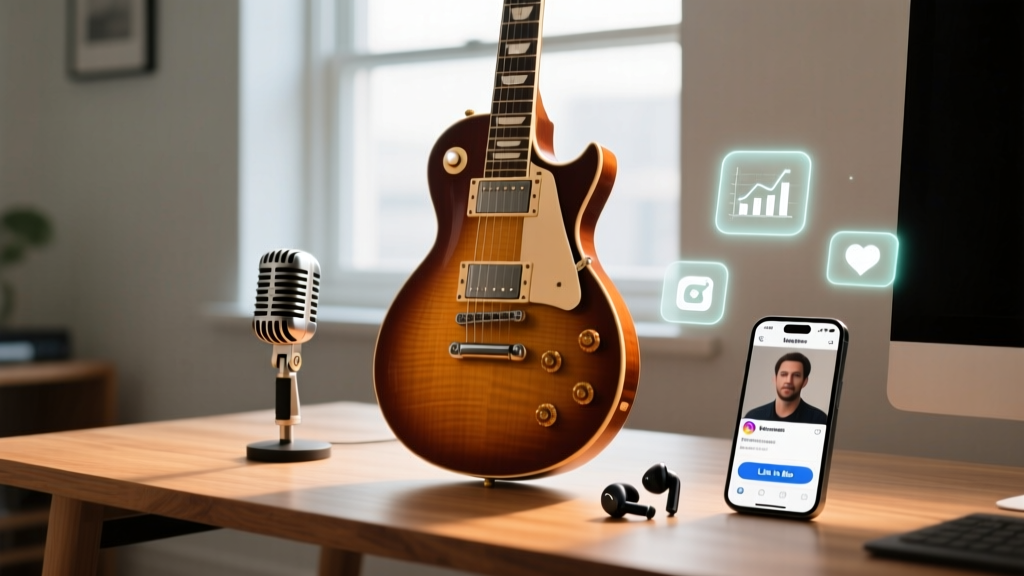
On platforms like Instagram and YouTube, the official channels dedicated to Les Paul do not chase fleeting trends. Instead, their bios and content strategies focus on timeless authority. The bio statements are concise, anchoring his name to his dual identity: 'Guitar Legend' and 'Inventor.' They use high-contrast archival photography—the classic image of Les Paul in a sharp tuxedo, smiling warmly while playing his Les Paul Custom 'Black Beauty.'
For a modern creator, this is a profound lesson in bio optimization. Your social media bio shouldn't just list your current job title; it should anchor your name to your most significant, enduring contribution. The estate’s use of isolated audio tracks, behind-the-scenes archival footage of his mahogany workshop, and quotes about his relentless work ethic creates a digital presence that feels intimate yet monumental. They don't post for the sake of the algorithm; they post to reinforce the mythos of the creator.
Furthermore, the engagement strategy relies heavily on user-generated content and community tributes. By reposting modern artists who cite him as an influence, the digital estate bridges the gap between a historical figure and contemporary creators. For your own brand, this translates to the power of community building. Highlighting your clients, students, or collaborators in your Stories and pinned posts transforms your profile from a static billboard into a living, breathing ecosystem of shared success.
Discography & Career Highlights
- 'How High the Moon' (1951): A groundbreaking hit with Mary Ford that showcased early overdubbing techniques.
- 'Vaya Con Dios' (1953): A massive crossover pop hit that solidified his mainstream appeal.
- The Les Paul Trio: Pioneering jazz and pop crossover performances in the 1940s.
- Radio Broadcasting: His weekly radio show served as early 'content marketing,' blending education about recording gadgets with entertainment.
- Grammy Awards: Multiple wins, including a Lifetime Achievement Award, cementing his elite industry status.
Personal Branding Takeaways for Modern Creators
What can a digital marketer, an aspiring musician, or a startup founder learn from a guitarist born in 1915? Here are the expert pro tips derived from the Les Paul brand playbook, applicable to your own bio and social media strategy.
1. Define Your 'Signature Instrument' (Niche Authority)
Les Paul had his solid-body guitar. What is yours? Your social media bio must immediately communicate your 'signature instrument'—the specific skill or niche where you are the undisputed expert. Don't be a generalist in your bio. Use your headline to state exactly what you build, create, or solve. If you are a copywriter, your bio shouldn't just say 'Writer.' It should say 'Architect of High-Converting SaaS Copy.' Attach your name to a specific, valuable output.
2. Build for Longevity (The Legacy Bio Strategy)
Most people treat their Instagram or LinkedIn bio as a temporary resume. Les Paul’s estate treats his digital footprint as a museum. When crafting your bio, ask yourself: Will this still make sense in five years? Focus on your core philosophy and your proven track record rather than temporary campaigns. Use evergreen language that highlights your methodology, not just your current job title.
3. Visual Consistency is Paramount
Think of the visual association with the Les Paul brand: the elegant tuxedo, the warm smile, the gleaming gold hardware of the guitar. It is instantly recognizable. Your social media profile requires the same visual discipline. Use a high-quality, well-lit profile picture across all platforms. Maintain a consistent color palette or visual motif in your content grid. When someone sees your post, they should know it’s yours before they even read the handle.
4. Document the Process, Not Just the Polish
Les Paul was famous for letting people see his workshop. He demystified the magic of recording by showing the wires, the tape machines, and the soldering irons. Today’s audiences crave authenticity. Use your Stories, Reels, or TikTok to document your creative process. Show the messy desk, the failed drafts, and the late-night brainstorming. A bio that claims you are an 'innovator' is only believable if your content proves it by showing the workshop.
5. Collaborate to Amplify Your Reach
The partnership between Les Paul and Mary Ford was the ultimate branding collaboration. They combined his technical wizardry with her vocal charm, creating a brand that appealed to both audiophiles and mainstream pop fans. Look for strategic collaborations that complement your weaknesses. If you are a technical founder, partner with a charismatic marketer. Highlight these partnerships in your bio or pinned posts to show that you are a team player who delivers comprehensive results.
Final Thoughts on the Les Paul Blueprint
Building a personal brand is not about chasing viral moments; it is about constructing a foundation of undeniable value and recognizable identity. Les Paul didn't just play the guitar; he reinvented it, and in doing so, he ensured his name would echo through every amplifier in the world. By applying these expert analysis pro tips—defining your niche, optimizing for legacy, maintaining visual consistency, and documenting your process—you can craft a social media bio and digital presence that doesn't just capture attention today, but builds a lasting legacy for tomorrow.
Sources & Further Reading
- The Les Paul Foundation - Official archives, biography, and legacy preservation.
- Gibson Brands - History of the Les Paul model and artist spotlights.
- Rock & Roll Hall of Fame - Les Paul induction profile and career achievements.