When you hear the name Leslie Stefanson, you might immediately recall her gripping, critically acclaimed performance as Capt. Karen Emma Walden in the 1999 thriller The General's Daughter. Or perhaps you remember her intense role alongside Kurt Russell in 1997’s Breakdown. However, for digital marketers, personal branding enthusiasts, and anyone looking to craft a meaningful online identity, Stefanson offers a completely different, highly effective masterclass: the art of the career pivot and the power of intentional privacy.
In this beginner-friendly explainer, we are going to break down how Leslie Stefanson successfully transitioned from a high-profile Hollywood actress and model to a deeply respected contemporary sculptor and artist. More importantly, we will analyze her deliberate, quiet approach to social media and personal branding. In an era where oversharing is the norm, Stefanson’s digital footprint proves that you do not need to sacrifice your privacy to maintain a powerful, authentic personal brand. Let’s dive into the anatomy of her online presence and extract actionable lessons you can apply to your own Instagram bio and social profiles.
Quick Facts: Leslie Stefanson at a Glance
| Attribute | Details |
|---|---|
| Full Name | Leslie Stefanson |
| Born | May 23, 1971 (Fargo, North Dakota, USA) |
| Nationality | American |
| Known For | Acting (The General's Daughter, Breakdown), Contemporary Sculpture & Fine Art |
| Spouse | James Spader (Actor) |
| Social Media Style | Highly Private, Art-Focused, Minimalist |
From Hollywood to the Art Studio: A Masterclass in Pivoting
To understand Leslie Stefanson’s current personal brand, we first have to look at her career evolution. Stefanson began her career in the public eye as a model, eventually signing with Elite Model Management. Her striking look and natural screen presence quickly led to a transition into acting. Throughout the 1990s and early 2000s, she built a solid filmography, appearing in projects like Unbreakable (2000) and the aforementioned The General's Daughter, which earned her widespread recognition and critical praise.
However, unlike many actors who chase the spotlight indefinitely, Stefanson made a conscious decision to step away from the relentless Hollywood machine. She pivoted her creative energy into the fine arts, specifically focusing on sculpture, painting, and mixed media. Working with challenging materials like bronze, resin, wood, and steel, she began to exhibit her work in prestigious galleries across Los Angeles and New York.
Her sculptures often explore themes of human emotion, tension, and the physical weight of memory. By immersing herself in the rigorous, unglamorous process of welding, molding, and casting, Stefanson shed the 'celebrity' label entirely. Critics and art collectors do not buy her work because she was in a movie with John Travolta; they acquire her pieces because of her undeniable technical skill and unique artistic vision. This complete separation of her past fame from her current merit is a cornerstone of her modern personal brand.
From a branding perspective, this is a monumental shift. She successfully rebranded herself from a 'celebrity' to a 'working artist.' This pivot required her to change how she presented herself to the world. She no longer needed a bio that highlighted her IMDB credits; instead, her brand needed to reflect the tactile, deeply personal, and introspective nature of her sculptures.
Analyzing Leslie Stefanson's Social Media Presence
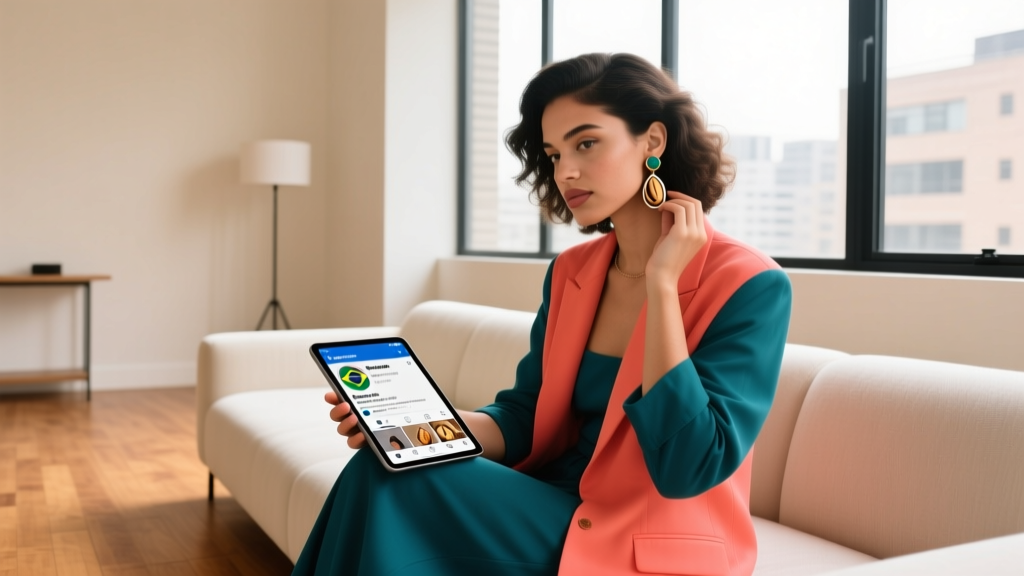
If you search for Leslie Stefanson on platforms like Instagram or X (formerly Twitter), you will notice something immediately refreshing: an almost complete absence of the typical celebrity noise. Stefanson does not use social media to document her daily meals, share unsolicited opinions, or fish for engagement through controversy.
When she is tagged by galleries, or when her art-focused accounts are active, the content is strictly curated. Her visual branding relies on the 'quiet luxury' and 'minimalist' aesthetics that are highly prized in the contemporary art world. The photos are often close-ups of textured sculptures, wide shots of gallery installations, or black-and-white portraits that emphasize the work rather than the artist's ego.
Furthermore, her engagement strategy is virtually non-existent in the traditional influencer sense. She does not reply to comments with emojis, run giveaways, or use aggressive call-to-action phrases in her captions. This might seem counterintuitive to a beginner learning about social media growth, but it perfectly aligns with the high-end art market. In the fine art world, mystique and exclusivity drive value. By treating her social media as a digital archive rather than a tool for daily validation, she attracts serious collectors and gallery curators rather than casual scrollers.
The 'Anti-Bio' Bio Strategy
What can we learn from her actual bio setup? Stefanson’s approach to the Instagram bio is the epitome of 'show, don't tell.' Where an amateur might write a sprawling paragraph about their past acting career, their current art career, and their personal life, Stefanson’s digital footprint relies on the work speaking for itself. Her branding is tied to her gallery representations and her physical exhibitions. For a beginner looking to build a professional brand, this teaches a vital lesson: your portfolio (or in Instagram's case, your grid and highlights) is your true bio. The text in your profile should merely serve as a subtle signpost pointing to your work.
The Power of Privacy in a Hyper-Connected World
Leslie Stefanson has been in a long-term relationship with acclaimed actor James Spader since 2002, and the couple shares children together. Despite Spader’s massive fame—especially following his iconic role as Raymond Reddington on The Blacklist—the couple is notoriously private. They rarely walk red carpets together, and they do not use social media to broadcast their relationship.
In the realm of personal branding, privacy is often mistakenly equated with irrelevance. Stefanson proves the exact opposite. By withholding her private life from the public sphere, she creates an aura of mystique and exclusivity. When you do see a photo of her or her work, it carries weight and intentionality. For everyday users and professionals, this highlights a crucial branding strategy: scarcity creates value. You do not owe the internet your entire life. By keeping your personal boundaries firm, the content you choose to share becomes much more impactful to your audience.
Personal Branding Takeaways for Your Own Bio
How can you translate the Leslie Stefanson approach to your own Instagram, LinkedIn, or personal website? Here are three beginner-friendly takeaways to elevate your digital presence:
1. Embrace the Minimalist Bio
If you are transitioning careers or launching a new creative venture, resist the urge to over-explain yourself in your bio. Instead of listing every past achievement, distill your identity into a clean, one-line statement. Use a simple formula: [Current Focus/Title] | [Location] | [Link to Portfolio]. Let your pinned posts or featured highlights do the heavy lifting of explaining your journey.
2. Curate Your Grid Like a Gallery
Stefanson’s art is tactile, intentional, and visually cohesive. Treat your Instagram grid like an art gallery. Before you post, ask yourself: 'Does this align with the personal brand I am trying to build today?' If you are a professional, a photographer, or an artist, ensure your visual aesthetic is consistent. Use cohesive color palettes and high-quality lighting to make your profile look like a curated exhibition rather than a digital junk drawer.
3. Separate the Persona from the Professional
One of the biggest mistakes beginners make is blending their private complaints with their professional branding. Stefanson keeps her family life and personal thoughts entirely offline, ensuring that her public brand is synonymous with her craft. Create boundaries for yourself. Decide what is for the public (your art, your business, your professional insights) and what is strictly for your inner circle. This boundary not only protects your mental health but also makes your public-facing brand look significantly more professional.
Final Thoughts: Let Your Work Speak
Leslie Stefanson’s journey from a recognizable Hollywood actress to a dedicated, private fine artist is a testament to the power of intentional personal branding. She didn't need a viral social media strategy, a controversial online persona, or a heavily filtered lifestyle to remain relevant and respected. Instead, she relied on a quiet pivot, a dedication to her new craft, and the confident restraint of privacy. As you craft your own bio and build your online presence, remember that sometimes the most powerful statement you can make is letting your work speak for itself.
Sources & Further Reading
- IMDb - Leslie Stefanson Biography and Filmography (imdb.com/name/nm0824314/)
- Artnet / Gallery Archives - Contemporary Sculpture Exhibitions in Los Angeles (artnet.com)
- Vanity Fair - James Spader on His Private Life and Career (vanityfair.com)