
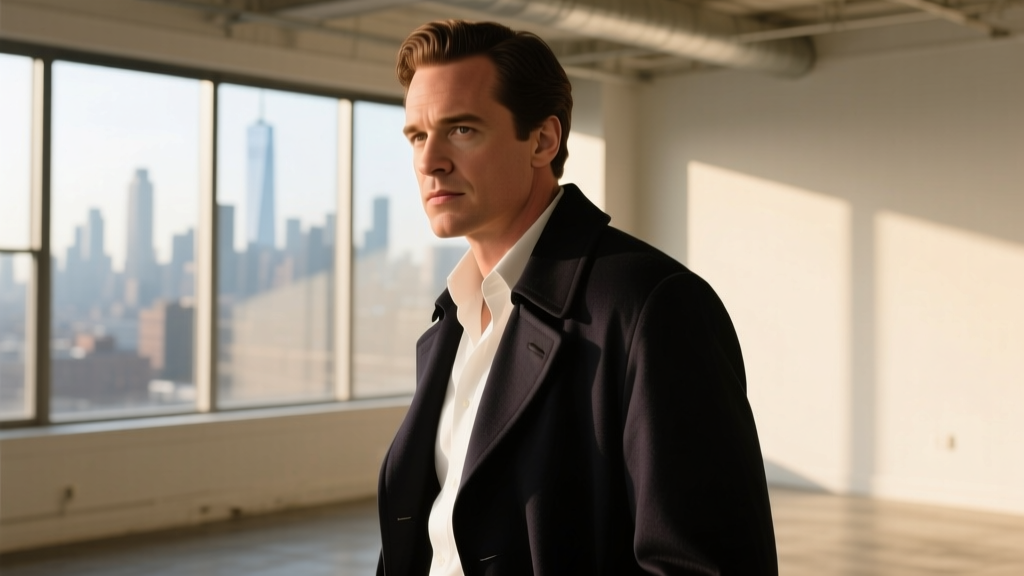
When audiences think of Luke Kirby, they often picture the sharp-witted, tragic brilliance of Lenny Bruce in The Marvelous Mrs. Maisel or the poetic intensity of Walt Whitman in Dickinson. As an Emmy-winning actor, Kirby has mastered the art of disappearing into his roles. But this dedication to the craft has sparked numerous questions and myths about the man behind the characters. In this deep dive, we explore the most frequent FAQs and common misconceptions surrounding Luke Kirby, while analyzing his highly unusual, minimalist approach to social media and personal branding—and how you can apply his mystique to your own profile.
Quick Facts: The Real Luke Kirby
| Full Name | Luke Farrell Kirby |
|---|---|
| Born | January 30, 1978 (Hamilton, Ontario, Canada) |
| Nationality | Canadian |
| Known For | The Marvelous Mrs. Maisel, Dickinson, Shattered Glass |
| Education | National Theatre School of Canada |
| Social Media Handles | Private / Unverified (Agency representation only) |
Luke Kirby on Screen: Career and Filmography Highlights
Before he was a staple of prestige television, Luke Kirby built a formidable foundation in independent cinema and theater. His breakout role came in the critically acclaimed 2003 film Shattered Glass, where he portrayed real-life journalist Stephen Glass. This role showcased his ability to handle complex, morally ambiguous characters, setting the stage for a career defined by nuance rather than typical Hollywood archetypes.
Kirby later took a massive creative risk with HBO's controversial 2007 drama Tell Me You Love Me, proving his willingness to push boundaries for the sake of authentic storytelling. However, his career experienced a massive renaissance in the late 2010s. As Lenny Bruce in Amazon's The Marvelous Mrs. Maisel, Kirby didn't just play a comedian; he embodied the frantic, philosophical energy of a cultural icon, earning him the 2019 Primetime Emmy Award for Outstanding Guest Actor in a Comedy Series. Simultaneously, he captivated audiences as a rugged, soulful Walt Whitman in Apple TV+'s Dickinson, proving his mastery over historical figures who shaped American literature and comedy.
FAQ & Common Misconceptions About Luke Kirby
Because Kirby is so effective at inhabiting his roles, the line between the actor and the character often blurs for the audience. Let's clear up the most common misconceptions.
1. Misconception: Luke Kirby is a real stand-up comedian.
The Truth: While his portrayal of Lenny Bruce is widely considered one of the most accurate and electrifying depictions of stand-up comedy on screen, Kirby is not a stand-up comic. He is a classically trained actor who studied at the prestigious National Theatre School of Canada in Montreal. The seamless delivery of Bruce's intricate, rhythm-heavy routines was the result of grueling rehearsal, vocal coaching, and deep historical research, not a background in comedy clubs.
2. Misconception: He is a New York native.
The Truth: Given his frequent casting as fast-talking, intellectual East Coast figures, many assume Kirby is a born-and-raised New Yorker or Bostonian. In reality, he was born in Hamilton, Ontario, and raised in Canada. His mastery of various American dialects is a testament to his technical skill as a trained thespian.
3. Misconception: He only plays historical figures.
The Truth: While his recent high-profile roles (Lenny Bruce, Walt Whitman, and even his cameo as a fictionalized Hollywood director in The Deuce) lean historical, Kirby has a rich background in contemporary roles. From indie thrillers to modern family dramas, his historical casting is simply a byproduct of current showrunners recognizing his ability to handle period-accurate dialogue and mannerisms.
Social Media Presence: The Power of Digital Mystique
If you search for Luke Kirby on Instagram, TikTok, or X (formerly Twitter), you will not find a verified, blue-check account with millions of followers posting behind-the-scenes selfies from the Mrs. Maisel set. In an entertainment industry where actors are increasingly pressured to act as influencers, content creators, and brand ambassadors, Kirby has chosen a radically different path: digital minimalism.
His social media presence is effectively a ghost town by modern Hollywood standards, and this is entirely by design. Kirby relies on traditional public relations, in-depth interviews with publications like Variety and The Hollywood Reporter, and the sheer gravitational pull of his filmography to maintain his public profile. This 'anti-branding' strategy creates an aura of old-school Hollywood mystique. When an actor isn't constantly in your feed sharing their morning coffee routine or political hot takes, the audience's only connection to them remains the art they produce. This preserves the magic of the performance. When Luke Kirby steps onto the screen, the audience sees Lenny Bruce or Walt Whitman, not an internet personality playing dress-up.
Personal Branding Takeaways for Your Own Bio
You might not be an Emmy-winning actor, but Luke Kirby's approach to his public image offers profound lessons for professionals, artists, and creatives looking to craft a standout personal brand on platforms like Instagram, LinkedIn, or a personal portfolio site.
1. The 'Less is More' Bio Strategy
There is a common misconception that a strong personal brand requires oversharing. Kirby's mystique proves the opposite. If you are a photographer, writer, or consultant, your Instagram or Twitter bio doesn't need a laundry list of emojis and life updates. A minimalist bio—perhaps just your name, your core profession, and a single link to your portfolio—signals quiet confidence. It tells the visitor: My work speaks for itself.
2. Let Your Portfolio Be Your loudest Voice
Kirby lets his Emmy wins and critically acclaimed performances do the heavy lifting of his PR. For your own profile, ensure your pinned posts, highlighted stories, or link-in-bio direct users immediately to your highest-quality work. Instead of using your bio to tell people you are an expert, use your profile grid to show them your case studies, published articles, or design portfolios.
3. The Power of the Private Boundary
Not every aspect of your life needs to be monetized or shared for engagement. Kirby's choice to keep his personal life private protects his mental health and maintains professional boundaries. You can apply this by utilizing Instagram's 'Close Friends' feature for personal updates, keeping your public-facing grid strictly curated to your professional or creative brand. This creates a sense of exclusivity and respect for your own boundaries.
4. Embrace the 'Character' vs. 'Creator' Split
Just as Kirby separates himself from his characters, you should separate your personal identity from your professional output. Use your bio to establish your professional avatar. A clean, well-structured bio that highlights your agency or representation (or in your case, your business entity) adds a layer of legitimacy that a chaotic, overly personal profile simply cannot match.
Sources & Further Reading
- IMDb: Luke Kirby Biography and Filmography
- Television Academy: Emmy Awards Profile and Wins
- Variety: Prestige Television Interviews and Actor Profiles
At lovemebio.com, we believe that the best personal brands are authentic to the individual. Whether you choose the high-engagement influencer route or the quiet mystique of a Luke Kirby, your bio should reflect your true professional boundaries and goals.