While most profiles on lovemebio.com focus on human influencers, actors, and athletes, true branding mastery sometimes comes from historical and cultural phenomena. Maundy Thursday is not a person you can follow on Instagram, but as a global cultural cornerstone and historical event, its origin story provides a masterclass in enduring personal branding, symbolic consistency, and audience engagement. By examining the history and origin story of Maundy Thursday, we can uncover powerful strategies for crafting a meaningful social media bio and building a personal brand rooted in authenticity, service, and disruptive humility.
Quick Facts: The Maundy Thursday Profile
| Attribute | Details |
|---|---|
| Full Name | Maundy Thursday (also known as Holy Thursday, Covenant Thursday) |
| Born (Origin) | 1st Century AD (approx. 30-33 AD), Jerusalem |
| Nationality / Origin | Judean Origins / Global Cultural Phenomenon |
| Known For | The Last Supper, the Mandatum (foot washing), Institution of the Eucharist |
| Social Media Handles | #MaundyThursday, #HolyThursday, #Triduum, #ServantLeadership |
The History and Origin Story of Maundy Thursday
To understand the branding power of this day, we must look at its origin story. The term 'Maundy' is derived from the Latin word mandatum, which translates to 'commandment.' This refers to the words spoken by Jesus of Nazareth during the Last Supper, as documented in the Gospel of John: 'A new commandment I give unto you, That ye love one another.' According to Britannica, this historical moment established a completely new paradigm for leadership and community interaction.
In the context of 1st-century Judea, washing the feet of guests was a task strictly reserved for the lowest-ranking servants. When the central figure of the movement took off his outer garments, tied a towel around his waist, and washed the feet of his disciples, it was a shocking disruption of the social hierarchy. This act was not merely a ritual; it was a profound piece of experiential branding. It visually and physically communicated the core ethos of the movement: servant leadership. The origin story of Maundy Thursday is fundamentally about aligning actions with a core message, creating a symbolic legacy that has endured for over two millennia.
Furthermore, the institution of the Eucharist (Communion) during this same evening provided a repeatable, highly symbolic ritual that followers could carry forward. From a branding perspective, this is the equivalent of creating a highly recognizable, easily replicable brand touchpoint that transcends language and geography. The historical origins of this day laid the groundwork for a global community united by shared symbols and a distinct ethical mandate.
Social Media Presence and Digital Engagement
Today, the 'brand' of Maundy Thursday experiences a massive, cyclical surge in digital engagement every spring. While it does not have a single verified Instagram account, the collective digital footprint of this observance is staggering. Hashtags like #MaundyThursday and #HolyThursday generate millions of impressions annually across platforms like X (formerly Twitter), Instagram, and TikTok. But how does this ancient origin story translate to modern social media aesthetics and engagement?
On Instagram, the visual aesthetic of Maundy Thursday is highly distinct. Content creators, religious leaders, and cultural commentators utilize a specific visual language: low lighting, the stark imagery of a basin and towel, the breaking of bread, and the stripping of altars. According to resources from the United Methodist Church, the visual transition from the joy of the Last Supper to the solemnity of the impending crucifixion provides a powerful narrative arc that digital storytellers leverage through carousel posts and moody, cinematic Reels.
On TikTok and YouTube Shorts, the engagement shifts from aesthetics to action. The 'foot-washing' motif has been adopted by modern influencers and community leaders as a metaphor for volunteerism and servant leadership. It is common to see viral videos on this day featuring individuals performing unexpected acts of service—washing the feet of the homeless, serving meals, or doing the 'unglamorous' work behind the scenes of their businesses. The digital engagement on these posts is remarkably high because it breaks the typical pattern of curated, ego-driven social media content. The Maundy Thursday digital presence proves that audiences crave authenticity, vulnerability, and a demonstration of values over mere performative aesthetics.
Personal Branding Takeaways from Maundy Thursday
You might be wondering how an ancient religious observance can help you craft the perfect Instagram bio or elevate your personal brand on lovemebio.com. The principles derived from the Maundy Thursday origin story are universally applicable to modern digital branding. Here are the key takeaways you can apply to your own profile.
1. Define Your 'Mandatum' (Core Mandate)
The very name of this day comes from a clear, concise commandment. Your Instagram bio needs a similar 'mandatum'—a core mandate that tells your audience exactly what you stand for and how you serve them. Instead of just listing your job titles, use your bio to state your guiding principle. For example, instead of 'Marketing Consultant,' try 'Helping founders build brands rooted in radical authenticity.' Give your audience a clear commandment of what they can expect when they engage with your content.
2. Embrace Disruptive Humility
The most memorable moment of the Maundy Thursday origin story was an act of profound humility that disrupted the status quo. In a digital landscape saturated with flex culture, luxury aesthetics, and highlight reels, humility is a disruptive and highly engaging brand pillar. Use your Stories and captions to share your failures, your behind-the-scenes struggles, and the unglamorous work it takes to achieve your goals. When you position yourself as a servant to your audience rather than an untouchable guru, you build deep, parasocial trust that translates into loyal followers and customers.
3. Establish Consistent Visual Symbolism
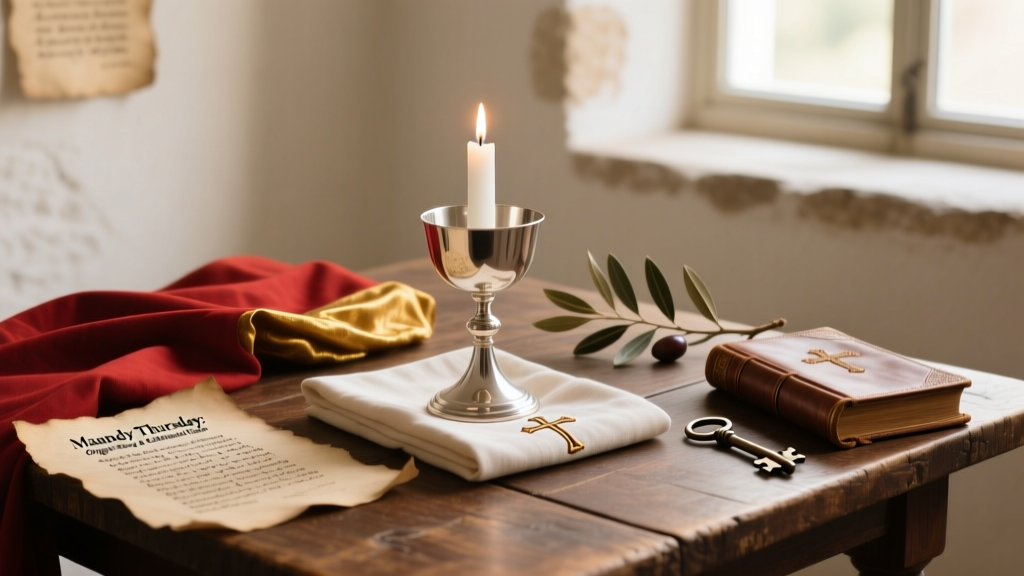
The basin, the towel, the bread, and the wine are symbols that have remained visually consistent for centuries. When designing your Instagram grid and profile aesthetics, choose two or three visual motifs that represent your brand and use them consistently. Whether it is a specific color palette, a recurring prop in your videos, or a distinct editing style, visual consistency helps your audience instantly recognize your content in a crowded feed. Let your visual symbols do the heavy lifting of communicating your brand identity before a single word is read.
4. Create Repeatable Community Rituals
The events of the Upper Room were designed to be repeated. To build a cult-like following on social media, you need to create rituals that your audience can participate in. This could be a weekly Q&A session in your Stories, a specific hashtag challenge, or a monthly community giveaway. When your audience knows what to expect and feels invited to participate in a shared ritual, they transition from passive scrollers to active community members.
Final Thoughts on Origin Stories and Brand Legacy
The history and origin story of Maundy Thursday demonstrates that the most enduring brands are not built on ego, but on service, clear mandates, and powerful symbolism. As you use lovemebio.com to refine your Instagram bio and curate your online presence, remember that true influence comes from what you are willing to give to your audience. By adopting the principles of servant leadership and visual consistency, you can build a personal brand that doesn't just chase temporary algorithms, but creates a lasting, meaningful impact in your digital community.