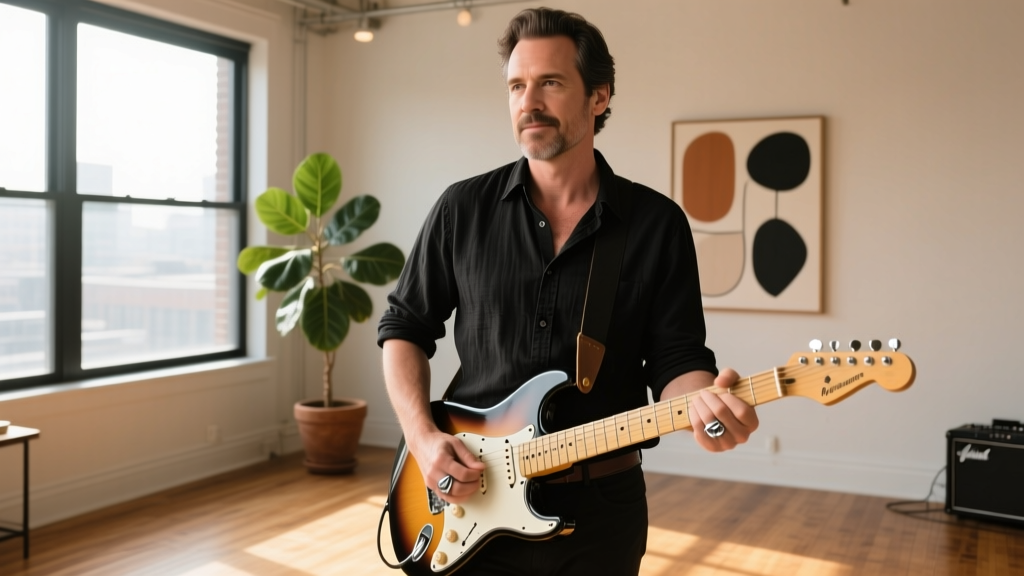
When you think of music industry heavyweights, the spotlight usually falls on the lead vocalists or frontmen. However, the backbone of any legendary track is often the session and touring musician. Enter Michael Lockwood, a virtuoso guitarist whose digital footprint is as authentic and understated as his legendary fretwork. For aspiring musicians, creative professionals, and personal branding enthusiasts, analyzing how Michael Lockwood presents himself online offers a masterclass in niche authority. He doesn't rely on viral trends, clickbait, or over-polished influencer aesthetics; instead, his social media bio and grid reflect the quiet confidence of a working professional. Let's dive deep into his unique branding strategy and see what we can learn.
Building a personal brand as a "sideman" or session musician requires a completely different approach than building one as a solo pop star. Your brand isn't about selling a larger-than-life persona; it is about selling reliability, elite skill, and an unmistakable sonic signature. By examining Lockwood's digital presence, we can uncover exactly how to craft a bio and social media strategy that attracts high-level industry peers and dedicated fans alike.
Quick Facts: The Man Behind the Guitar
| Attribute | Details |
|---|---|
| Full Name | Michael Lockwood |
| Born | May 20, 1965 (Hawthorne, California) |
| Nationality | American |
| Known For | Session & Touring Guitarist (L7, Aimee Mann, Fiona Apple, Carly Simon) |
| Social Media Focus | Instagram (Gear, studio sessions, tour life, and sonic craftsmanship) |
Career Highlights & Key Discography
To understand a person's personal brand, you must first understand the weight of their resume. Michael Lockwood's career is a testament to versatility, moving seamlessly between aggressive punk-grunge and sophisticated indie-pop. His discography reads like a map of alternative music's evolution from the early 1990s through the 2000s.
- L7 (Early 1990s): Lockwood cut his teeth in the gritty Los Angeles punk and grunge scene, most notably playing with the pioneering all-female rock band L7. His work during the Smell the Magic era helped define the heavy, distorted guitar tones that would influence a generation of alternative rock.
- Aimee Mann (Late 1990s - 2000s): Transitioning from punk to meticulous indie-pop, Lockwood became a crucial collaborator for Aimee Mann. His guitar work on the critically acclaimed album Bachelor No. 2 or, the Last Remains of the Dodo showcased his ability to serve the song with melodic, textured, and emotionally resonant playing.
- Fiona Apple (Late 1990s): Perhaps his most famous sonic contribution is his extensive work on Fiona Apple's masterpiece, When the Pawn.... Lockwood's guitar arrangements added a layer of sophisticated grit to Apple's percussive, jazz-inflected alt-rock, proving his ability to adapt to highly complex musical environments.
- Carly Simon & Lisa Marie Presley: Beyond the alternative sphere, Lockwood has toured and recorded with legacy artists like Carly Simon and served as a musical anchor for Lisa Marie Presley, demonstrating his reliability and professionalism at the highest echelons of the music business.
Decoding Michael Lockwood's Social Media Presence
Unlike mainstream celebrities who use their platforms for lifestyle curation or brand sponsorships, Michael Lockwood treats his social media as a digital workshop. His Instagram presence is a masterclass in what we call the "Working Professional" aesthetic.
The Bio Structure: Minimalist and Credibility-Driven
When you visit the profile of a highly respected session musician, you won't find emojis, motivational quotes, or lengthy paragraphs. The bio is typically structured for immediate industry recognition. It generally includes:
- The Identifier: Simply "Guitarist" or "Musician." No need for buzzwords like "visionary" or "guitar ninja."
- The Anchor Credits: Listing 2-3 marquee names (e.g., Fiona Apple, Aimee Mann, L7). This acts as immediate social proof. When a music director or producer lands on his page, they instantly know his pedigree.
- The Contact/Link: A clean link to a management contact, a personal website, or a Linktree housing session reels and booking inquiries.
This minimalist approach to the bio is incredibly effective for B2B (business-to-business) networking within the entertainment industry. It respects the viewer's time and lets the credits do the heavy lifting.
Posting Style: The Digital Workbench
Lockwood's grid is not filled with posed red-carpet photos or heavily filtered selfies. Instead, his content strategy revolves around the process of making music. You will find close-up shots of vintage Fender Twin Reverb amplifiers, intricate pedalboard signal chains, and candid backstage soundcheck photos. This type of content serves two purposes: it engages hardcore music fans who want a behind-the-scenes look at their favorite albums, and it signals to other musicians and producers that he is a dedicated student of tone and gear.
The "Working Musician" Aesthetic: Visual Branding
Visual branding is just as important as the text in your bio. For Michael Lockwood, the visual language of his profile is rooted in authenticity. The lighting in his photos is rarely studio-perfect; it's the moody, high-contrast lighting of a dimly lit recording studio or the neon glow of a stage rig.
This "unglamorous" aesthetic is actually a highly calculated personal branding choice for session players. In the music industry, being perceived as "too polished" or "too Hollywood" can sometimes work against a session musician, whose job is to be a chameleon in the studio. By maintaining a rugged, gear-focused, and authentic visual brand, Lockwood signals that he is there to work, not to be the center of attention. His visual branding perfectly aligns with the expectations of the producers and artists who hire him.
Personal Branding Takeaways for Your Own Bio
You don't need to be a touring rock musician to apply the principles of Michael Lockwood's personal brand to your own social media profiles. Whether you are a freelance designer, a software engineer, a session photographer, or a consultant, here is how you can adapt the "Working Professional" strategy for your own bio and grid:
1. Let Your Credits Be Your Hook
Stop using subjective adjectives in your Instagram or Twitter bio. Instead of writing "Award-winning passionate creative thinker," adopt the Lockwood approach: state your title and list your top 3 clients, companies, or projects. Example: "Lead UX Designer. Ex-Apple, Spotify, Stripe." This provides instant, undeniable social proof to anyone who visits your profile.
2. Curate a "Process-Driven" Grid
People love seeing how the sausage is made. If you are a photographer, don't just post the final edited portrait; post a photo of your lighting setup. If you are a coder, share a clean snippet of your workspace or a complex architecture diagram. Showing your process establishes you as an authority and attracts peers and clients who value your specific methodology.
3. Embrace the Minimalist Bio Format
A cluttered bio is a confusing bio. Use line breaks to separate your title, your social proof (credits/clients), and your call-to-action (a link to your portfolio or booking page). Keep it stark, professional, and easy to read in under three seconds.
4. Network in the Comments (The Sideman Strategy)
Lockwood's comment sections are often filled with interactions with other elite musicians, audio engineers, and producers. He uses social media to maintain industry relationships. You should do the same. Use your platform to engage thoughtfully with peers in your niche, elevating your visibility within the specific community that matters most to your career.