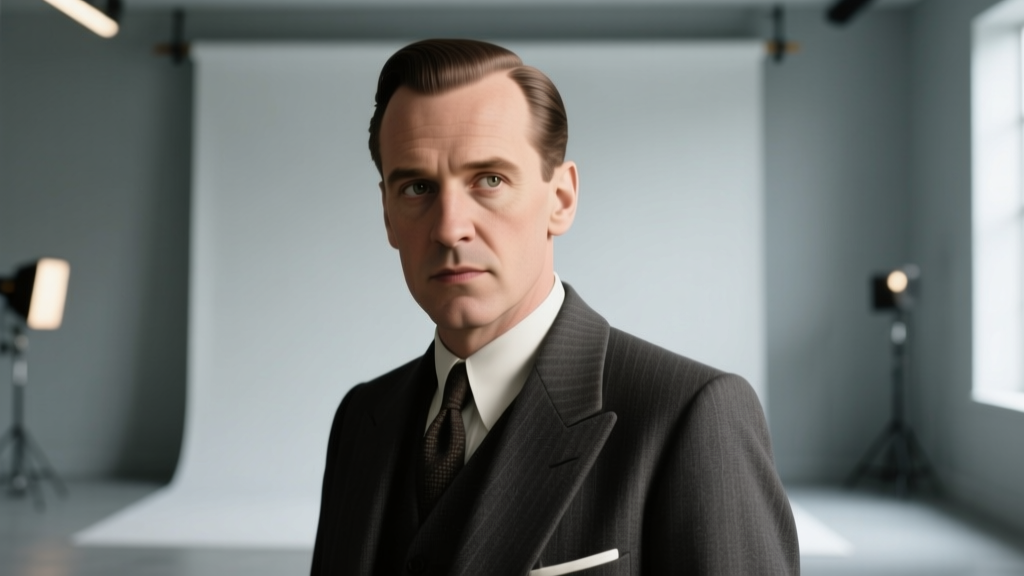
When analyzing the historical trajectory of political personal branding, few figures offer a more stark cautionary tale than Sir Oswald Mosley. Best known as the leader of the British Union of Fascists (BUF) in the 1930s, Mosley’s trajectory from mainstream parliamentary politician to extremist pariah provides critical lessons in reputation management, the power of political iconography, and the permanence of a toxic legacy. At lovemebio.com, we analyze how individuals present themselves to the world. While Oswald Mosley died in 1980—long before the advent of Instagram or X (formerly Twitter)—his posthumous digital footprint, historical misconceptions, and the way modern platforms handle his brand remain highly relevant to understanding digital reputation, algorithmic moderation, and historical archiving today.
Quick Facts: Sir Oswald Ernald Mosley
| Full Name | Sir Oswald Ernald Mosley, 6th Baronet |
|---|---|
| Born | November 16, 1896 (London, England) |
| Died | December 3, 1980 (Paris, France) |
| Nationality | British |
| Known For | Leading the British Union of Fascists (BUF); Political extremism |
| Political Affiliations | Conservative, Independent, Labour, New Party, BUF |
| Digital Archive Status | Monitored by anti-hate watchdogs; curated by historical institutions |
FAQ: Common Misconceptions About Oswald Mosley
Because Mosley’s legacy is heavily tied to the Second World War and 1930s extremism, modern internet users often encounter fragmented or inaccurate information about his early career. Here are the most common FAQs and misconceptions regarding his political brand.
1. Was Oswald Mosley always a fascist?
Misconception: Many assume Mosley was a lifelong extremist who entered politics with fascist intentions.
Fact: Mosley began his career as a mainstream Conservative MP in 1918. He later crossed the floor to the Labour Party in 1924, serving as a junior minister. It was only after his radical ‘Mosley Memorandum’ was rejected by the Labour leadership in 1930 that he formed the ‘New Party,’ which eventually devolved into the fascist BUF in 1932. His constant ideological pivoting is a textbook example of a personal brand lacking a core, authentic foundation.
2. Did the BUF have massive mainstream support?
Misconception: Online forums sometimes exaggerate the size and influence of the BUF, suggesting they were on the verge of taking over the UK.
Fact: While the BUF claimed 50,000 members at its peak in 1934, this number rapidly declined. The movement was heavily reliant on the financial and media backing of Lord Rothermere (owner of the Daily Mail). Following the violent 1934 Olympia rally, which shocked the British public and alienated moderate supporters, Rothermere withdrew his support, and the BUF’s brand was permanently tarnished in the eyes of the mainstream.
3. Is his iconography still used online today?
Misconception: Some believe his symbols have faded into obscurity.
Fact: The BUF’s primary symbol, the ‘Flash and Circle,’ remains a monitored hate symbol. Modern white supremacist and neo-fascist groups occasionally attempt to co-opt this imagery on fringe social media platforms, requiring constant moderation by digital watchdogs.
The Political ‘Brand’ of the 1930s: A Cautionary Case Study
From a purely analytical branding perspective, the BUF’s visual and rhetorical identity was meticulously crafted, though ultimately destructive. Mosley understood the power of a unified visual aesthetic long before modern political campaigns hired branding agencies. The adoption of the Blackshirt uniform, the choreographed rallies, and the creation of the ‘Flash and Circle’ logo were designed to project discipline, action, and unity.
However, this branding was inherently exclusionary and reliant on intimidation. The 1934 Olympia rally, where Blackshirt stewards violently attacked hecklers, was meant to project strength but instead broadcasted thuggery to the nation. For modern personal brands, this highlights a critical rule: your brand’s visual identity and community behavior must align with broader societal values. A brand built on hostility may generate short-term engagement and fierce tribal loyalty, but it will inevitably face platform bans, societal rejection, and long-term reputational ruin.
Posthumous Social Media Presence & Digital Footprint
While Oswald Mosley passed away decades before the invention of social media, analyzing his ‘social media presence’ requires examining his posthumous digital footprint. Today, his digital bio is not managed by a personal PR team, but by a complex web of historical archivists, algorithmic moderation bots, and anti-hate watchdogs.
The ‘HistoryTok’ Phenomenon and Algorithmic Challenges
On platforms like TikTok and YouTube Shorts, historical figures are frequently packaged into fast-paced, aestheticized video essays. Mosley occasionally appears in these algorithmic feeds. The challenge for platforms is context: a documentary clip meant to educate users about the dangers of 1930s fascism can be stripped of its audio and repurposed by bad actors to glorify the aesthetic of the Blackshirts. Consequently, Mosley’s digital ‘bio’ on these platforms is a battleground between educational archivists and algorithmic moderation systems designed to flag extremist iconography.
X (Twitter) and the Role of Digital Watchdogs
On X, historical debates frequently surface regarding Mosley’s policies and legacy. Here, his digital presence is heavily policed by organizations like Hope Not Hate and the Anti-Defamation League (ADL). When neo-fascist accounts attempt to revive his rhetoric or utilize the Flash and Circle in their profile pictures, these watchdogs mass-report the accounts, effectively acting as the moderators of Mosley’s posthumous brand. His digital footprint serves as a prime example of how controversial historical figures are actively managed by the communities they once harmed.
Wikipedia and the Curated Bio
Mosley’s Wikipedia page is one of the most heavily monitored biographical entries on the site. Volunteer editors engage in rigorous ‘edit wars’ to ensure that his early mainstream political career is not used to whitewash his later fascist extremism. For anyone studying digital reputation, this proves that in the internet era, your biography is ultimately written and maintained by the consensus of the public and institutional historians, not by yourself.
Personal Branding Takeaways: The Permanence of Reputation
What can modern creators, professionals, and personal brands learn from the historical trajectory of Oswald Mosley? While the context is vastly different, the mechanics of reputation and audience perception remain the same.
1. Define Your Core Values Early
Mosley’s constant party-hopping (Conservative to Labour to New Party to BUF) destroyed his credibility long before he embraced fascism. For modern creators, constantly pivoting your niche, abandoning your core audience for fleeting trends, or changing your brand values to chase algorithms will confuse your followers and destroy trust. Authenticity requires a consistent foundation.
2. Understand the Weight of Visual Identity
The BUF’s uniforms and logos were designed for intimidation, which ultimately led to their banning under the Public Order Act 1936. Your visual branding—from your Instagram color palette to your profile aesthetics—signals your values to your audience instantly. Ensure your visual identity fosters community and inclusion rather than alienation.
3. The Internet is Forever (Your Legacy is Curated by Others)
Once you lose control of your narrative, historians, critics, and watchdogs will write your digital bio for you. Mosley’s legacy is permanently tethered to extremism because that is the consensus of historical record. Build a brand rooted in positive community impact, ethical practices, and genuine engagement. When you leave a digital footprint worth respecting, your legacy remains intact regardless of how algorithms or platforms shift over time.
Sources & Further Reading
- The Anti-Defamation League (ADL): Hate Symbols Database (Flash and Circle). Provides context on how historical extremist iconography is monitored on modern digital platforms.
- The UK National Archives: Cabinet Office papers and Home Office files regarding the BUF and the Public Order Act 1936, detailing the state’s response to Mosley’s political branding.
- Pugh, Martin (2005): ‘Hurrah for the Blackshirts!’: Fascists and Fascism in Britain between the Wars. A definitive historical text analyzing the rise, fall, and public perception of Mosley’s movement.