
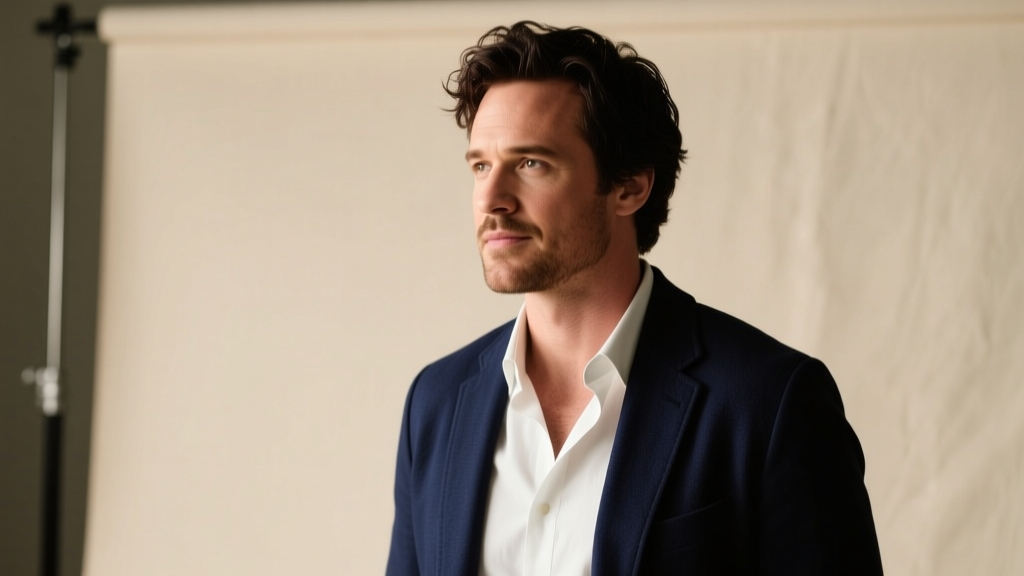
When most people hear the phrase 'personal branding,' they immediately picture loud, hyper-active influencers posting daily selfies, sharing every meal, and chasing viral trends. But what if you are an introvert? What if you want your work to speak for itself? For beginners feeling overwhelmed by the pressure to be constantly 'loud' online, studying the career and digital footprint of character actor Patrick Fugit offers a masterclass in a different kind of personal branding: the quiet, authentic approach.
Patrick Fugit first captured the world's attention as the teenage journalist William Miller in Cameron Crowe's beloved 2000 film 'Almost Famous.' Since then, he has deliberately navigated Hollywood, transitioning from a teen indie darling to a gritty, reliable character actor in projects like 'Wristcutters: A Love Story,' the Cinemax series 'Outcast,' and Damien Chazelle's 'First Man.' Unlike many of his peers, Fugit has not relied on a massive, over-sharing social media presence to maintain his relevance. Instead, he has built a brand rooted in mystique, craft, and deliberate career choices. In this beginner-friendly explainer, we will break down how Patrick Fugit presents himself to the world, analyze his unconventional social media strategy, and extract actionable takeaways you can use to craft a compelling, professional bio for your own profiles.
Quick Facts: Patrick Fugit at a Glance
| Attribute | Details |
|---|---|
| Full Name | Patrick Raymond Fugit |
| Born | October 27, 1982 (Salt Lake City, Utah) |
| Nationality | American |
| Known For | Almost Famous, Wristcutters, Outcast, First Man |
| Social Media Handles | Highly private; relies on IMDb and agency representation |
The Career Arc: From Teen Prodigy to Gritty Character Actor
To understand a person's brand, you must first look at their portfolio. For an actor, personal branding is intrinsically tied to their filmography and the roles they choose to accept. Patrick Fugit's career trajectory is a brilliant example of deliberate rebranding. After the massive mainstream success of 'Almost Famous,' many young actors in his position would have immediately chased blockbuster superhero roles or leaned heavily into teen rom-coms to capitalize on their heartthrob status.
Fugit took a different path. He gravitated toward independent cinema and complex, often dark storytelling. His role as Zia in the cult classic 'Wristcutters: A Love Story' (2006) signaled to audiences and casting directors that he was interested in the offbeat and the unconventional. Later, he anchored the supernatural horror series 'Outcast' (2016-2018) as Kyle Barnes, a man plagued by demonic possession, showcasing his ability to carry a gritty, dramatic television series. He followed this with a supporting role as astronaut Elliot See in the critically acclaimed 'First Man' (2018).
What this means for your brand: Your career choices are the foundation of your personal brand. Fugit's brand is not built on what he says on Twitter; it is built on the consistent, grounded, and complex characters he portrays. For beginners building a professional profile on LinkedIn or a personal portfolio site, the lesson is clear: let your actual work, projects, and case studies form the core of your narrative. A bio is just the introduction; your portfolio is the proof.
Analyzing the Patrick Fugit Social Media Presence
If you search for an official, verified Patrick Fugit Instagram or TikTok account where he posts behind-the-scenes selfies and daily vlogs, you will come up mostly empty-handed. Fugit is notoriously private. He does not participate in the modern celebrity obligation to broadcast his personal life to millions of followers. When he does engage with the public, it is almost exclusively through structured press tours, podcast interviews, and premiere junkets where the focus remains strictly on the craft of acting and the specific project he is promoting.
For a beginner trying to build a personal brand, this might seem counterintuitive. Aren't you supposed to post every day to beat the algorithm? Fugit's digital absence is actually a powerful branding tool known as 'subtractive branding' or 'mystique.' By withholding his daily personal life from the public, he ensures that when audiences see him on screen, they see the character, not the influencer. His 'bio' is effectively his IMDb page and his professional representation.
When Fugit does sit down for interviews, his communication style is thoughtful, humble, and deeply analytical regarding his work. He speaks about the psychological weight of his roles rather than the glamour of Hollywood. This creates a public perception of a serious, dedicated artist. His lack of a noisy social media presence filters out casual gossip and attracts an audience that respects his boundaries and values his artistic output.
Beginner-Friendly Personal Branding Takeaways
How can an everyday professional, freelancer, or creator apply the 'Patrick Fugit Method' to their own Instagram, LinkedIn, or personal website bio? Here are three beginner-friendly takeaways to help you build a brand that feels authentic without requiring you to become a loud influencer.
1. Embrace the Minimalist Bio
Beginners often make the mistake of cluttering their social media bios with too many emojis, inside jokes, and a laundry list of unrelated hobbies. Fugit's brand proves that sometimes, less is more. A minimalist bio conveys confidence. If you are a graphic designer, your bio does not need to explain your entire life story. A simple, punchy formula works best: Current Role | Core Specialty | One Unique Personal Detail | Link to Portfolio. By stripping away the noise, you force the visitor to focus on your primary professional value.
2. Let Your Portfolio Do the Talking
Fugit does not need to tweet about his acting process because his performances do the heavy lifting. On your own profiles, your bio should act as a signpost pointing toward your best work. Instead of using 150 characters to claim you are an 'award-winning visionary,' use that space to link directly to a clean, well-organized portfolio, a published article, or a GitHub repository. Let the quality of your output validate your bio's claims.
3. Cultivate Professional Mystique
You do not owe the internet your every waking thought. In an era of oversharing, setting boundaries can actually elevate your professional brand. It is entirely acceptable to use your social media profiles strictly as a digital business card. Keep your Instagram grid curated to showcase your professional aesthetic, your LinkedIn focused on industry insights, and your personal life private. This 'mystique' makes your public-facing work feel more premium and intentional.
Real-World Sources and Further Reading
To further study how character actors manage their public profiles and career trajectories, you can explore the following resources:
- IMDb (Internet Movie Database): Reviewing Patrick Fugit's complete filmography on IMDb provides a clear map of how his role choices have evolved, serving as a perfect example of a portfolio-driven brand.
- Collider & IndieWire Interviews: Searching for his press interviews surrounding 'Outcast' and 'First Man' on major entertainment sites like Collider showcases his thoughtful, craft-focused communication style, which is an excellent model for professional public speaking and networking.
Ultimately, building a personal brand does not require you to change your personality or force yourself into the mold of a digital influencer. As Patrick Fugit has demonstrated throughout his enduring career, authenticity, dedication to your craft, and a carefully curated public presence can create a deeply compelling brand that stands the test of time.