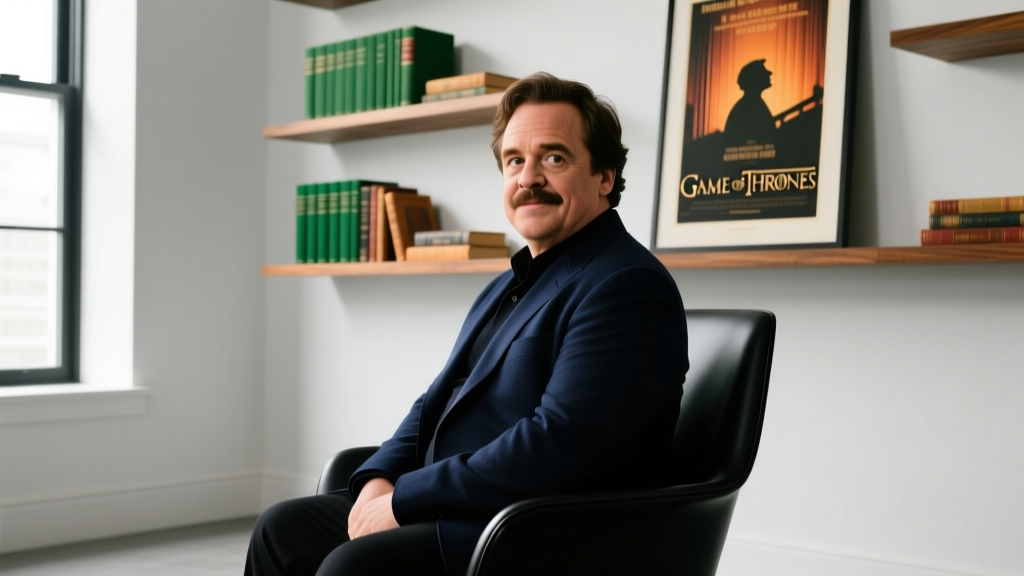
When building a personal brand, most people assume they need a perfectly curated Instagram grid, a witty Twitter feed, and a TikTok full of behind-the-scenes content. Yet, one of the most recognizable and respected actors in Hollywood has built a global empire of influence without a single personal social media account. The Peter Dinklage origin story is not just a tale of Hollywood triumph; it is a masterclass in boundary-setting, narrative control, and letting undeniable talent serve as your ultimate biography. By examining his journey from indie theater stages to the Iron Throne, we can uncover profound lessons for crafting a personal brand that commands respect.
The Peter Dinklage Origin Story: From Morristown to the Stage
Born Peter Hayden Dinklage in 1969 in Mendham Township, New Jersey, his early life was defined by a deep love for the arts and a determination to forge his own path. Diagnosed with achondroplasia, the most common form of dwarfism, Dinklage did not let physical differences dictate his ambitions. He attended the prestigious Delbarton School before enrolling at Bennington College in Vermont, graduating in 1991 with a degree in theater.
Rather than moving to Los Angeles to chase commercial fame, Dinklage moved to New York City. His early years were marked by the quintessential struggling artist experience. He lived in a cold, unheated apartment and worked various odd jobs while immersing himself in the city's avant-garde theater scene. Alongside his college friend Jesse Keck, he co-founded the Fainting Clown Theater. This period was crucial to his origin story; it was in these gritty, experimental theater spaces that Dinklage honed his craft, developed his distinct voice, and decided that he would never compromise his dignity for a paycheck.
Quick Facts: The Man Behind the Icon
| Full Name | Peter Hayden Dinklage |
|---|---|
| Born | June 11, 1969 (Mendham Township, New Jersey) |
| Nationality | American |
| Known For | Tyrion Lannister (Game of Thrones), Cyrano, The Station Agent |
| Social Media Handles | None (No official personal accounts; represented by HBO and PR teams) |
| Education | Bennington College (BA in Theater, 1991) |
Breaking the Mold: Early Career and Indie Roots
In the late 1990s and early 2000s, the entertainment industry had a very narrow, often demeaning view of actors with dwarfism. Roles were largely restricted to fantasy creatures, leprechauns, or punchlines. Dinklage made a conscious, career-defining choice: he refused to play these stereotypical parts. This boundary-setting is a foundational element of his personal brand. By saying 'no' to easy money, he signaled to the industry that he was a serious dramatic actor.
His uncompromising stance caught the attention of filmmaker Tom McCarthy, who wrote the screenplay for the 2003 independent film The Station Agent specifically with Dinklage in mind. The film was a critical darling at the Sundance Film Festival. Dinklage's portrayal of Finbar McBride, a quiet, complex man seeking solitude, shattered industry preconceptions. According to a profile by The New York Times, this role proved that Dinklage could carry a film on his charisma and emotional depth alone, effectively rewriting his Hollywood origin story from a niche character actor to a leading man.
Theatrical Roots and Filmography Highlights
While mainstream audiences know him best for television, Dinklage's brand is deeply rooted in the theater. His stage work includes acclaimed performances in off-Broadway productions like Things We Want and the musical adaptation of Cyrano, which he later transitioned to the silver screen in 2021. His theatrical background informs his meticulous approach to character building and public speaking. He has also lent his distinct voice to animated projects like The Angry Birds Movie and Ice Age: Continental Drift, showcasing a brand versatility that appeals to all demographics.
His filmography is a curated list of complex, often morally ambiguous characters. Beyond his record-breaking, four-time Emmy-winning run as Tyrion Lannister in HBO's Game of Thrones, he has taken on diverse roles in films like Three Billboards Outside Ebbing, Missouri, I Think We're Alone Now, and Denis Villeneuve's Dune: Part Two. As noted by The Guardian, Dinklage's ability to steal scenes in massive ensemble casts is a testament to his commanding presence, a trait that translates directly to how he carries himself in the public eye.
Peter Dinklage on Social Media: A Masterclass in Privacy
When analyzing the social media presence of Peter Dinklage, the most striking feature is its complete absence. Unlike his Game of Thrones co-stars who boast tens of millions of followers across Instagram and X (formerly Twitter), Dinklage does not maintain personal social media profiles. Any accounts using his name and likeness are fan pages or managed promotional profiles tied to specific movie releases and studio PR campaigns.
For a personal branding site like lovemebio.com, this presents a fascinating case study in the 'Ghost Bio' strategy. Dinklage's brand is not built on daily engagement, sponsored posts, or sharing his morning routine. Instead, his public persona is communicated through high-signal, low-frequency channels: in-depth interviews on late-night television, carefully selected red-carpet appearances, and the work itself. When he does appear on a podcast or talk show, his wit, intelligence, and self-deprecating humor shine, leaving a much stronger impression than a daily grid of curated selfies ever could. An NPR interview highlighted his sharp intellect and refusal to be pigeonholed, traits that resonate far more deeply with fans than a standard celebrity Instagram feed.
This approach creates an aura of mystique and prestige. In an era of oversharing, Dinklage's privacy makes his public appearances feel like events. His 'bio' is written by his peers, critics, and fans, rather than by his own digital marketing team. This proves that a strong personal brand does not require a digital footprint; it requires a reputation for excellence.
Personal Branding Takeaways for Your Own Profile
While you may not be an Emmy-winning actor, the history and origin story of Peter Dinklage offers actionable strategies for optimizing your own social media bio and personal brand:
- Set Firm Boundaries: Dinklage's refusal to play stereotypical roles early in his career established his worth. In your own bio, do not be afraid to state what you do not do or who you do not work with. Clear boundaries attract higher-quality opportunities.
- The Power of the 'Ghost Bio': You do not need to post every day to remain relevant. If you are a professional, use your Instagram or LinkedIn bio to link directly to your portfolio, published works, or business. Let your tangible output serve as your primary introduction.
- Curate Like a Casting Director: Look at your social media grid as a filmography. Does it tell the story you want to tell? Delete old, irrelevant posts that dilute your professional narrative. Treat your profile like a museum, not a dumping ground.
- Own Your Narrative: Dinklage took control of his origin story by leaning into indie theater and complex scripts rather than waiting for Hollywood to hand him a good part. Use your bio's 'About Me' section to frame your unique background—especially the unconventional or difficult parts—as the exact reason you excel at what you do today.
- Prioritize High-Signal Platforms: Instead of spreading yourself thin across TikTok, Instagram, X, and Threads, pick one platform where your target audience lives and master it. Dinklage chooses the 'platform' of his actual work and high-quality press interviews.
Ultimately, the Peter Dinklage story reminds us that the most compelling personal brands are built on substance, not just aesthetics. Whether you are writing a witty Instagram bio or building a professional LinkedIn presence, remember that your digital profile is just the prologue. The real story is told through the work you choose to do and the boundaries you refuse to cross.