
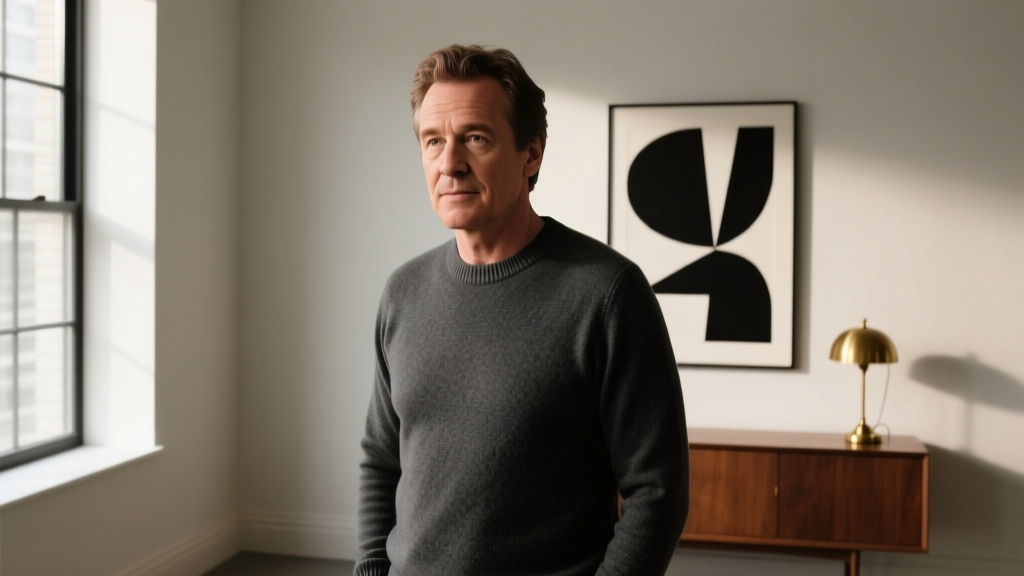
When building a personal brand, the modern instinct is to broadcast every detail of your daily life. However, Scottish actor Robert Carlyle has proven that a fiercely guarded private life and a minimalist digital footprint can be just as powerful. Best known for his explosive role as Begbie in Trainspotting and his masterful, dual-layered performance as Rumplestiltskin in Once Upon a Time, Carlyle’s approach to fame is a masterclass in letting the work speak for itself. This deep dive explores how Robert Carlyle maintains a massive global brand without playing the traditional social media game, and what professionals, creatives, and actors can learn from his quiet confidence.
The Evolution of Robert Carlyle: From Indie Darling to Fantasy Icon
Before he was a household name, Robert Carlyle was a founding member of the Raindog Theatre company in Glasgow, a collective dedicated to gritty, avant-garde performances. This early dedication to the craft established the foundation of his personal brand: an uncompromising commitment to raw, authentic storytelling. His breakout role as the terrifyingly unpredictable Francis Begbie in Danny Boyle’s 1996 cultural phenomenon Trainspotting instantly branded him as an actor capable of immense, volatile intensity.
Yet, Carlyle immediately pivoted to showcase his range, starring as the charismatic, vulnerable Gaz in the 1997 global hit The Full Monty. This strategic career move proved that his brand was not limited to one-note villains; he was a versatile leading man. Over the decades, he transitioned seamlessly from indie cinema to Hollywood blockbusters like The World Is Not Enough, and eventually found a massive new audience in the golden age of television with Syfy’s Stargate Universe and ABC’s Once Upon a Time. Through every era, his brand has remained consistent: he is the actor you hire when you need absolute, undeniable gravitas.
Quick Facts & Career Milestones
| Attribute | Details |
|---|---|
| Full Name | Robert Carlyle |
| Born | April 14, 1961 (Glasgow, Scotland) |
| Nationality | Scottish / British |
| Known For | Rumplestiltskin (Once Upon a Time), Begbie (Trainspotting), Gaz (The Full Monty) |
| Awards | BAFTA Award Winner, Emmy Nominee, Screen Actors Guild Nominee |
| Representation | Independent Talent Group |
| Primary Digital Hub | IMDb, Agency Profiles, Official Fan Wikis |
The Digital Footprint of Robert Carlyle: Social Media Presence
To understand Robert Carlyle’s social media presence, one must first understand what it lacks. Unlike many of his contemporaries who leverage Instagram, TikTok, or X (formerly Twitter) to maintain daily parasocial relationships with fans, Carlyle does not maintain a hyper-active, verified personal social media presence. He does not post behind-the-scenes selfies, share his daily meals, or engage in internet controversies.
Instead, his digital footprint is highly curated, professional, and largely managed through official industry channels. His primary 'bio' exists on platforms like IMDb and his agency, the Independent Talent Group. On these platforms, his biography is strictly business: highlighting his extensive filmography, major awards, and current representation. This is a deliberate and highly effective branding choice. By abstaining from the influencer rat race, Carlyle preserves the mystique required to play complex, often terrifying characters. When audiences see him on screen, they see Rumplestiltskin or Dr. Nicholas Rush, not an actor promoting a skincare line on Instagram Stories.
Furthermore, Carlyle’s digital presence is heavily sustained by community advocacy. The Once Upon a Time fandom, one of the most dedicated communities on Tumblr, X, and Reddit, acts as his digital marketing team. Fan accounts, wikis, and video essayists analyze his micro-expressions and character arcs, generating millions of impressions without Carlyle ever having to log into a social media app. For personal branding, this highlights a crucial reality: if your work is exceptional, your audience will do the broadcasting for you.
Defining Roles & The Brand of the Anti-Hero
An actor’s filmography is their ultimate portfolio, and Carlyle’s body of work reads like a masterclass in character psychology. His personal brand is inextricably linked to the 'Anti-Hero' and the 'Sympathetic Villain.'
- Francis Begbie (Trainspotting): Established his capacity for terrifying, explosive energy. This role branded him as a fearless risk-taker.
- Gaz (The Full Monty): Showcased his everyman charm and comedic timing, proving his brand had warmth and relatability beneath the grit.
- Dr. Nicholas Rush (Stargate Universe): Cemented his ability to play arrogant, brilliant, and morally ambiguous intellectuals.
- Rumplestiltskin / Mr. Gold (Once Upon a Time): The defining role of his later career. Playing a tragic, power-hungry villain with a deeply wounded heart allowed Carlyle to merge theatricality with profound emotional vulnerability, securing a massive, devoted global fanbase.
By consistently choosing roles that require deep psychological excavation, Carlyle has branded himself as a 'thespian’s actor.' He is not a celebrity who acts; he is an actor who occasionally achieves celebrity status.
Personal Branding Takeaways: The Power of Mystique
What can professionals, freelancers, and aspiring creatives learn from the Robert Carlyle approach to personal branding? Here are the core takeaways you can apply to your own bio and digital strategy:
1. The 'Work-First' Bio Strategy
Look at Carlyle’s agency and IMDb profiles. They do not contain fluffy adjectives or long-winded personal anecdotes. They list credits, awards, and representation. When writing your LinkedIn summary or professional website bio, consider adopting this minimalist, authority-driven approach. Let your portfolio, case studies, and verifiable achievements serve as the core of your bio. Confidence is quiet; insecurity is loud.
2. Protect Your Mystique
Oversharing dilutes professional authority. If you are a consultant, a designer, or an artist, your audience wants to believe in your expertise and your vision. By maintaining a boundary between your private life and your public professional brand, you create a sense of mystique. People are drawn to what they cannot entirely figure out. Use your social media to highlight your process, your insights, and your finished work, rather than your personal drama.
3. Cultivate Community Advocates
Carlyle doesn’t need to tweet about his own brilliance because his fans and critics do it for him. Focus on delivering such high-quality work that your clients and audience become your evangelists. A single, deeply detailed recommendation on LinkedIn or a case study shared by a satisfied client is worth infinitely more than a hundred self-congratulatory social media posts.
4. Consistency in Your Niche
Carlyle’s brand promises intensity, depth, and psychological complexity. Whether he is in a gritty Scottish indie film or a glossy American fantasy drama, he delivers on that promise. Identify the core 'promise' of your personal brand. Are you the data-driven strategist? The empathetic UX designer? Ensure that every piece of content you publish and every project you accept reinforces that specific identity.