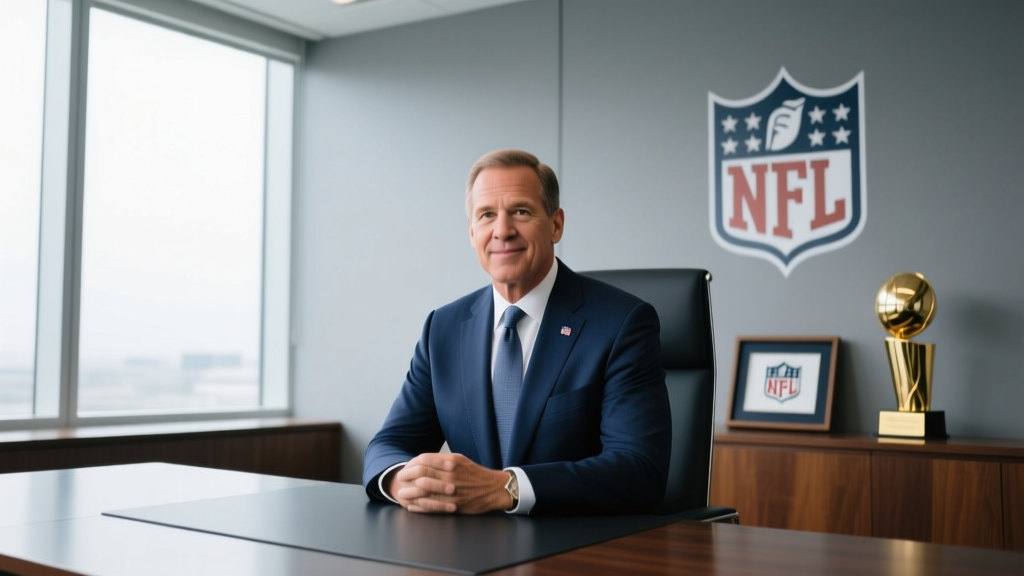
When we think of personal branding and social media bios, we usually picture influencers, actors, or athletes curating their daily lives. But what happens when your personal brand is inextricably linked to a $20 billion sports empire? Enter Roger Goodell, the Commissioner of the National Football League. Unlike celebrities who rely on Instagram grids and viral tweets, Goodell’s personal branding is a masterclass in institutional authority, crisis management, and corporate proxy. For executives, founders, and corporate leaders, analyzing Roger Goodell’s approach to public relations and executive biography offers profound lessons in wielding power, maintaining mystique, and protecting the "Shield." In this expert analysis, we break down the branding strategy of the NFL's top executive and extract actionable takeaways for your own professional presence.
The Executive Shield: Roger Goodell's Career Evolution
To understand the current branding of Roger Goodell, one must examine his trajectory. Goodell did not inherit his position through ownership or fame; he built it through institutional grit. Starting as an unpaid intern in the NFL's public relations department in 1982, he climbed the ranks to become the league's chief operating officer before being named Commissioner in 2006. Transitioning from the shadow of his predecessor, Paul Tagliabue, Goodell had to establish a distinct authority rooted in aggressive expansion and strict discipline.
His personal brand is not built on relatability or viral charm. Instead, it is built on resilience, negotiation, and stewardship. Under his tenure, the NFL has secured a staggering $110 billion media rights deal, expanded international games, and navigated intense cultural and legal crises. Goodell’s brand is the ultimate "Fixer" and "Protector of the Shield." He represents the corporate entity first and the individual second, a crucial distinction for any high-level executive managing a public profile.
Quick Facts: The Man Behind the NFL
| Attribute | Details |
|---|---|
| Full Name | Roger Allen Goodell II |
| Born | February 19, 1959 (Jamestown, New York) |
| Nationality | American |
| Known For | Commissioner of the National Football League (NFL) |
| Social Media Handles | No personal verified accounts; represented via @NFL and corporate PR channels |
Social Media Presence: The Strategy of Silence
In an era where CEOs like Elon Musk or Mark Cuban dominate headlines via personal X (formerly Twitter) accounts, Roger Goodell employs a radically different social media strategy: deliberate silence. If you search for a verified, personal Roger Goodell Instagram or Twitter account, you will not find one. This is not an oversight; it is a highly calculated executive branding choice. For the Commissioner of the NFL, a personal social media bio or daily feed introduces unnecessary risk. A single misinterpreted tweet could impact billion-dollar sponsorships or ignite a media firestorm.
Instead of a personal megaphone, Goodell utilizes "Institutional Proxy." His voice is channeled exclusively through the official @NFL accounts, press releases, and owned media properties like the NFL Network. When Goodell needs to address the public, he does not use a smartphone; he uses the annual Super Bowl Press Conference or his highly anticipated "Kickoff Letter" sent to fans every September. This strategy teaches a vital lesson in executive branding: you do not need to be everywhere to be powerful. By restricting his direct communication channels, Goodell ensures that when he does speak, the entire sports world listens. His "bio" is not a 150-character Instagram caption; it is the collective reputation of the 32 franchises he oversees.
Anatomy of an Executive Bio: Crafting the Corporate Narrative
If you visit the official NFL executive directory, the biography of Roger Goodell is a textbook example of corporate narrative design. An effective executive bio must balance personal history with enterprise value. Goodell’s official bio focuses heavily on metrics, growth, and legacy. It highlights his role in negotiating historic collective bargaining agreements, launching the NFL Draft as a premier cultural event, and spearheading player health and safety initiatives.
Notice what is omitted: personal controversies, the minutiae of daily operations, and overly emotional language. The vocabulary is deliberate, utilizing words like "stewardship," "unprecedented growth," and "innovation." The bio acts as a shield against media narratives by anchoring his identity in business outcomes rather than cultural debates. For professionals crafting their own LinkedIn summaries or corporate website bios, the takeaway is clear. Your executive bio should not read like a diary or a list of grievances. It must read like a prospectus. It should signal to stakeholders, investors, and peers that you are a steady hand capable of steering a massive enterprise through turbulent waters. Goodell’s bio positions him not just as a sports executive, but as a global entertainment CEO.
Personal Branding Takeaways for Corporate Leaders
What can founders, C-suite executives, and ambitious professionals learn from the NFL Commissioner's approach to personal branding? Here are the core takeaways you can apply to your own digital presence and professional bio.
1. Embrace the Institutional Proxy. You do not need a personal TikTok or X account to be an industry leader. If your role requires immense diplomacy and risk management, let your company’s official channels do the heavy lifting. Use your personal LinkedIn strictly for high-level industry insights, and route daily updates through your corporate brand.
2. Create an Annual Manifesto. Goodell’s "Kickoff Letter" is a branding masterstroke. It is a yearly touchpoint that allows him to control the narrative, address criticisms indirectly, and hype the upcoming season directly to the consumer. Create your own annual manifesto—a yearly LinkedIn newsletter, an end-of-year industry report, or a podcast episode—that establishes you as a forward-thinking authority in your niche.
3. Bio Minimalism and Metric-Driven Storytelling. Audit your current professional bio. Remove the buzzwords and replace them with hard metrics. Goodell’s legacy is tied to revenue growth, international expansion, and broadcast deals. Frame your own bio around the tangible value you have generated for your organization. Metrics transcend industry jargon and prove your ROI to potential board members or recruiters.
4. Control the Medium. When Goodell faces intense scrutiny, he does not engage in internet arguments. He sits down for a scheduled interview with a major network or hosts a formal press conference. Control the environments where your brand is discussed. Own your website, your newsletter, and your formal presentations, rather than leaving your reputation to the mercy of social media algorithms.
Sources and Further Reading
To dive deeper into executive branding and the business of the NFL, refer to the following resources: