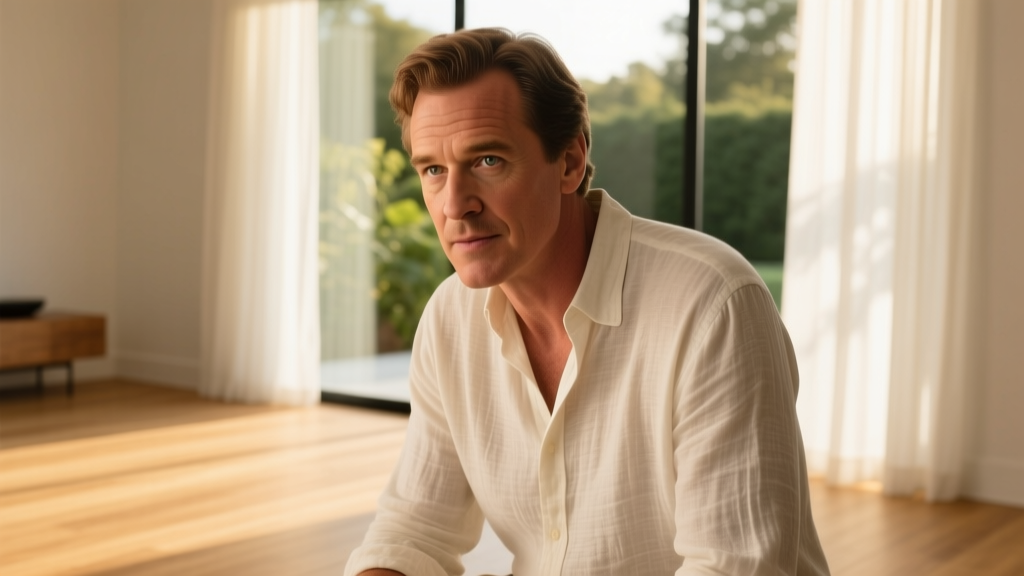
In the current landscape of personal branding, the prevailing trend dictates that visibility equals viability. Creators and professionals are told to post daily, share behind-the-scenes content, and maintain an always-on digital presence. Yet, as we analyze the upper echelons of legacy entertainment and literary circles, a counter-trend is emerging: digital mystique. At the forefront of this unintentional movement is British actor, author, and director Rupert Everett. Known for his sardonic wit, iconic film roles, and deeply personal memoirs, Everett presents a fascinating case study in brand longevity. He does not rely on viral social media trends or curated influencer grids to maintain his relevance. Instead, Rupert Everett proves that a personal brand can thrive on substance, selective visibility, and the enduring power of a well-crafted public narrative. For those looking to refine their own social media bios and digital footprints, examining his approach offers a masterclass in the art of saying less to mean more.
The Current Landscape: Why Mystique is the New Currency
Over the past decade, the digital ecosystem has been dominated by the 'hustle culture' bio. Social media profiles are frequently cluttered with buzzwords, excessive emojis, and a laundry list of self-proclaimed titles. However, a shift is occurring among high-net-worth individuals, legacy artists, and established professionals. The modern trend report indicates a growing fatigue with oversharing. Audiences are beginning to crave authenticity, depth, and a touch of the unknown. Digital mystique—the practice of maintaining a highly curated, minimalist online presence while letting substantial real-world work speak for itself—is becoming a hallmark of true authority. Everett embodies this anti-influencer ethos perfectly, proving that you do not need to document every meal or thought to remain culturally significant.
Quick Facts: The Architecture of a Legacy
| Attribute | Details |
|---|---|
| Full Name | Rupert James Hector Everett |
| Born | May 29, 1959 (Burnham Deepdale, Norfolk, England) |
| Nationality | British |
| Known For | Film (My Best Friend's Wedding, Shrek 2), Stage (Oscar Wilde portrayals), Literature (Memoirs) |
| Social Media Handles | N/A (No personal public Instagram or X accounts; represented by literary agents and PR) |
From Stage to Page: A Multi-Hyphenate Career
To understand Everett's brand, one must look at the sheer volume and variety of his output. He first captured public attention in the 1980s with his breakout role in the film 'Another Country', establishing himself as a quintessential British leading man with a sharp, aristocratic edge. He later achieved global mainstream fame with his seen-stealing supporting roles in 'My Best Friend's Wedding' and 'An Ideal Husband', alongside his voice work as the villainous Prince Charming in 'Shrek 2' and 'Shrek the Third'.
However, Everett's personal brand is not confined to acting. He is a celebrated author and director. His memoirs, including 'Red Carpets and Other Banana Skins' and 'Vanished Years', are praised for their blistering honesty, dark humor, and literary merit. Furthermore, he wrote, directed, and starred in 'The Happy Prince', a passion project chronicling the final, tragic days of Oscar Wilde. This multi-hyphenate career trajectory is crucial for personal branding. Everett is not just an 'actor'; he is a storyteller, a historian of his own life, and a cultural commentator. This depth gives his public persona a gravitas that a simple social media bio could never fully capture.
Rupert Everett and the Digital Ghost Strategy
When analyzing the social media presence of Rupert Everett, the most striking feature is its absence. Unlike his contemporaries who engage in daily digital PR, Everett operates as a 'digital ghost.' He does not possess a verified, personal Instagram account where he shares selfies or promotional reels. His X (formerly Twitter) presence is similarly non-existent or limited to publisher-managed announcements.
So, how does his brand survive and thrive without a traditional social media bio? The answer lies in his reliance on high-signal, low-noise mediums. Everett's 'bio' is effectively written by the cultural institutions that platform him. When he appears in long-form interviews with The Guardian, participates in BBC documentaries, or speaks at literary festivals, his distinct voice—dry, erudite, unapologetic, and deeply intelligent—takes center stage. His digital footprint consists of his IMDb page, his publisher's author profile on Faber & Faber, and the enduring legacy of his published books. In a landscape where everyone is shouting into the digital void, Everett's silence creates a vacuum that is filled by the prestige of his actual work. His brand is protected by a layer of editorial curation that social media algorithms simply cannot replicate.
Personal Branding Takeaways for Your Own Bio
While you may not be a celebrated British actor with a roster of literary agents, the principles behind Everett's digital mystique can be directly applied to your own Instagram, LinkedIn, or personal website bio. Here is how you can leverage the 'less is more' trend to elevate your personal brand:
1. Embrace the Minimalist Bio
Take a hard look at your current bio. Is it cluttered with jargon like 'Ninja,' 'Guru,' or 'Visionary'? Strip it back. A bio that simply states your core competency with a touch of dry wit is infinitely more memorable than a paragraph of buzzwords. Channel Everett's aristocratic nonchalance: state what you do, do it well, and let the reader connect the dots. A clean, minimalist bio signals confidence.
2. Link to Your Magnum Opus
Everett doesn't link to a chaotic social feed; his work links to his books and films. In your own bio, utilize the link-in-bio space to direct people to your most substantial piece of work. Whether it is a meticulously curated portfolio, a published research paper, a signature case study, or a professional newsletter, give your audience a destination that proves your expertise rather than just another social platform where they can watch you scroll.
3. Cultivate a Signature Tone
Everett is instantly recognizable by his sardonic, deeply literate voice in his memoirs and interviews. Your bio and content should have a distinct tone. Are you the analytical data expert? The empathetic design thinker? The no-nonsense financial advisor? Choose a tone and let it bleed into the short description in your bio. A bio that sounds like a human being wrote it will always outperform one generated by corporate templates.
4. The Power of the Pivot
Everett transitioned from a 1980s heartthrob to a respected author and director. If you have pivoted in your career, do not hide it. Use your bio to tell a micro-story of evolution. A format like 'Former [Industry A] -> Current [Industry B] | Building [Project C]' shows adaptability and range, making you a more compelling figure to potential collaborators and followers.
5. Practice Selective Visibility
You do not need to post every day to stay relevant. Quality eclipses quantity. By stepping back from the daily grind of content creation, you can focus on producing one or two high-value pieces of content or insights a month. When you do speak, your audience will listen because your signal-to-noise ratio is exceptionally high. Mystique is built by being selective about where and how you show up.